Fresnet-Juillet
Fresnet-Juillet is a family Champagne producer based in Verzy on the Montagne de Reims. The house dates its own Champagne production to 1952, when Gérard Fresnet began bottling wine and adapted the family cellar in Verzy for the new activity.
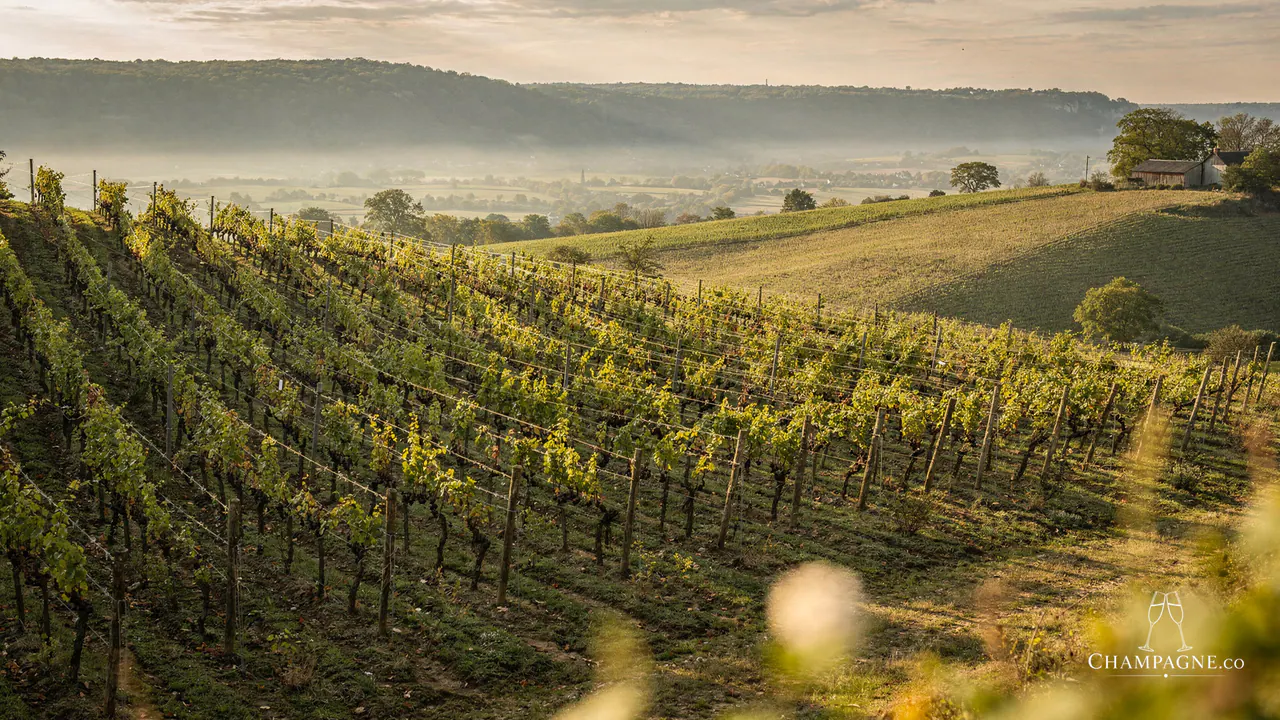
Editorial profile
Fresnet-Juillet is a family Champagne producer based in Verzy on the Montagne de Reims. The house dates its own Champagne production to 1952, when Gérard Fresnet began bottling wine and adapted the family cellar in Verzy for the new activity.
The estate remains closely tied to its home village. Its cellars were excavated by hand in the chalk between 1955 and 1997, ultimately creating the approximately 120 metres of galleries now included in the producer’s visitor route.
Why this producer matters
Fresnet-Juillet offers a straightforward example of a Verzy family producer whose modern history can be followed through both vineyard and cellar development. The house expanded its production infrastructure gradually: a temperature-controlled stainless-steel winery and Coquard press were installed in 1991, a separate pressing site closer to the vines followed in 2006, and disgorgement equipment was added in 2007.
The current portfolio is broader than a single core Brut. It includes Premier Cru and Grand Cru wines, Blanc de Blancs, rosé, a named Grand Cru cuvée, a Special Club vintage and a Pinot Noir-focused bottling.
Cellar and house approach
The historic cellars descend into the chalk beneath Verzy, providing the cool conditions required for bottle ageing. The current production setup combines those traditional underground galleries with later investment in temperature-controlled stainless steel and modern pressing equipment.
Technical details vary by wine. Blend, dosage, vintage and classification therefore need to remain tied to the exact cuvée rather than being treated as a single estate formula.
Champagne.co analysis
Fresnet-Juillet is most useful as a Verzy producer with a clear historical line from post-war family bottling to a broader present-day range. The cellar history is unusually tangible: the hand-dug galleries and later winery upgrades show how the domaine evolved rather than appearing fully formed.
The range itself is stylistically broad. A Premier Cru Brut sits alongside Grand Cru rosé and named cuvées, Blanc de Blancs, Demi-Sec and Special Club. That breadth makes it more informative to compare wines by classification, grape composition and release than to force the producer into one stylistic category.
Buying guidance
The Brut Premier Cru is the most practical starting point for the house. Cuvée Valentin offers a step toward the named Grand Cru range, while the Blanc de Blancs provides a Chardonnay-led alternative. The Rosé Grand Cru is the clearest current rosé expression, and Demi-Sec is the option for buyers deliberately seeking a sweeter style.
Special Club and Cuvée Vincent should be approached as more release-specific wines. Check the exact vintage and technical details of the bottle on offer rather than assuming that specifications from an earlier release still apply.
Loading current Champagne range…
Spotted something wrong? Report a correction
Every report goes to a human review queue. Nothing on this page changes automatically.