G.H. Martel & Co
G.H. Martel & C° is a Reims Champagne house founded in 1869 and now closely identified with the Rapeneau family. Its historic base is at 17 rue des Créneaux in Reims, where the house opens its medieval chalk cellars to visitors.
Editorial profile
G.H. Martel & C° is a Reims Champagne house founded in 1869 and now closely identified with the Rapeneau family. Its historic base is at 17 rue des Créneaux in Reims, where the house opens its medieval chalk cellars to visitors.
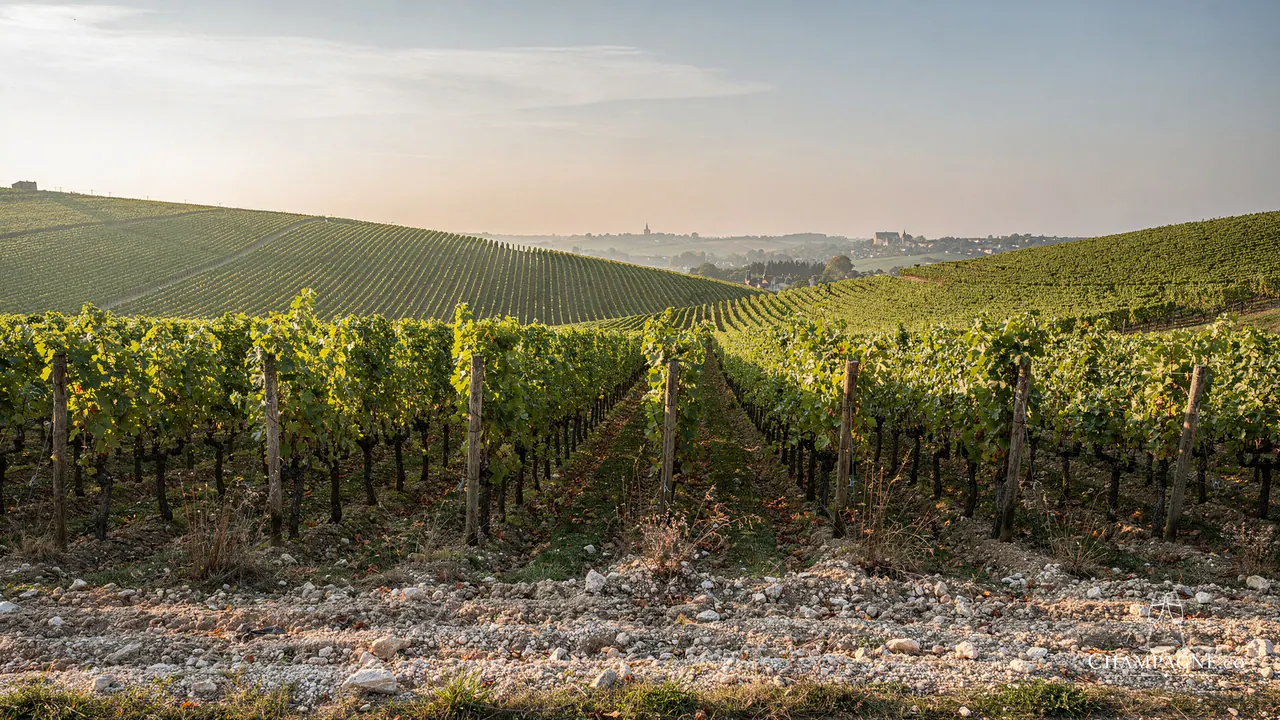
The current vineyard model combines a substantial family holding with long-term grower relationships. The house states that 100 hectares of family vineyards, certified HVE level 3, are dedicated to G.H. Martel, while supply partnerships represent a further 200 hectares. Fruit comes principally from the Petite Montagne de Reims and the Sézannais.
Why this producer matters
G.H. Martel sits between the model of a large historic maison and that of a family-controlled vineyard business. Its scale is significant, but its public identity remains centred on the Rapeneau family, its Reims cellars and a wide blending palette drawn from both owned vines and growers.
The house also provides a useful example of how Champagne’s regional diversity is used in blending. Grapes from villages including Sermiers, Chamery, Écueil, Sacy and Ville-Dommange are complemented by fruit from the Sézannais around Broyes and Sézanne.
Vineyard and sourcing
The Rapeneau family’s current vineyard contribution totals 100 hectares dedicated to G.H. Martel and is certified Haute Valeur Environnementale level 3. The house also records approximately 200 hectares represented by long-term supply relationships with growers.
The family vineyard itself is spread across dozens of Champagne villages, while the sourcing emphasis highlighted by the house falls mainly on the Petite Montagne de Reims and Sézannais. That breadth is central to the producer’s blending approach and gives G.H. Martel access to different grape varieties, exposures and village profiles.
Cellar and winemaking
Christophe Rapeneau is presented by the house as cellar master. The producer states that wines are vinified terroir by terroir before blending, allowing individual origins to be assessed separately before the final assemblage.
The house describes Chardonnay as an important component across its blends and gives 24 months of cellar ageing as a broad reference for its champagnes, but exact grape proportions, dosage, vintage and maturation should still be read cuvée by cuvée because the portfolio is wide and technically varied.
Champagne.co analysis
G.H. Martel is best understood through scale, blending range and family control rather than through one signature grape or single-village identity. The house’s 100-hectare family vineyard is large enough to matter in its own right, while the additional grower network broadens the palette further.
That makes the range useful for buyers who want to explore different Champagne categories under one house name: Blanc de Blancs, Blanc de Noirs, rosé, vintage, Premier Cru and Demi-Sec all sit within the same portfolio.
Buying guidance
Prestige is the simplest place to begin with the core house style. Buyers looking to compare grape emphasis can move toward the Blanc de Blancs or Blanc de Noirs, while the Premier Cru and vintage wines provide a more specific step up within the regular collection.
The Victoire and limited-edition wines are better treated as separate collections rather than simple upgrades of one core cuvée. For vintage, dosage, blend and ageing information, check the exact current release because those details vary across the portfolio and over time.
Loading current Champagne range…
Spotted something wrong? Report a correction
Every report goes to a human review queue. Nothing on this page changes automatically.