Gallimard
Gallimard is a six-generation family domaine in Les Riceys, in the Côte des Bar. Didier and Arnaud Gallimard currently work the family vineyard together, producing both Champagne and Rosé des Riceys from this southern part of the appellation.
Editorial profile
Gallimard is a six-generation family domaine in Les Riceys, in the Côte des Bar. Didier and Arnaud Gallimard currently work the family vineyard together, producing both Champagne and Rosé des Riceys from this southern part of the appellation.
The estate’s present identity combines traditional family continuity with a cellar that is willing to use several different élevage approaches. Current producer material refers to single-variety and single-vintage wines, oak barrels, egg-shaped terracotta amphorae and perpetual reserve wines, depending on the cuvée.
Why this producer matters
Les Riceys is one of Champagne’s most distinctive villages, both for its large vineyard area and for its association with the separate Rosé des Riceys appellation. Gallimard reflects that dual identity directly: the domaine makes sparkling Champagne and also bottles Rosé des Riceys, which should be understood as a distinct still wine rather than a Champagne rosé.
The range is also broad enough to show several sides of the estate, from Pinot Noir-led and Chardonnay-led wines to amphora-aged, vintage and rosé expressions.
Vineyard and terroir
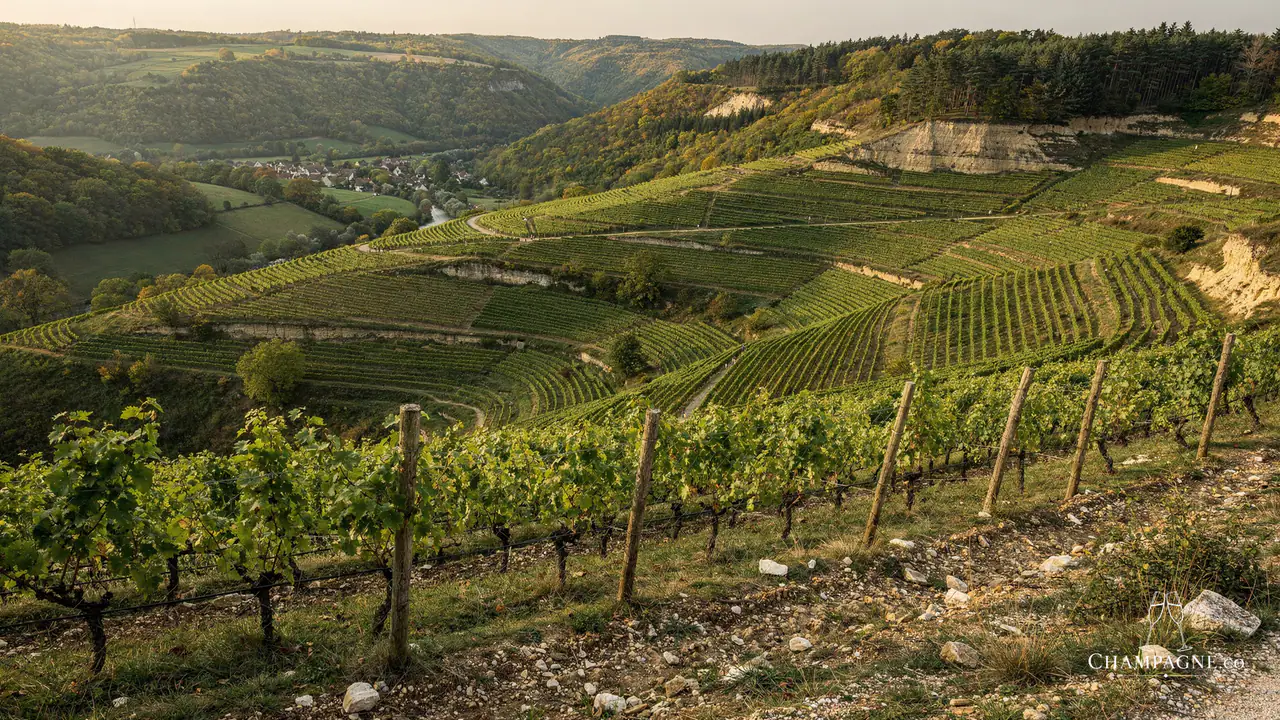
The domaine is rooted in Les Riceys, in the Côte des Bar. Current first-party material emphasises environmentally conscious vineyard work and the expression of the local terroir rather than presenting one prescriptive farming formula.
Les Riceys’ southern Champagne location gives Gallimard a clearly different geographical context from houses based around Reims or the Côte des Blancs. That local identity is especially important because the estate works across both Champagne and Rosé des Riceys.
Cellar and winemaking
Gallimard describes its winemaking as low-intervention in intention, with cellar choices adjusted according to the wine. The estate currently uses stainless steel alongside oak barrels and egg-shaped terracotta amphorae, and also maintains perpetual reserve wines.
Those methods are not applied uniformly.
Champagne.co analysis
Gallimard is most interesting as a Les Riceys family producer that uses a relatively wide technical vocabulary without losing its village identity. The estate can move from Blanc de Noirs to Chardonnay, from stainless steel to amphora, and from Champagne to Rosé des Riceys while remaining anchored in one Côte des Bar commune.
That breadth makes the range more informative when bottles are compared by grape, vessel and appellation rather than placed in a simple quality ladder.
Buying guidance
Réserve Blanc de Noirs is the clearest starting point for a Pinot Noir-led view of the estate, while Grande Réserve Chardonnay provides the contrasting Chardonnay route. Amphoressence is the most obvious choice for buyers specifically interested in Gallimard’s amphora work.
Rosé de Saignée should be chosen as a sparkling rosé Champagne. Rosé des Riceys is a separate still wine and should be bought with that distinction in mind. For the vintage and named cuvées, check the exact current release before relying on older blend, dosage or ageing specifications.
Loading current Champagne range…
Spotted something wrong? Report a correction
Every report goes to a human review queue. Nothing on this page changes automatically.