Georges Laval
Champagne Georges Laval is a small family grower based in Cumières Premier Cru, on the right bank of the Marne. The domaine traces family vine-growing in the village to 1694 and has an unusually long documented history of organic farming: Georges Laval…
Editorial profile
Champagne Georges Laval is a small family grower based in Cumières Premier Cru, on the right bank of the Marne. The domaine traces family vine-growing in the village to 1694 and has an unusually long documented history of organic farming: Georges Laval began cultivating organically in 1971, and Vincent Laval has continued the family operation since 1996.
The current vineyard covers about 3.5 hectares. The Association des Champagnes Biologiques records 3 hectares as certified organic and a further 0.5 hectare in conversion, planted almost evenly to Pinot Noir, Meunier and Chardonnay.
Why this producer matters
Georges Laval is one of Champagne’s early organic pioneers. Organic cultivation here predates the formal French organic-wine framework and has been part of the estate’s identity for more than half a century rather than being a recent conversion.
The domaine is also highly site-focused. Its small vineyard is divided among Cumières and named lieux-dits, and the range is organised to show the difference between a multi-terroir blend and wines tied directly to individual sites.
Vineyard and terroir
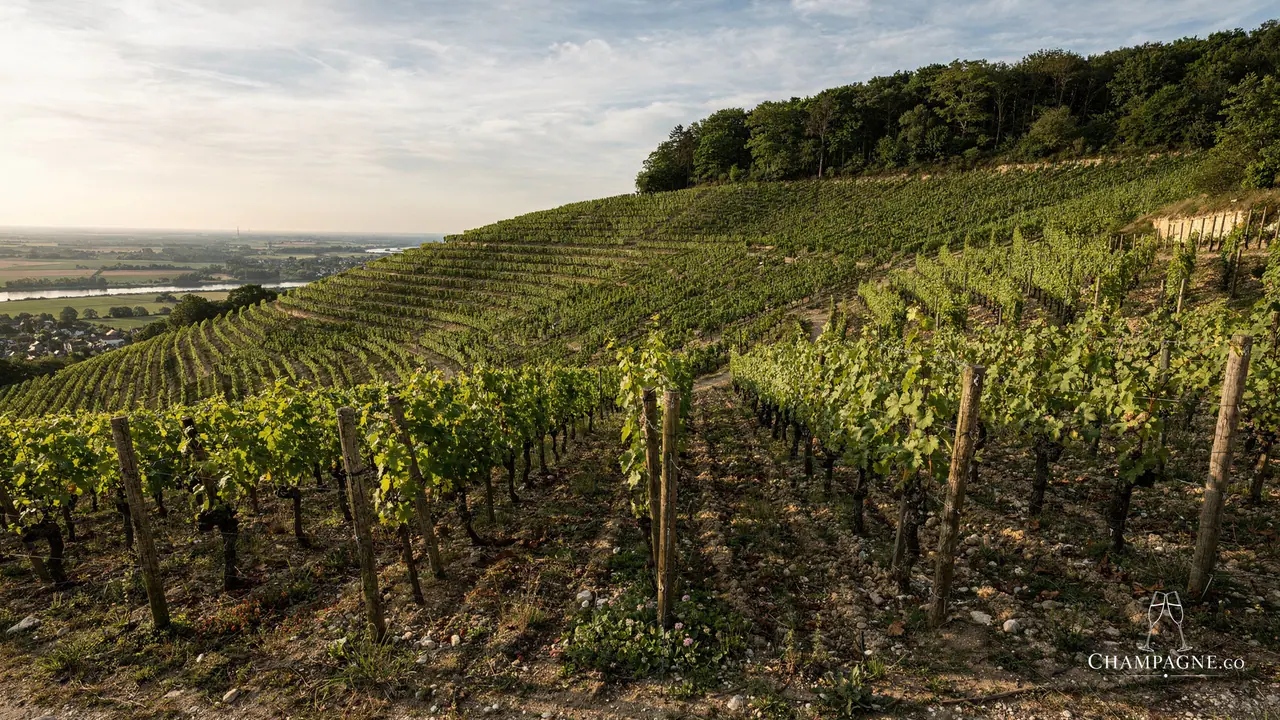
Cumières lies close to Épernay on south-facing slopes above the Marne, with chalk beneath the soils. The producer farms all three principal Champagne varieties and preserves a significant proportion of older vines, including some parcels with vines more than 80 years old.
Current certification records show 3 hectares certified AB and 0.5 hectare in conversion. The producer emphasises manual work in the vineyard and a small team relative to the domaine’s size.
Cellar and winemaking
The estate uses barrel vinification and keeps the cellar approach closely connected to individual terroirs. The range separates a blended cuvée from wines named for Cumières and specific lieux-dits.
Exact base years, dosage, disgorgement dates and release quantities change by bottling.
Champagne.co analysis
Georges Laval is best understood through two forms of continuity: organic farming since 1971 and a family presence in Cumières stretching back centuries. The result is not a broad commercial range but a small set of wines designed to distinguish village and lieu-dit character.
Garennes shows the blending side of the domaine, while Cumières and the named parcels progressively narrow the geographical focus. That structure makes the range particularly useful for buyers interested in how one small organic estate interprets several sites within and around its home village.
Buying guidance
Garennes is the most practical starting point for the estate because it shows the blended side of the house and is produced in more than one dosage style. Cumières Premier Cru is the next step for a village-focused, zero-dosage expression.
For the most site-specific view, look to Les Chênes, Les Hautes Chèvres and Les Longues Violes. Check the exact current release for harvest, disgorgement, dosage and quantity, because those details are deliberately specific to each bottling.
Loading current Champagne range…
Spotted something wrong? Report a correction
Every report goes to a human review queue. Nothing on this page changes automatically.