Georges Rémy
Georges Rémy is a Bouzy-based grower whose vineyard extends across Bouzy, Tauxières, Ambonnay and Louvois on the Montagne de Reims. The current organic-certification record covers 5.30 hectares, planted to 4.30 hectares of Pinot Noir and 1 hectare of…
Editorial profile
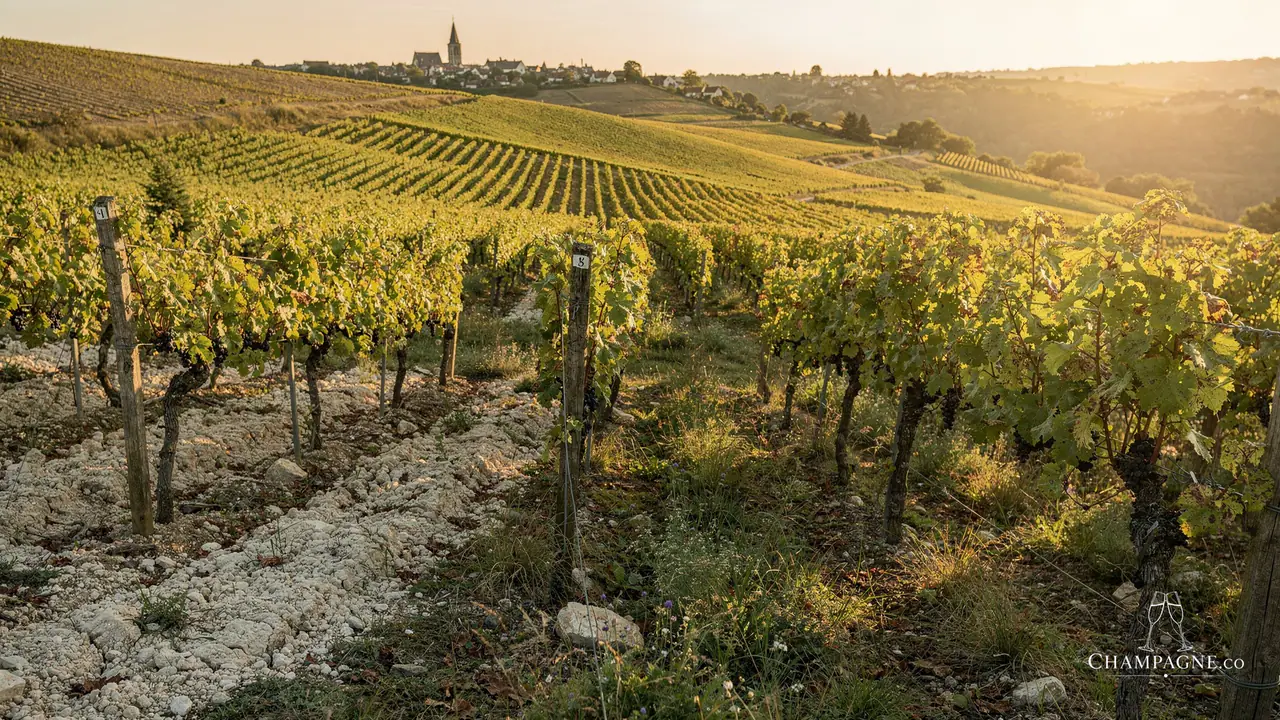
Georges Rémy is a Bouzy-based grower whose vineyard extends across Bouzy, Tauxières, Ambonnay and Louvois on the Montagne de Reims. The current organic-certification record covers 5.30 hectares, planted to 4.30 hectares of Pinot Noir and 1 hectare of Chardonnay.
The domaine committed to organic certification in 2015 and recorded its first certified-organic harvest in 2018. It produces both Champagne and Coteaux Champenois, with the two appellations kept distinct in the cellar and in the range.
Why this producer matters
Rémy combines a Pinot Noir-led Bouzy identity with vineyard holdings in several neighbouring Montagne de Reims villages. That makes the domaine broader than a single-village grower while still retaining a compact, clearly defined vineyard footprint.
The estate is also notable for using barrel élevage for both its Champagnes and still wines.
Vineyard and terroir
The certified vineyard totals 5.30 hectares across Bouzy, Tauxières, Ambonnay and Louvois. Pinot Noir dominates at 4.30 hectares, with 1 hectare of Chardonnay.
The Association des Champagnes Biologiques currently records the 5.30 hectares as 85% of the domaine’s total surface, with the certified area farmed organically. That percentage and certification status should be refreshed if the estate’s conversion progresses further.
Cellar and winemaking
Current certification records state that the Champagnes and Coteaux Champenois are vinified and aged in barrels on fine lees. For the Champagnes, the referenced élevage is around ten months; for the Coteaux Champenois, it is around 15 to 20 months.
Those figures describe the current estate practice but do not replace bottle-specific information. Vintage, parcel, dosage and exact élevage should remain tied to the individual release when available.
Champagne.co analysis
Georges Rémy is best understood through three linked features: a Pinot Noir-led Montagne de Reims vineyard, organic farming, and barrel élevage across both sparkling and still wines. The combination gives the domaine a coherent agricultural and cellar identity without requiring a large or highly standardised range.
Its holdings in Bouzy, Tauxières, Ambonnay and Louvois also make origin important. The useful comparison is not simply between “entry” and “prestige” wines, but between villages, parcels, vintages and appellations.
Buying guidance
Buy Georges Rémy by exact release. Check whether the bottle is Champagne or Coteaux Champenois first, then verify village or parcel, vintage and technical information.
For buyers interested primarily in the farming approach, the current certified record is clear: 5.30 hectares are certified organic, strongly weighted toward Pinot Noir, with the first certified harvest recorded in 2018.
Loading current Champagne range…
Spotted something wrong? Report a correction
Every report goes to a human review queue. Nothing on this page changes automatically.