Georges Vesselle
Domaine Georges Vesselle is a family producer based in Bouzy, one of the Grand Cru villages on the Montagne de Reims. The estate’s current site records 18 hectares of vines around the village and HVE level 3 certification.
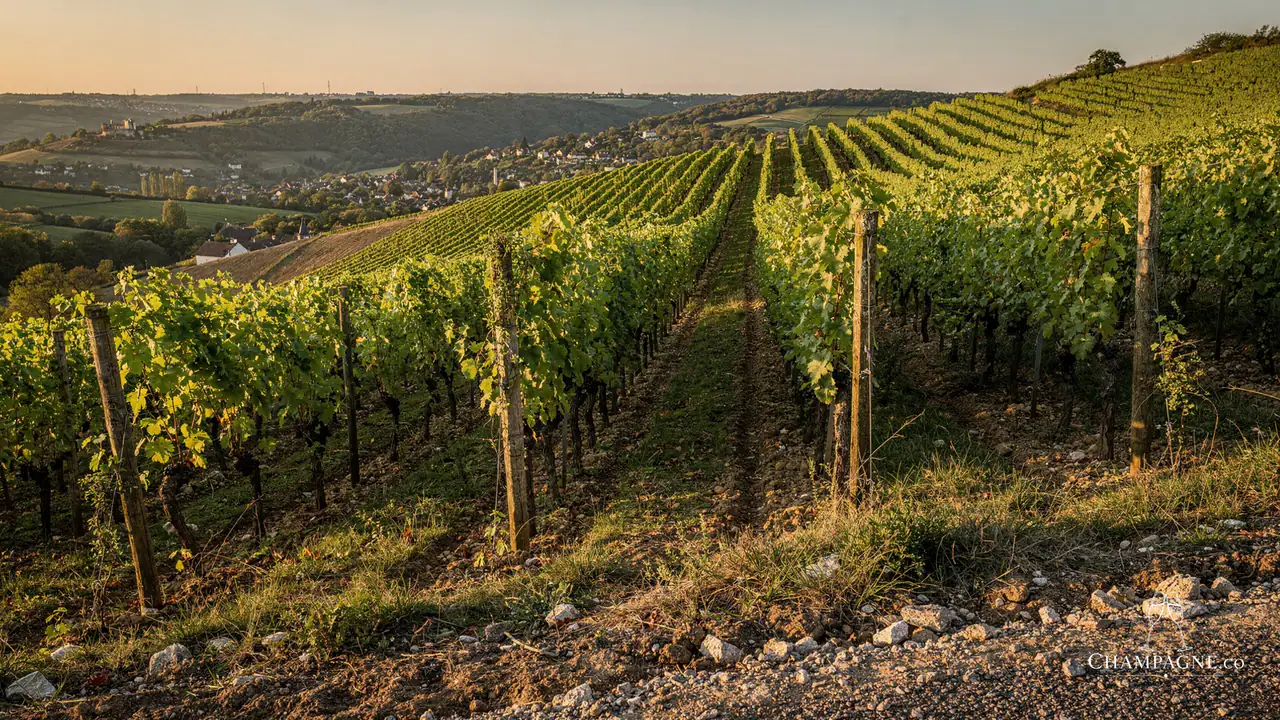
Editorial profile
Domaine Georges Vesselle is a family producer based in Bouzy, one of the Grand Cru villages on the Montagne de Reims. The estate’s current site records 18 hectares of vines around the village and HVE level 3 certification.
Pinot Noir is central to the domaine’s identity, while Chardonnay provides the principal counterpoint in its Champagne range. Georges Vesselle also maintains an important Bouzy Rouge programme under the Coteaux Champenois appellation, so the estate is best understood as a producer of both sparkling Champagne and still red wine.
Why this producer matters
The domaine combines a substantial Bouzy vineyard with a long family history and an unusually visible commitment to the village’s still-red tradition. Its range therefore shows two sides of the same terroir: Grand Cru Champagne and Coteaux Champenois Bouzy Rouge.
That dual identity is particularly useful for understanding Bouzy, where Pinot Noir can be expressed both through sparkling blends and as a still red wine.
Vineyard and terroir
The current vineyard covers 18 hectares distributed around Bouzy on mid-slope sites. The estate presents the whole holding as Grand Cru and records HVE level 3 certification.
Pinot Noir is the dominant grape, reflecting the traditional strength of Bouzy, while Chardonnay is used in several Champagne bottlings. Exact proportions vary by cuvée and should remain tied to the current release.
Cellar and winemaking
The range includes blended Champagnes, varietal expressions, vintage releases and Coteaux Champenois. Because those wines are technically distinct, no single blend, dosage or ageing formula should be applied across the portfolio.
The still Bouzy Rouge programme is especially release-specific. Current producer material includes both non-vintage and vintage examples, with separate ageing regimes depending on the wine.
Champagne.co analysis
Georges Vesselle is most revealing when Champagne and Bouzy Rouge are considered together. The same village and dominant grape sit behind both, but sparkling and still-wine production show different dimensions of Bouzy Pinot Noir.
The estate’s 18-hectare scale also gives it more breadth than many small grower domaines while keeping the geographical focus tightly concentrated around one Grand Cru village.
Buying guidance
Start with Brut Grand Cru for the broadest view of the estate. Blanc de Noirs is the more direct Pinot Noir route, while Blanc de Blancs provides a useful stylistic comparison within the same domaine.
For the still-wine side, choose Bouzy Rouge and keep it distinct from Champagne. Check the exact current release for vintage, blend, dosage and ageing, particularly among named or vintage bottlings.
Loading current Champagne range…
Spotted something wrong? Report a correction
Every report goes to a human review queue. Nothing on this page changes automatically.