G.H. Mumm
G.H. Mumm is a Reims Champagne house established in 1827. Its current vineyard estate covers approximately 218 hectares, including about 160 hectares in Grand Cru villages, giving the house an unusually substantial owned-vineyard base for a major maison.
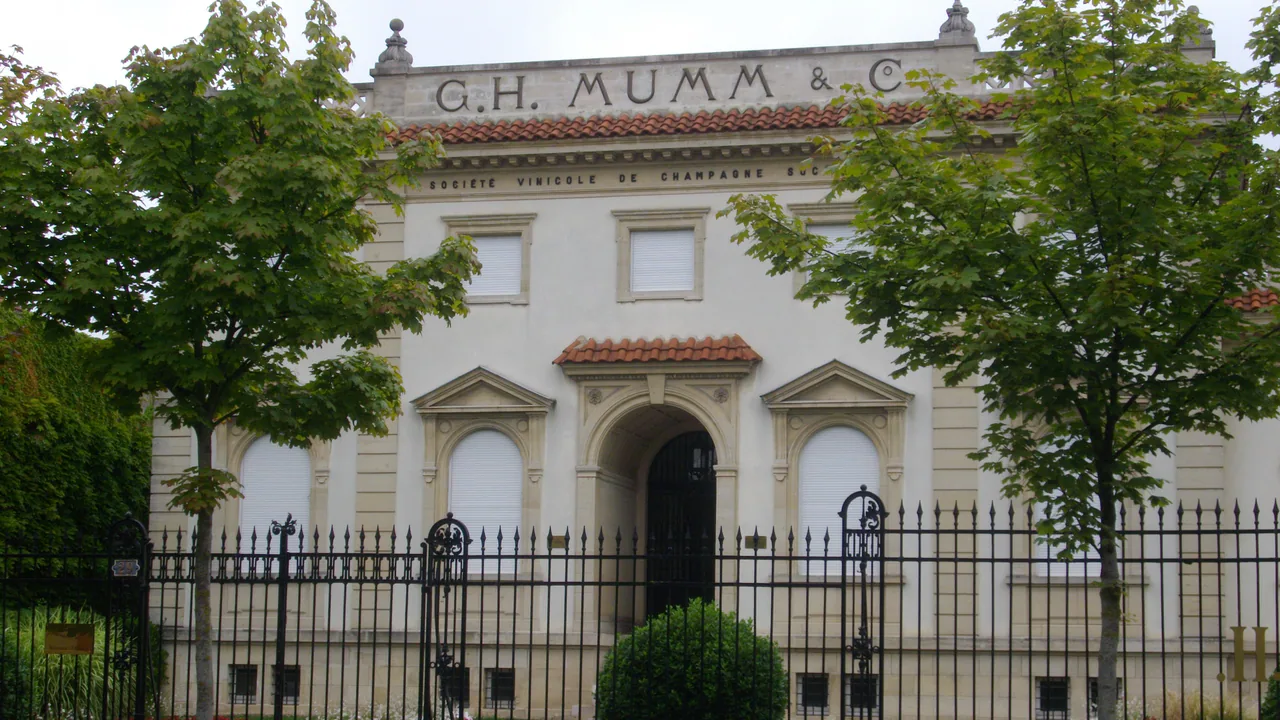
G.H. Mumm — Champagne producer profile image.
Editorial profile
G.H. Mumm is a Reims Champagne house established in 1827. Its current vineyard estate covers approximately 218 hectares, including about 160 hectares in Grand Cru villages, giving the house an unusually substantial owned-vineyard base for a major maison.
Pinot Noir is central to Mumm’s current vineyard identity: the house reports that roughly 78% of its estate is planted to Pinot Noir. Chardonnay holdings include important Grand Cru sites at Cramant and Avize, while the wider estate also reaches into the Vallée de la Marne.
Why this producer matters
Mumm combines the scale and distribution of a historic international house with a large estate vineyard. That matters because the producer is not dependent solely on external supply: its own vines contribute directly to the style and include holdings in eight Grand Cru villages—Aÿ, Bouzy, Ambonnay, Verzy, Verzenay, Mailly-Champagne, Avize and Cramant.
The house also has a clearly defined modern winemaking leadership. Yann Munier became cellar master in April 2024, taking responsibility for the continuity of Mumm’s style across harvest, fermentation and blending.
Vineyard and terroir
The current estate is approximately 218 hectares, of which around 160 hectares are classified Grand Cru. Pinot Noir dominates, particularly on the Montagne de Reims, while Chardonnay is important in Côte des Blancs villages such as Cramant and Avize.
The estate vineyards supply part of Mumm’s requirements, with the remainder coming from independent growers. This combination gives the cellar team access to both a significant family of owned crus and a broader external sourcing network.
Cellar and winemaking
Yann Munier has served as cellar master since April 2024. The house describes blending as the central act in maintaining its style, combining wines from different grape varieties and crus while preserving the character it associates particularly with Pinot Noir.
Because the range includes non-vintage, rosé, demi-sec, vintage and RSRV wines, technical details such as blend, dosage and ageing vary materially by cuvée.
Champagne.co analysis
Mumm is easiest to understand when its famous red sash is set aside and the vineyard is considered first. An estate of roughly 218 hectares, strongly weighted toward Pinot Noir and including 160 hectares of Grand Cru vines, gives the house a substantial agricultural foundation beneath its global brand identity.
The range then works at two scales. Cordon Rouge and Grand Cordon show the blending-led house style, while RSRV narrows the focus toward grape variety, cru and more selective releases.
Buying guidance
Cordon Rouge is the logical starting point for the classic Mumm profile. Grand Cordon is the next comparison within the regular house range, while the rosé and Demi-Sec offer clear stylistic alternatives.
For buyers interested in origin and grape variety rather than the broad house blend, the RSRV collection is the more revealing part of the range. Check the exact current vintage and technical specification when buying RSRV or vintage bottles, since those details are release-specific.
Loading current Champagne range…
Spotted something wrong? Report a correction
Every report goes to a human review queue. Nothing on this page changes automatically.