Gounel-Lassalle
Champagne Gounel-Lassalle is a grower-producer based in Chigny-les-Roses Premier Cru on the Montagne de Reims. Arnaud and Sophie Gounel took over the family exploitation in 2002, with the long-term aim of moving away from cooperative vinification and…
Editorial profile
Champagne Gounel-Lassalle is a grower-producer based in Chigny-les-Roses Premier Cru on the Montagne de Reims. Arnaud and Sophie Gounel took over the family exploitation in 2002, with the long-term aim of moving away from cooperative vinification and bringing the work fully back to the domaine. The producer identifies 2018 as the first harvest vinified entirely at home under that independent approach.
The family story reaches further back: the domaine traces its vineyard roots to 1870 in Ludes, with later generations expanding the holding and commercial activity before Arnaud and Sophie shifted the business toward estate vinification and a more parcel-led identity.
Why this producer matters
Gounel-Lassalle is interesting because its recent development is a story of increasing control rather than a change of terroir. The family had long farmed vines around Chigny-les-Roses and neighbouring villages, but the move to full estate vinification gave Arnaud Gounel more freedom to separate parcels, choose vessels and build wines around specific vineyard identities.
The producer's current presentation is unusually detailed about individual lieux-dits, exposures, plantings and grape varieties. That makes the range a useful example of how a Premier Cru grower can move between blended cuvées and more narrowly defined parcel wines without treating every vineyard as an automatic standalone bottling.
Vineyards and terroir
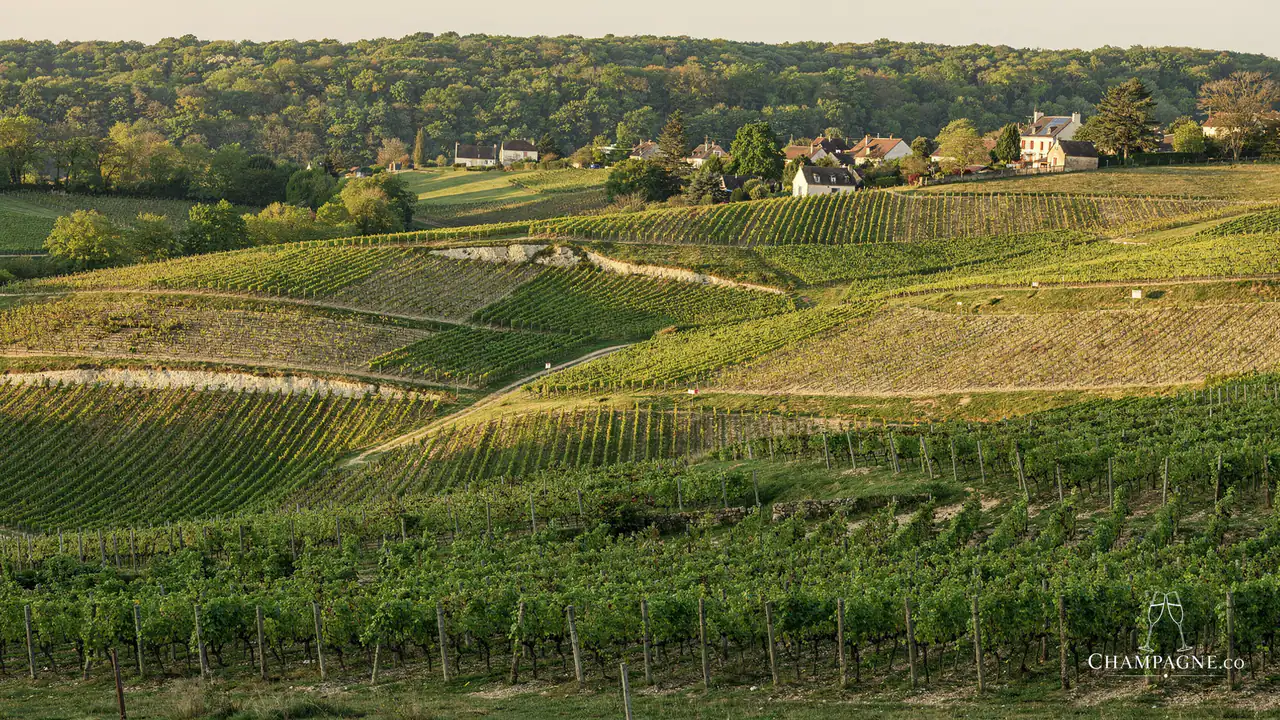
The estate's parcels are spread across Chigny-les-Roses, Ludes, Rilly-la-Montagne and other villages including Barzy-sur-Marne. Current producer material identifies numerous Premier Cru sites around Chigny, including Dessus la Ville, Les Amis les Champs, La Maladrerie, Les Agneaux, Les Grandes Crières, Les Champs Goulats, Les Ruelles, Les Noues, Le Haut Belai and others.
The vineyard mix includes Meunier, Pinot Noir and Chardonnay, with exposures varying from south-east/north-west to east-west and north-south. The producer says the vines have been grassed since 2007 and managed without insecticide, and that the estate holds HVE and Viticulture Durable en Champagne certification while pursuing conversion toward organic viticulture.
Winemaking and cellar approach
Gounel-Lassalle's current range is built in the domaine's own tanks and barrels. The producer describes a deliberately low-dosage philosophy and states that its Champagnes are made without dosage. Individual technical sheets also show that vessel choice and malolactic-fermentation decisions can vary by cuvée.
For example, the documented Dessus la Ville release is a 100% Meunier parcel wine from Chigny-les-Roses, vinified in foudre and barrels with malolactic fermentation blocked. Its vintage, tirage date, production volume and other technical details are specific to that release and should not be treated as permanent specifications for future bottlings.
Champagne.co analysis
Gounel-Lassalle is best understood as a domaine in the middle of a long transition from family farming through cooperative dependence to full estate expression. The important date is not the founding of the family vineyard alone, but 2018, when the producer says the harvest and vinification finally came fully under its own roof.
That helps explain the present range. Blended wines express the breadth of the holding, while parcel bottlings such as Dessus la Ville show what happens when one site and one grape are isolated. The result is a producer whose identity comes from the relationship between many small Premier Cru parcels rather than from a single flagship vineyard.
Buying guidance
Start with one of the domaine's broader assemblage wines if you want the clearest view of the overall Gounel-Lassalle vineyard base. Move to Dessus la Ville or another named parcel bottling if your interest is in a more site-specific expression.
For any parcel wine, check the exact vintage or base year and current technical sheet before comparing bottles, because vessel use, malolactic treatment, production volume and other details are release-bound. Readers interested in the estate's non-Champagne work can also look for Lounge N°1 Ratafia Champenois as a separate expression of the same grower's cellar.
Loading current Champagne range…
Spotted something wrong? Report a correction
Every report goes to a human review queue. Nothing on this page changes automatically.