Grongnet
Champagne Grongnet is a family estate in Étoges, south-west of Épernay. Club Trésors de Champagne dates the domaine to 1885, when Edmond Grongnet bought vines and installed a press in the village, and records five generations of family continuity.
Editorial profile
Champagne Grongnet is a family estate in Étoges, south-west of Épernay. Club Trésors de Champagne dates the domaine to 1885, when Edmond Grongnet bought vines and installed a press in the village, and records five generations of family continuity.
The Club currently lists 18 hectares planted to approximately 60% Chardonnay, 20% Pinot Noir and 20% Meunier. The live producer range is divided between a classic Grongnet collection and a separate Carpe Diem line, with Spécial Club providing the estate's vintage prestige expression.
Why this producer matters
Grongnet is notable for a Chardonnay-led vineyard in a part of Champagne where the three principal varieties coexist closely. The estate's current planting mix gives Chardonnay the largest share without reducing the range to Blanc de Blancs alone: Pinot Noir and Meunier remain important in blended wines and the Blanc de Noirs.
Membership of Club Trésors de Champagne is also meaningful because it allows Grongnet to produce Spécial Club, a category made only by member growers and subject to the Club's collective selection process. That gives the range a clear distinction between everyday estate wines, the Carpe Diem series and vintage Spécial Club releases.
Vineyards and terroir
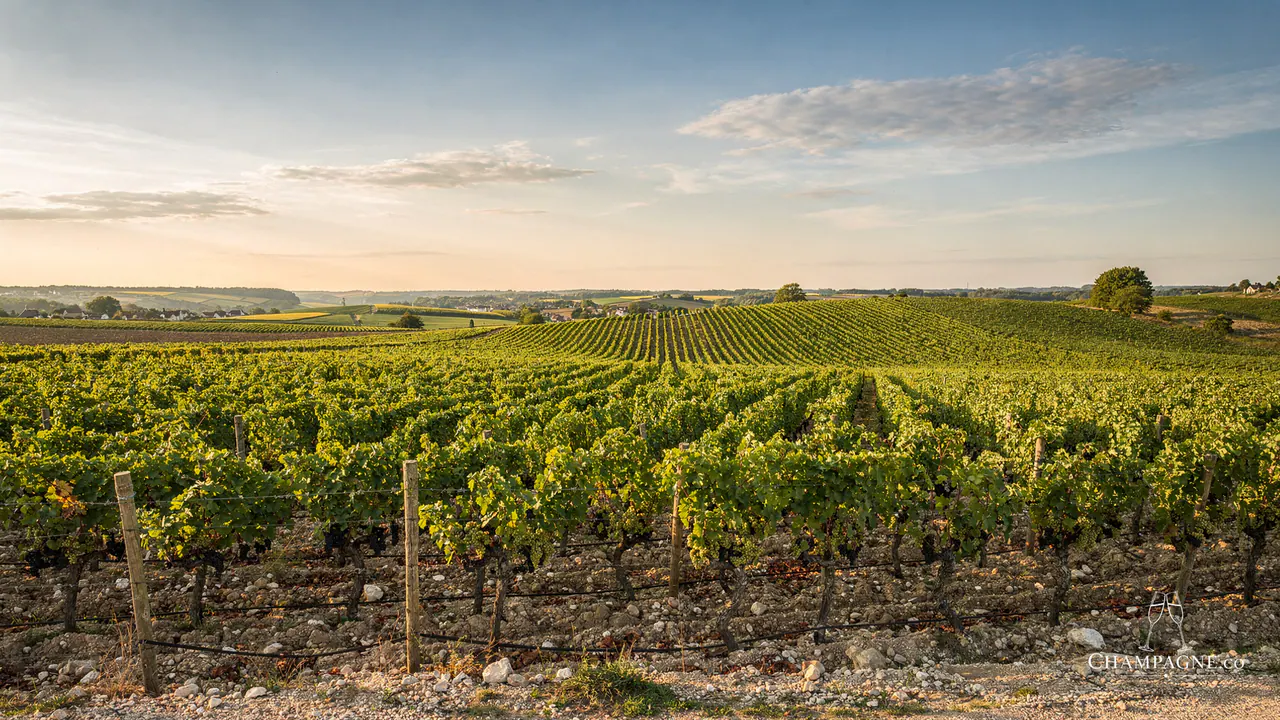
The domaine's vineyards are centred on Étoges. Club Trésors records 18 hectares and a 60/20/20 Chardonnay, Pinot Noir and Meunier split. The village lies in the southern part of the historic Côte des Blancs extension toward the Petit Morin area, so Grongnet's Chardonnay emphasis is geographically coherent while still allowing meaningful contributions from the two black grapes.
Winemaking and cellar approach
Current Club technical records show that Grongnet varies its cellar choices by wine rather than following one universal recipe. Blanc de Blancs and Blanc de Noirs are documented in stainless steel, while the current Club listing for Carpe Diem uses oak foudre and blocks malolactic fermentation. A listed Spécial Club release combines stainless steel and oak.
These are cuvée- and release-specific details.
Champagne.co analysis
Grongnet's range is easiest to understand as a set of contrasts. The vineyard is Chardonnay-led, yet the producer gives Pinot Noir and Meunier enough space to create a genuine Blanc de Noirs and several three-grape blends. The result is broader than a simple Chardonnay specialist.
Carpe Diem adds another layer by changing blend and cellar choices, while Spécial Club functions as a separately selected vintage wine. That makes grape composition and exact release more useful navigation tools than any borrowed quality hierarchy.
Buying guidance
Start with Tradition for the broadest view of the estate. Choose Blanc de Blancs to focus on the domaine's Chardonnay majority, or Blanc de Noirs for the equal Pinot Noir-Meunier counterpoint.
The Carpe Diem wines are better choices for readers interested in different blending or cellar approaches, while Spécial Club should always be bought by exact vintage. Check the current bottle or technical record for dosage, vessel and blend because those details are release-specific.
Loading current Champagne range…
Spotted something wrong? Report a correction
Every report goes to a human review queue. Nothing on this page changes automatically.