Guiborat Fils
Champagne Guiborat is a small grower based in Cramant in the Côte des Blancs, led by Richard and Karine Fouquet. Current Passion Chardonnay material lists the couple at the domaine in Cramant and presents Richard's approach as strongly focused on…
Editorial profile
Champagne Guiborat is a small grower based in Cramant in the Côte des Blancs, led by Richard and Karine Fouquet. Current Passion Chardonnay material lists the couple at the domaine in Cramant and presents Richard's approach as strongly focused on understanding chalk soils, exposure and the relationship between Chardonnay and place.
Independent current producer guides consistently place the family's vineyards in Cramant, Chouilly and Oiry, with an additional Meunier holding in Mardeuil.
Why this producer matters
Guiborat is notable for the contrast between a tightly focused Côte des Blancs Chardonnay identity and one deliberate departure from it: Prohibition, a Meunier cuvée from Mardeuil. That contrast makes the domaine easier to understand than a simple 'Blanc de Blancs specialist' label would suggest.
The range is also highly release-sensitive. Téthys operates as a broader multi-parcel Chardonnay wine, while Prisme and De Caurés à Mont-Aigu move toward more selective site expression. Exact base year, vintage, dosage and ageing vary by bottling and are therefore more useful than generic style claims.
Vineyards and terroir
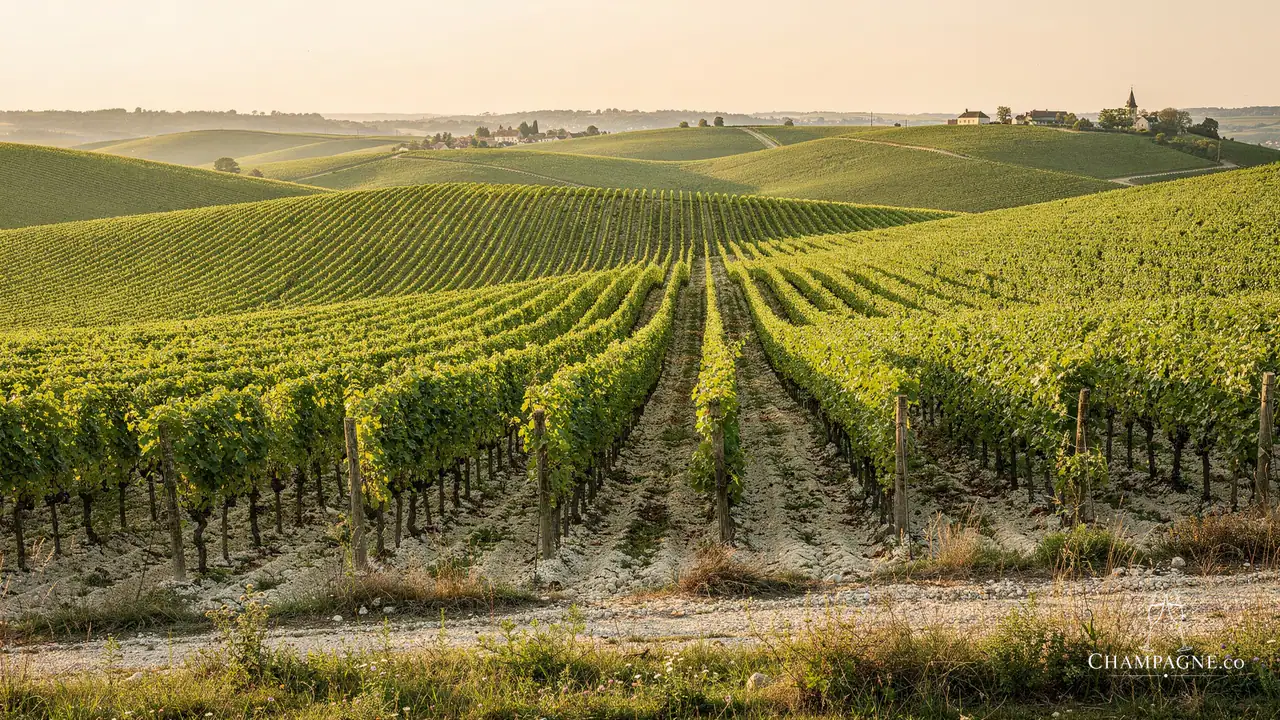
The core vineyard identity lies in the chalk of Cramant, Chouilly and Oiry, all Grand Cru villages of the Côte des Blancs. Richard Fouquet's own current statement emphasises geology, soil and exposure as the basis for his work with Chardonnay.
A separate Mardeuil holding supplies Meunier for Prohibition. Current specialist records identify old-vine parcels there, but those parcel ages and names should remain tied to the documented release rather than treated as permanent specifications for every future bottling.
Winemaking and cellar approach
Available current technical records point to a restrained cellar approach built around preserving vineyard differences rather than imposing one recipe on the range. Individual parcels may be vinified separately, dosage is generally low, and malolactic fermentation can be blocked on particular releases.
Those details are not universal rules. For example, a documented Prohibition release was made without malolactic fermentation and with zero dosage, while Téthys and Prisme have appeared in multiple editions with their own technical data.
Champagne.co analysis
Guiborat's identity is unusually clear because the exception helps define the rule. Most of the domaine's Champagne is about Chardonnay on Côte des Blancs chalk, but Prohibition shows that Richard and Karine Fouquet are willing to step outside that framework when a different parcel warrants its own treatment.
Within the Chardonnay wines, the useful progression is from broader blending toward greater site specificity. That makes vineyard origin and release information central to understanding the range, while generic tasting hierarchies add little.
Buying guidance
Start with Téthys for the broadest introduction to Guiborat's Côte des Blancs Chardonnay. Move to Prisme or De Caurés à Mont-Aigu when a more selective vineyard expression is the priority.
Choose Prohibition specifically to explore the domaine's Meunier side rather than as a substitute for its Chardonnay wines. For every cuvée, retain the exact vintage or edition when comparing bottles because dosage, ageing and other technical details can change between releases.
Loading current Champagne range…
Spotted something wrong? Report a correction
Every report goes to a human review queue. Nothing on this page changes automatically.