Guillaume Sergent
Guillaume Sergent is a small Champagne grower based in Vrigny Premier Cru on the Montagne de Reims. Current records confirm the producer in Vrigny, with a very small holding split between Vrigny and neighbouring Coulommes-la-Montagne.
Editorial profile
Guillaume Sergent is a small Champagne grower based in Vrigny Premier Cru on the Montagne de Reims. Current records confirm the producer in Vrigny, with a very small holding split between Vrigny and neighbouring Coulommes-la-Montagne.
Sergent trained in oenology and established production under his own name after taking responsibility for part of the family vineyard in the late 2000s.
Why this producer matters
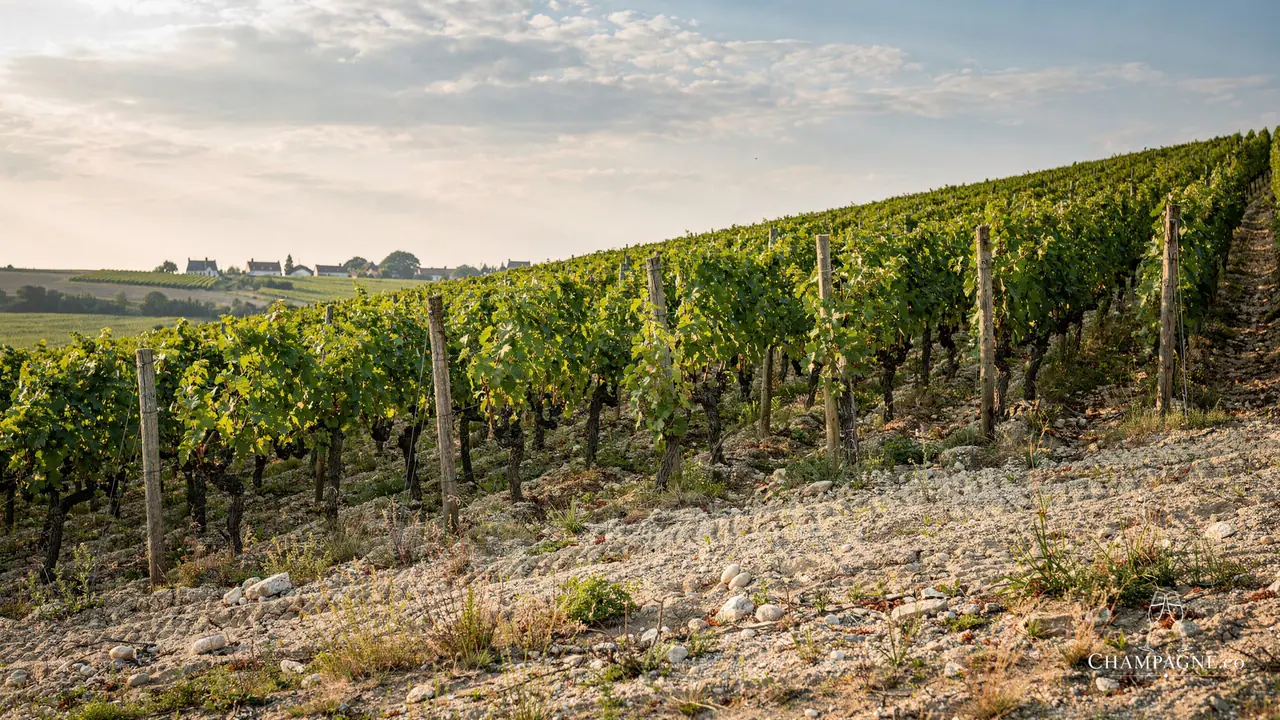
The domaine is notable for the unusual geological emphasis of its Vrigny and Coulommes vineyards. The current profile describes notably sandy soils — sand and clay-limestone over chalk bedrock — rather than the chalk-dominant shorthand often applied to Champagne as a whole.
The range also gives the three principal grapes distinct roles. Chardonnay appears in Prés De Dieu, while Le Chemin des Chappes combines Pinot Noir and Meunier. Other small-production wines extend the site-focused approach, making exact vineyard and release identity especially important.
Vineyards and terroir
Sergent's vineyard base is divided among small parcels in Vrigny and Coulommes-la-Montagne, on gentle slopes at roughly 80–120 metres of altitude. The soils are notably sandy on the lower slopes, over chalk bedrock, and the viticulture is currently recorded as certified organic through Ecocert.
These parcel descriptions are useful because they explain why Sergent's wines should not be reduced to a generic Montagne de Reims profile. Exact parcel age, exposure and soil detail should remain tied to the documented wine and release.
Champagne.co analysis
Guillaume Sergent's scale is central to understanding the domaine. This is not a producer whose identity comes from a large stable catalogue; it comes from a handful of small parcels and wines that can change meaningfully between releases.
The sandy soils around Vrigny and Coulommes provide the strongest recurring thread. Chardonnay and the two black grapes are then used to show different aspects of that vineyard base. For readers, site and release are therefore more informative than broad stylistic labels.
Buying guidance
Choose Prés De Dieu if the main interest is Chardonnay and the domaine's sandy-soil vineyard identity. Le Chemin des Chappes is the more direct route into Pinot Noir and Meunier.
Check the exact vintage or base year, dosage and technical record when buying, especially for less regularly seen bottlings such as Bossa Nova or Pataphysique.
Loading current Champagne range…
Spotted something wrong? Report a correction
Every report goes to a human review queue. Nothing on this page changes automatically.