H. Billiot Fils
H. Billiot & Fils is a family grower based in Ambonnay Grand Cru on the Montagne de Reims. The family traces its vineyard activity to 1896, with Champagne bottled under the Billiot name from 1937 and the H. Billiot & Fils identity established in 1960 when…
Editorial profile
H. Billiot & Fils is a family grower based in Ambonnay Grand Cru on the Montagne de Reims. The family traces its vineyard activity to 1896, with Champagne bottled under the Billiot name from 1937 and the H. Billiot & Fils identity established in 1960 when Henri Billiot created cellars at 1 place de la Fontaine in Ambonnay.
The current estate is led by Laetitia Billiot, representing the fifth generation. Its own site records 4.70 hectares across 18 parcels, all in Ambonnay, while Comité Champagne rounds the holding to five hectares. The producer says the vineyard is planted approximately 75% Pinot Noir and 25% Chardonnay, and all of its Champagne cuvées come from Ambonnay fruit.
Why this producer matters
Few growers have such a concentrated village identity. H. Billiot & Fils works entirely within Ambonnay, using the two principal varieties associated with the village to build a range that runs from non-vintage blends to vintage and prestige wines.
The cellar approach is also distinctive in current first-party material: the house states that its wines are made without malolactic fermentation and without filtration. That gives the range a clear technical thread, while individual wines differ in reserve strategy, oak use and ageing.
Vineyards and terroir
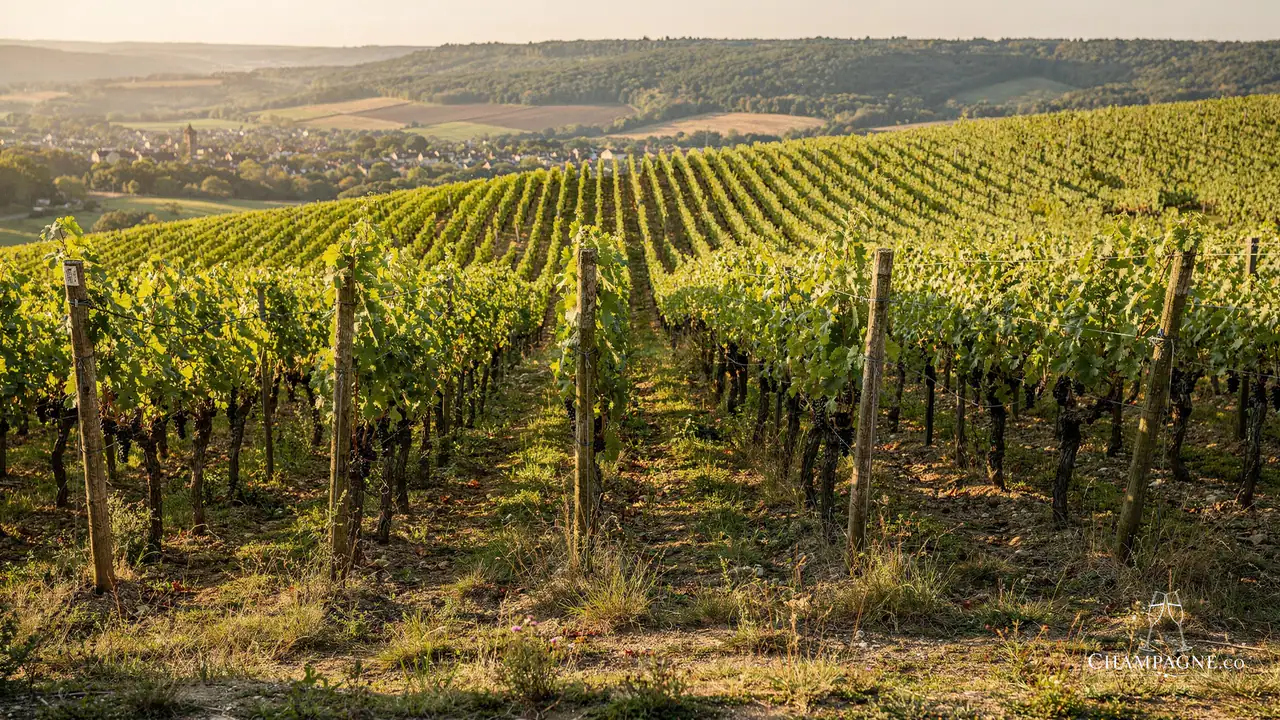
The estate's 18 parcels are all in Ambonnay, on the south-facing slopes of the Montagne de Reims. Pinot Noir accounts for roughly three quarters of the vineyard and Chardonnay the remaining quarter. The producer therefore has no need to build its identity from multiple Champagne subregions: every cuvée is presented as Grand Cru and pure Ambonnay.
Current first-party material describes reasoned vineyard management and an emphasis on maintaining traditional methods while reducing environmental impact.
Winemaking and cellar approach
The house says its wines are made traditionally without malolactic fermentation or filtration. Beyond that shared framework, each cuvée has its own structure. The current Tradition page, for example, documents a three-year blend with 75% Pinot Noir and 25% Chardonnay and a minimum two years of bottle ageing; those exact figures belong to that current release description.
The rosé uses estate red wine that can spend 18 to 24 months in barrel depending on the year. Cuvée Julie is raised in barrel, while Cuvée Laetitia is built as a perpetual blend. These are cuvée-specific cellar choices rather than a claim that every Billiot wine sees oak or perpetual reserve.
Champagne.co analysis
H. Billiot & Fils is defined by geographic concentration. The entire estate sits in Ambonnay, so differences within the range come from blending, reserve strategy, vintage and cellar treatment rather than from moving between villages or Champagne subregions.
That makes the portfolio unusually coherent. Tradition establishes the estate blend, Rosé adds a red-wine component, Millésimé isolates a year, Laetitia brings in a perpetual reserve, Julie foregrounds barrel élevage and Essence strips the composition back to Pinot Noir alone.
Buying guidance
Start with Tradition for the clearest baseline of the Billiot Ambonnay style. Choose Rosé for the estate's red-wine component, or Millésimé when vintage character is the main interest.
For the prestige wines, Laetitia is the best route into the perpetual-reserve approach, Julie into barrel élevage, and Essence de Billiot into a tiny-production 100% Pinot Noir expression. Keep all exact blend, dosage and reserve-span figures tied to the release being purchased.
Loading current Champagne range…
Spotted something wrong? Report a correction
Every report goes to a human review queue. Nothing on this page changes automatically.