Henriot
Henriot is a Reims Champagne house founded in 1808 by Apolline Henriot. The current Union des Maisons de Champagne record places the house within TEVC, gives a 30-hectare vineyard estate, and identifies Guillaume Deglise as managing director and Alice…
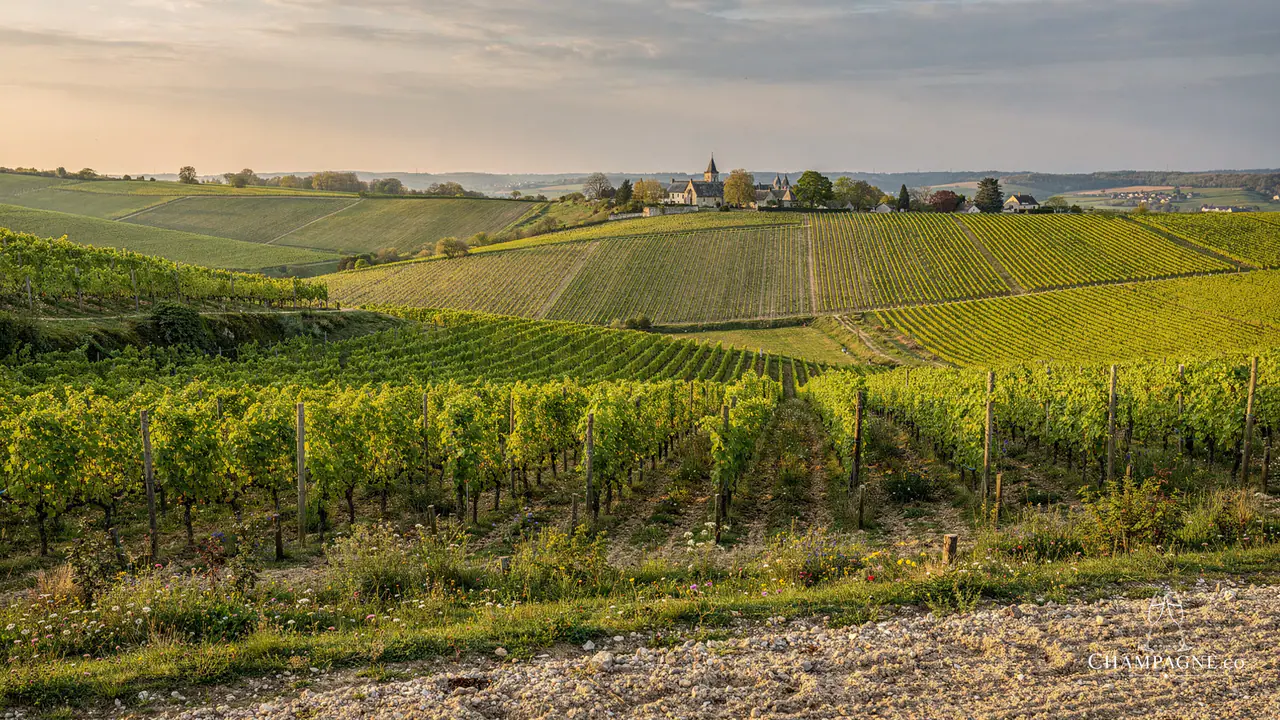
Editorial profile
Henriot is a Reims Champagne house founded in 1808 by Apolline Henriot. The current Union des Maisons de Champagne record places the house within TEVC, gives a 30-hectare vineyard estate, and identifies Guillaume Deglise as managing director and Alice Tétienne as deputy managing director, cellar master and oenologist.
Blending across crus and years remains central to the house's identity. Brut Souverain and Blanc Souverain use substantial proportions of reserve wine, while vintage, terroir-specific and perpetual-reserve bottlings provide progressively narrower readings of the vineyard.
Why this producer matters
Henriot's significance lies in the way it treats reserve wine as a long-term structural tool rather than simply as a way to smooth vintage variation. The house links that philosophy back to its foundation, while current wines such as Cuve 38 make the idea unusually explicit.
The portfolio also spans broad multi-cru blends, vintage wines, named terroir bottlings and a historic-library programme. This lets readers follow how the house moves from continuity across years toward increasingly specific place and vintage expression.
Vineyard and sourcing identity
Current UMC data records a 30-hectare vineyard estate, but Henriot's production also relies on long-standing grower relationships. The house's own Alliance Terroirs programme is focused on understanding individual terroirs and adapting viticultural practices accordingly.
Chardonnay and Pinot Noir are the two dominant varieties in the portfolio, with Meunier playing a smaller role in the core Brut. The Côte des Blancs is especially important for the house's Chardonnay wines, while Montagne de Reims Grand Crus feature prominently in prestige and library bottlings.
Winemaking and cellar approach
Reserve wines are fundamental to the current house style. Brut Souverain currently combines wines from 29 crus with roughly 30–50% reserve wine, while Blanc Souverain uses the same broad reserve philosophy across 12 Chardonnay crus. Those percentages are tied to the current technical sheets and should not be treated as immutable.
Cuve 38 is a separate perpetual-reserve project begun in 1990, dedicated to Chardonnay from four Côte des Blancs Grand Crus. Each edition evolves as new harvest wine is added, so its harvest span and dosage are inherently edition-specific.
Champagne.co analysis
Henriot is best understood through time. Brut Souverain uses multiple crus and reserve years to maintain continuity; Blanc Souverain applies the same principle specifically to Chardonnay; Cuve 38 turns perpetual reserve into the subject of the wine itself; and Mémoires looks backward through long-cellared vintages.
That gives the portfolio a clear internal logic. The range moves from multi-year house blending toward vintage, terroir and archival specificity rather than simply from inexpensive to expensive.
Buying guidance
Start with Brut Souverain for the broad house signature and Blanc Souverain for the Chardonnay side of the same blending philosophy. Choose Cuve 38 if the perpetual-reserve concept is the main interest.
For vintage and prestige wines, keep the exact year and cuvée name attached to the bottle. Hemera, Cuvée des Enchanteleurs, L'Inattendue and Mémoires should be approached release by release because their vineyard, vintage and technical identities are not interchangeable.
Loading current Champagne range…
Spotted something wrong? Report a correction
Every report goes to a human review queue. Nothing on this page changes automatically.