Herbert & Co
Herbert & Co is a contemporary Champagne producer whose current first-party catalogue is built around a small group of named, often highly specific releases rather than a conventional house ladder. The live range currently includes "1000%" Meunier, "1000%"…
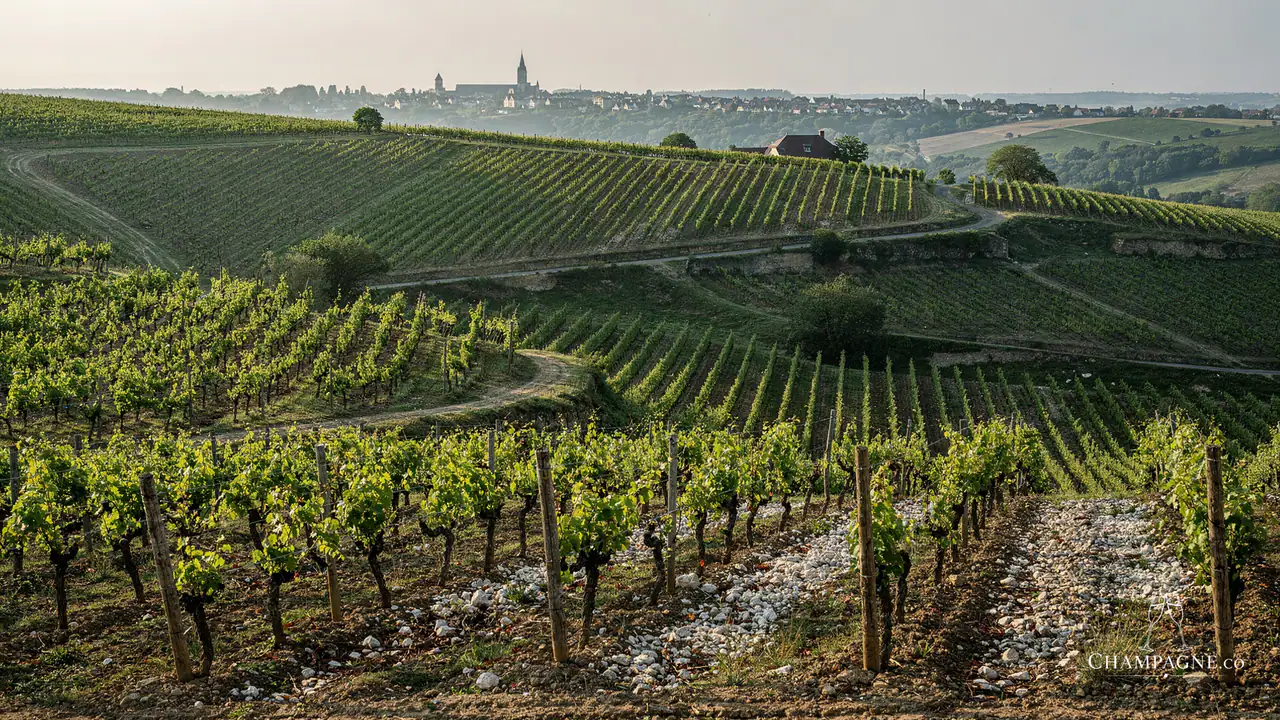
Editorial profile
Herbert & Co is a contemporary Champagne producer whose current first-party catalogue is built around a small group of named, often highly specific releases rather than a conventional house ladder. The live range currently includes "1000%" Meunier, "1000%" Pinot Noir, "1000%" Chardonnay, CUVE X, CUVE X 2.0, CUVE 4, ULTRABLUE and Ratafia Champenois.
The producer's current public material is strongest on individual wines rather than on a broad estate history or a definitive vineyard-area statement.
Why this producer matters
Herbert & Co is interesting for the way it separates grape variety, origin and cellar treatment into small-batch bottlings. The "1000%" series gives Meunier, Pinot Noir and Chardonnay their own identities, while CUVE X 2.0 shows a different combination of vintage Chardonnay, village origin and extended lees ageing.
That makes the range unusually dependent on release detail. Base year, grape, village sourcing, barrel duration, time on lees and dosage are not generic house specifications; they form part of the identity of the individual bottle.
Vineyard and sourcing identity
The current "1000%" Meunier and "1000%" Pinot Noir releases are documented from Rilly-la-Montagne, Ludes, Trois-Puits and Mailly, linking those wines to several Montagne de Reims villages rather than a single estate site. The producer's current CUVE X 2.0 is documented separately as Chardonnay from Verzenay and Mailly.
Those origins should not be projected onto the rest of the catalogue without an exact technical record. Herbert & Co's present public information supports a cuvée-by-cuvée sourcing model, not a single universal vineyard description.
Winemaking and cellar approach
Current first-party technical pages show meaningful variation between releases. The documented 2019-base "1000%" Meunier and Pinot Noir wines each spent nine months in 228-litre Burgundy barrels followed by three years on lees and were released as Extra Brut at 2.5 g/L. By contrast, the documented CUVE X 2.0 is a 2016 Chardonnay wine that spent nine months in 228-litre barrels and eight years on lees, with Extra Brut dosage of 2 g/L.
These details belong only to those exact releases. They demonstrate that barrel élevage and extended lees ageing are important tools in the current range, but they do not justify assigning the same regime to CUVE X, CUVE 4, ULTRABLUE or future editions.
Champagne.co analysis
Herbert & Co is best approached as a release-led producer. The current catalogue does not invite a single fixed house recipe; instead, individual wines foreground grape variety, selected villages and differing periods of barrel and lees ageing.
The strongest comparison is therefore between bottles with complete technical records. The 2019-base "1000%" Meunier and Pinot Noir provide a controlled varietal contrast from the same four villages, while CUVE X 2.0 changes both grape geography and maturation length. That is more informative than trying to impose a broad stylistic hierarchy on the whole range.
Buying guidance
For a direct grape comparison, look for the "1000%" series and keep the exact release details attached to each bottle. CUVE X 2.0 is the more useful choice when extended lees ageing and a specific Chardonnay vintage are the priority.
Several current catalogue wines are shown as sold out, so availability can be intermittent. Treat a sold-out listing as a stock condition, not proof that the cuvée has been discontinued, and verify the exact release before carrying technical specifications from one bottle to another. Keep Ratafia Champenois separate from the Champagne range when comparing or cataloguing bottles.
Loading current Champagne range…
Spotted something wrong? Report a correction
Every report goes to a human review queue. Nothing on this page changes automatically.