J. Dumangin Fils
Champagne Dumangin J. Fils is a fifth-generation family producer based in Chigny-les-Roses, on the Montagne de Reims. The current estate site identifies Gilles Dumangin as the winemaker and places the house firmly in Premier Cru Montagne de Reims…
Editorial profile
Champagne Dumangin J. Fils is a fifth-generation family producer based in Chigny-les-Roses, on the Montagne de Reims. The current estate site identifies Gilles Dumangin as the winemaker and places the house firmly in Premier Cru Montagne de Reims territory, with more than 130 years of family Champagne production behind the present range.
What makes Dumangin particularly useful editorially is the level of technical transparency in its current producer material.
Why this producer matters
Dumangin sits at the intersection of traditional family Champagne and a highly release-specific modern cellar programme. Its current range moves from multi-vintage blends with very high reserve-wine components to a perpetual-reserve cuvée, vintage rosé and long-aged vintage Champagne. The house also keeps parcel lots separate through vinification, giving the blending stage unusually detailed source material.
The estate's contemporary winemaking position is also clear: current producer pages state that there has been no malolactic fermentation for the post-2012 wines described, while older reserve material can pre-date that change. That makes Dumangin a good example of why Champagne technical facts must be bounded by release rather than turned into timeless house rules.
Vineyards and farming
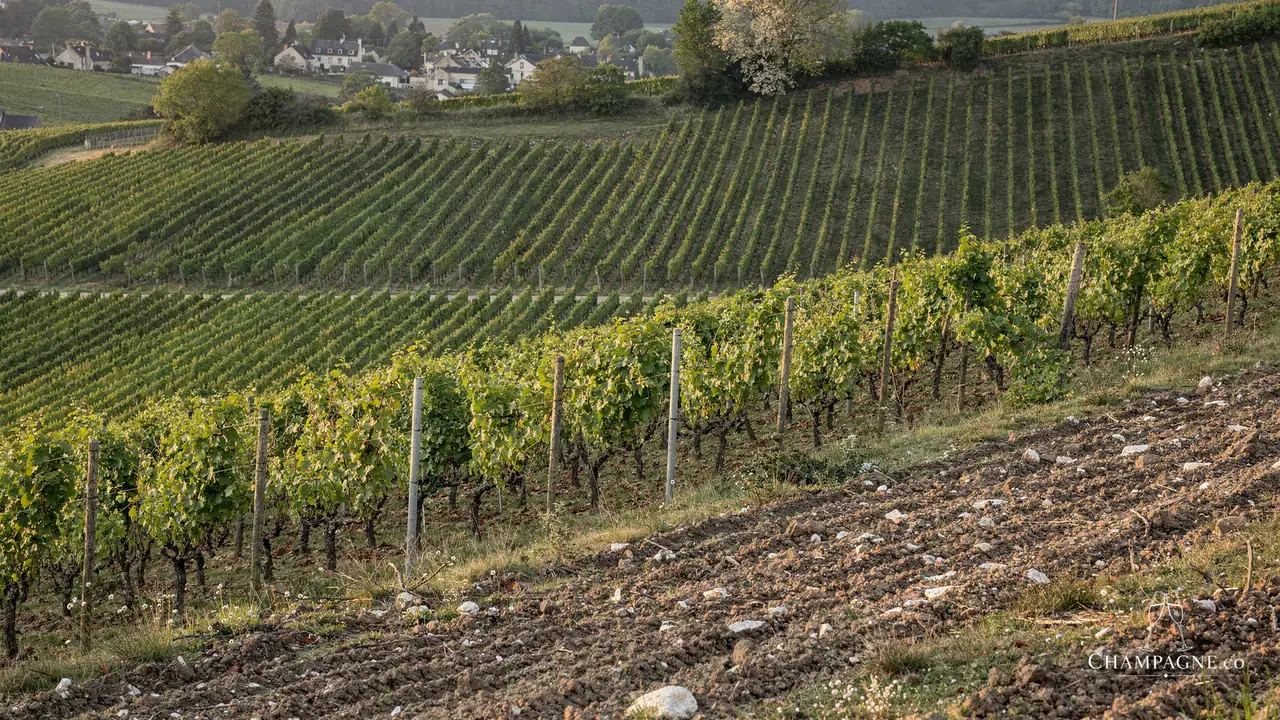
The producer's current Champagne collection is centred on Premier Cru terroirs of the Montagne de Reims, with Chigny-les-Roses as the home base and fruit drawn across several villages according to the cuvée. Current technical pages refer repeatedly to ploughed vineyards, clay-and-chalk soils and an absence of herbicide and pesticide use in the described parcels.
Those statements support a factual description of vineyard practice, but they do not by themselves establish a current organic-certification claim. The useful reader point is that Dumangin publishes its farming approach at cuvée level and links individual wines to specific soil proportions and village sources.
Cellar and winemaking
A consistent feature of the current producer documentation is separate vinification of parcels. The estate uses Coquard pressing and, for the principal multi-vintage wines, stainless-steel fermentation and ageing before blending. The house states that malolactic fermentation has not been used for wines from 2012 onward in the relevant contemporary programme.
Reserve wine is central. The current M.V La Cuvée release was blended in March 2022 with 79% reserve wines from 2001-2020 and 21% from the 2021 harvest. The current L'Extra-Brut 1er Cru technical page gives an even larger reserve component: 81% reserve wine from 2001-2020 and 19% from 2021. These percentages belong to the documented releases and should not be assumed for future bottlings.
The most distinctive reserve project is R.P62/20, which the producer describes as a perpetual reserve maintained from 1962 through 2020. For the documented release, 40% of the reserve was aged in barrel for a year before being recombined with the remaining 60% in stainless steel and bottled in June 2022.
Beyond Champagne
Dumangin also produces Ratafia Champenois and a series of whisky-related bottlings. These products are part of the wider business and winemaking identity, but they are not Champagne AOC and should remain clearly separated from the Champagne range in the catalogue.
Champagne.co analysis
Dumangin is best understood through its use of time as a blending component. The current multi-vintage wines use reserve percentages that are unusually high and explicitly documented, while R.P62 makes the perpetual reserve itself the centre of the wine. The vintage releases then reverse the logic by fixing the wine to one harvest and giving it extended bottle ageing.
That creates a coherent range without requiring stylistic claims borrowed from reviewers. The house asks two different Champagne questions: how much historical material can be carried forward through reserve blending, and how much individuality can be preserved when a single vintage is held for a long period before release? The technical documentation makes those questions unusually visible to the reader.
Buying guidance
For a first bottle, M.V La Cuvée is the clearest introduction to the house's multi-vintage and reserve-wine approach. L'Extra-Brut 1er Cru takes that same broad framework into a drier, Meunier-led documented blend.
Readers specifically interested in reserve-wine history should look to R.P62/20, where the perpetual reserve is the defining feature rather than a background component. For vintage Champagne, Le Rosé 2012 and Le Vintage 2010 illustrate two different long-aged routes within the current producer catalogue.
Because Dumangin publishes precise technical information, the exact release should always be checked. Reserve percentages, blend, dosage, bottling date and time on lees are not permanent properties of the cuvée name.
Editorial QA record
Outcome: REMEDIATED — PASS
Fresh research completed against current producer-controlled technical material. Release-specific reserve percentages, blends, vintages, bottling dates and ageing periods are explicitly bounded to the documented release. Farming statements are not converted into an unsupported organic-certification claim.
Loading current Champagne range…
Spotted something wrong? Report a correction
Every report goes to a human review queue. Nothing on this page changes automatically.