J.M. Goulard
Champagne J.M. Goulard is a family grower-producer in Prouilly, in the Massif de Saint-Thierry north-west of Reims. The producer's current website identifies Jean-Marie, Martine and Damien Goulard together, while Comité Champagne lists the domaine as a…
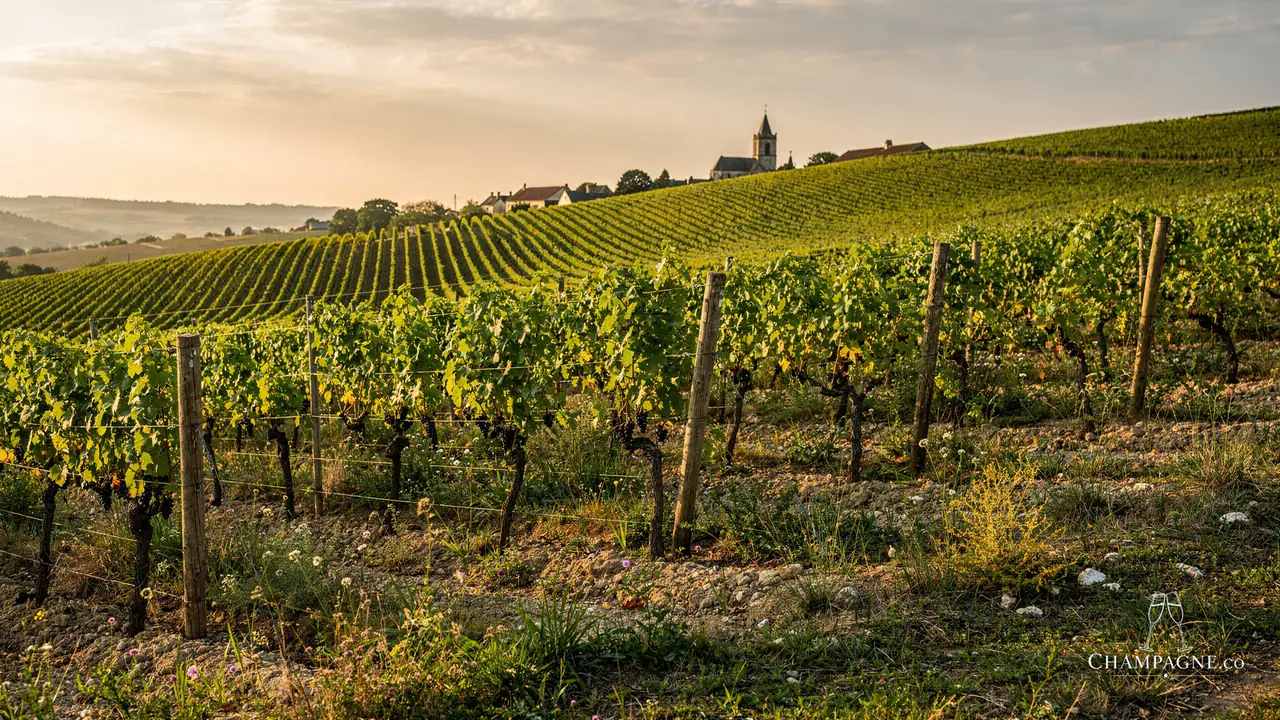
Editorial profile
Champagne J.M. Goulard is a family grower-producer in Prouilly, in the Massif de Saint-Thierry north-west of Reims. The producer's current website identifies Jean-Marie, Martine and Damien Goulard together, while Comité Champagne lists the domaine as a Vigneron Indépendant. Current organic-certification records identify Damien Goulard and document the entire certified vineyard surface at 7.5 hectares.
The estate is especially relevant for understanding a less familiar part of the northern Champagne vineyard. Its certified vineyard is dominated by Meunier and lies in the Massif de Saint-Thierry, where sandy soils form an important part of the local geological picture. Pinot Noir and Chardonnay complete the estate's three-grape palette.
Why this producer matters
J.M. Goulard combines family continuity with a clearly documented transition in farming. The Association des Champagnes Biologiques records the estate's commitment to organic certification from 2018 and its first certified-organic harvest in 2021. The same current certification record gives 100% of the estate's 7.5 hectares as certified organic and lists Meunier, Pinot Noir and Chardonnay among the certified varieties.
That matters because it gives the producer a strong factual identity beyond generic family-estate language. Goulard is a Prouilly grower working a fully certified organic vineyard in a Champagne subregion where Meunier and sandy soils are particularly relevant, while the cellar programme combines tanks and oak rather than relying on one vessel throughout.
Family and vineyard
Producer-linked current visitor material traces the modern family estate through Paul Goulard, then Jean-Marie and Martine, and now Damien Goulard. Jean-Marie and Martine established their own vineyard operation at the end of the 1970s, and their three sons grew up around the estate. Damien now plays the leading role in the vineyard and winemaking, with family participation continuing around harvest and blending.
The current organic-certification record places the vineyard at 7.5 hectares and describes it as a family domaine in Prouilly in the Massif de Saint-Thierry. It also identifies a vineyard on sandy soils with Meunier as the dominant variety. Producer-linked material adds a broader local soil picture of sandy-clay and clay-limestone sectors across the Massif de Saint-Thierry.
Rather than presenting the vineyard as one homogeneous block, the estate's winemaking material emphasises work by parcels or small vineyard sectors. That is a useful distinction for the range because it allows different soil and grape combinations to be handled separately before blending.
Organic farming
The strongest current farming claim is independently documented: the Association des Champagnes Biologiques records 100% of the estate's 7.5 hectares as certified organic, with the first certified-organic harvest in 2021. Meunier, Pinot Noir and Chardonnay are all included within the certified surface.
Producer-linked material describes soil cultivation and the elimination of herbicides as part of Damien Goulard's vineyard approach. Those practices fit the certified organic status but should not be expanded into unsupported biodynamic certification or other labels unless a current certifier documents them separately.
Cellar and winemaking
Current producer-linked material describes hand harvesting, followed by pressing and fermentation in both tanks and barrels. It also describes alcoholic and malolactic fermentation in the estate's current general winemaking sequence, with blending carried out from grape varieties, reserve wines, vintages and terroirs before secondary fermentation in bottle.
The same current material gives a minimum cellar-ageing period of 24 months as a general estate practice. Oak is an intentional part of the cellar toolkit rather than the only vessel used, and the estate's emphasis on parcel and small-sector vinification gives the blending stage a wide set of components.
These are current estate-level descriptions. Bottle-specific dosage, exact blend, disgorgement date, vintage and longer ageing should still be taken from the exact release rather than assumed from the general cellar method.
Champagne.co analysis
J.M. Goulard is most interesting when three pieces of evidence are read together: its Prouilly location in the Massif de Saint-Thierry, a fully certified organic 7.5-hectare vineyard with Meunier dominance, and a cellar that works with parcel separation, tanks and oak. That combination gives the estate a clearer identity than the older profile suggested.
The Massif de Saint-Thierry is often less visible to Champagne drinkers than the major named axes farther south, yet Goulard's range provides a practical route into it. Meunier is not simply one component in a generic three-grape blend here; it is central to the estate's certified vineyard context. At the same time, Pinot Noir and Chardonnay give the family enough material to build both broader blends and more narrowly defined bottlings.
The organic conversion adds another layer. Because the certification date and full certified surface are independently recorded, farming can be treated as part of the producer's present identity rather than as promotional aspiration.
Buying guidance
For a first bottle, Origine Blanc de Noirs is the logical starting point because it connects directly with the estate's Meunier-led vineyard identity and black-grape emphasis. Readers wanting the rosé side of the range can move to Origine Rosé de Noirs.
La Charme, La Sereine, Cuvée 2500 and Épanouie are useful next steps for exploring how the estate segments its range beyond the Origine wines.
For readers specifically interested in farming, J.M. Goulard is also a producer where the certification itself is meaningful buying context: the current certifier records the full 7.5-hectare surface as organic and the first certified harvest as 2021.
Editorial QA record
Outcome: REMEDIATED — PASS
Fresh research completed against the producer's current website, Comité Champagne, the Association des Champagnes Biologiques and producer-linked current estate material. Current organic status is tied to certifier evidence. The conflicting street addresses visible across current public sources are deliberately not turned into a public editorial claim. Cuvée names are current-market facts. release-specific technical specifications are not generalized without a current producer technical sheet.
Loading current Champagne range…
Spotted something wrong? Report a correction
Every report goes to a human review queue. Nothing on this page changes automatically.