J-M Sélèque
J-M Sélèque is a family Champagne estate based in Pierry, in the Coteaux Sud d’Épernay. The family story begins with Henri Sélèque, who planted vines in Moussy and Pierry in the 1960s and produced the first family bottles in 1969. His son Richard expanded…
Editorial profile
J-M Sélèque is a family Champagne estate based in Pierry, in the Coteaux Sud d’Épernay. The family story begins with Henri Sélèque, who planted vines in Moussy and Pierry in the 1960s and produced the first family bottles in 1969. His son Richard expanded and modernised the domaine, and Jean-Marc Sélèque took the third-generation lead in 2008.
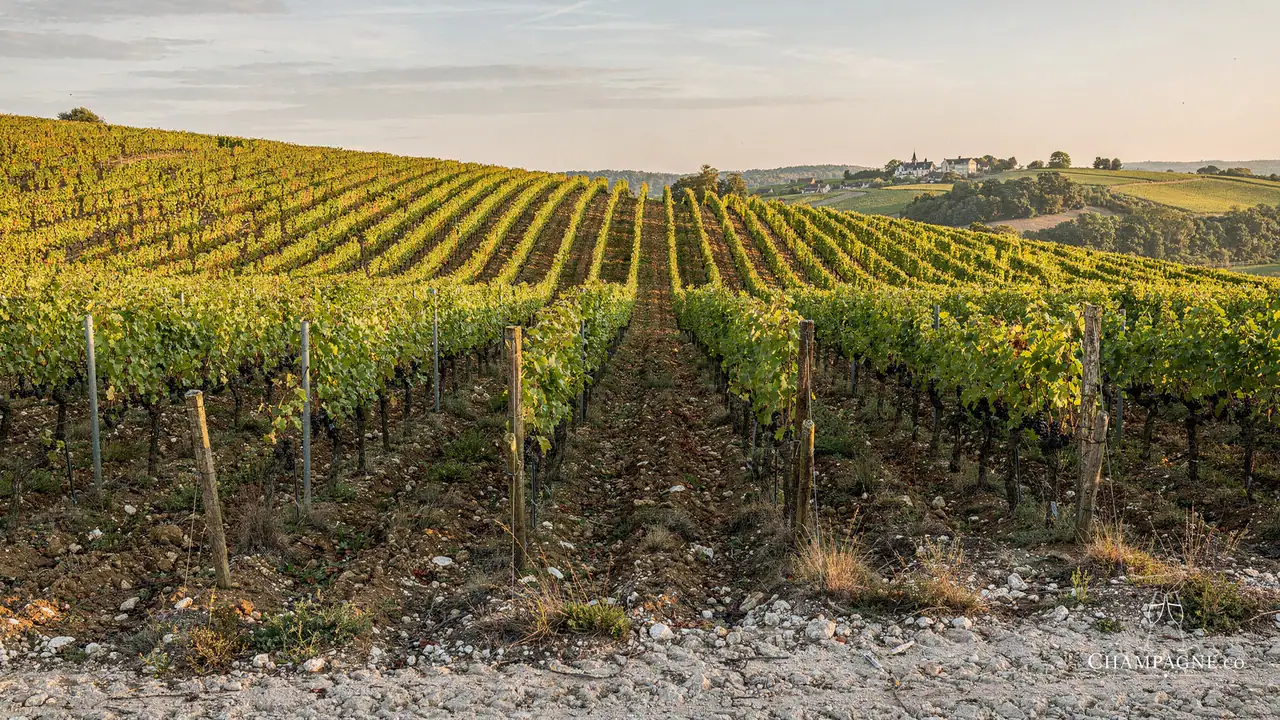
The current detailed vineyard page describes 10 hectares spread across 48 plots in seven villages, from Boursault, Dizy and Mardeuil in the Marne Valley to Pierry, Moussy and Épernay in the Coteaux Sud d’Épernay and Vertus on the Côte des Blancs. The result is a deliberately multi-terroir estate whose range moves from the broad Solessence blend to increasingly precise Chardonnay, parcel and single-variety interpretations.
Why this producer matters
Sélèque is a strong example of a grower using range architecture to explain the vineyard. Solessence combines the diversity of the whole estate; Quintette selects five Chardonnay terroirs; the Soliste wines focus on Pierry parcels and individual grape varieties; Partition brings together seven distinctive parcels vinified separately in seven barrels. These are not simply different labels but different scales at which the same vineyard can be read.
The estate is also unusually explicit about how it wants to farm. Jean-Marc describes an organic approach but deliberately does not seek organic certification, preferring freedom to experiment. the producer states that biodynamic-inspired practices have complemented this approach since 2010.
Family, vineyards and terroir
The current detailed producer page describes approximately 10 hectares across 48 plots and seven municipalities. It gives an average vine age of around forty years and says the vineyard is largely planted by massal selection. The geological spread is substantial: deep clays at Boursault, chalk at Vertus and a particularly complex mix around Pierry and Moussy.
Pierry is the family centre and one of the most revealing places in the domaine. The producer describes the Premier Cru hill as almost entirely south-facing, with deep Sparnacian clays higher on the slope, shallower clay with chalk and flint through the middle sectors, and clayey silts with flint and chalk veins lower down. Meunier is important in the deeper clays, while Chardonnay and Pinot Noir appear where chalk and shallower soils become more influential.
The wider Coteaux Sud d’Épernay add further variation: chalk mixes with alluvial sands, limestone formations, clays, marls and veins of sandstone depending on the village and slope. This diversity helps explain why Sélèque's range is organised around both blending and parcel separation rather than one house-wide terroir claim.
Farming approach
Jean-Marc Sélèque's current philosophy page says the estate is moving toward an organic farming approach without seeking certification. The stated reason is to retain freedom to experiment rather than be constrained by a fixed framework. Since 2010, the producer says this has been complemented by practices inspired by biodynamics.
This is a useful example of why certification and farming method should not be conflated. Champagne.co can accurately describe the stated cultivation philosophy and the biodynamic-inspired practices, but should not turn them into a certified-organic or certified-biodynamic claim.
Cellar and winemaking
The cellar is built around giving different parcels different routes. Stainless steel and oak are both used, and the current release pages repeatedly describe no fining and no filtration for the wines documented there. Oak becomes particularly important as the range narrows toward Quintette, the Soliste wines and Partition.
Reserve wine is another significant tool. The current Solessence release uses a perpetual reserve, while the documented Quintette release includes a wood-aged solera begun in 2012. The estate also uses different bottle closures and ageing periods according to the cuvée, with the more parcel-specific wines generally spending longer under natural cork.
These technical details vary by release and are therefore best read from the current bottle-specific producer page rather than treated as immutable house rules.
Champagne.co analysis
J-M Sélèque is most compelling as an exercise in changing resolution. Solessence asks what the whole estate looks like when seven villages and three grape varieties are brought together. Quintette removes two grapes and concentrates on Chardonnay across five terroirs. Soliste narrows the frame again to Pierry, one parcel and one grape. Partition then reverses the process, rebuilding complexity from seven individually handled parcels.
That progression makes the range unusually legible. It gives readers a way to understand not just individual bottles but the producer's underlying method: first establish the estate-wide identity, then isolate grape, place and parcel, and finally recombine selected sites with more intensive barrel work.
The farming philosophy fits the same pattern. Jean-Marc's stated refusal to turn an organic approach into a certification badge keeps the emphasis on decisions in individual vineyards. Whether or not one agrees with that choice, it is a distinctive and verifiable part of how the domaine positions its work.
Buying guidance
For a first bottle, Solessence Extra-Brut is the clearest starting point because it is deliberately built as the broadest reading of the estate. Solessence Nature is useful for seeing the same underlying family of terroirs with longer ageing and no dosage, while Solessence Rosé shows the rosé branch of the same architecture.
Readers focused on Chardonnay should move to Quintette, which brings together five Chardonnay sites across several villages. Those wanting to understand Pierry more specifically should choose within the Soliste range: Meunier from Les Gouttes d'Or, Pinot Noir from Les Gayères or Chardonnay from Les Tartières/Les Porgeons each isolates a different part of the hill.
Partition is the logical choice for readers who want the estate's most elaborate multi-parcel interpretation rather than a single-site wine. Because the current range is strongly release-specific, exact harvest, blend, dosage and ageing should always be checked against the producer's current technical page for the bottle being bought.
Editorial QA record
Outcome: REMEDIATED — PASS
Fresh research completed against current first-party pages. The detailed current vineyard page reports 10 hectares and 48 plots, while the current homepage still displays an older 45-plot summary. the article uses the more detailed current vineyard page and records this discrepancy rather than combining the figures. The producer explicitly describes an organic approach without certification, so no certified-organic claim is made. All vintage, blend, dosage, parcel and ageing facts are bounded to the exact current release.
Loading current Champagne range…
Spotted something wrong? Report a correction
Every report goes to a human review queue. Nothing on this page changes automatically.