Jacquart
Champagne Jacquart is a Reims house founded in 1964, making it comparatively young by the standards of the grandes maisons. Since 2009 it has been based at the Hôtel de Brimont, 34 Boulevard Lundy, and the current house history records Floriane Eznack's…
Editorial profile
Champagne Jacquart is a Reims house founded in 1964, making it comparatively young by the standards of the grandes maisons. Since 2009 it has been based at the Hôtel de Brimont, 34 Boulevard Lundy, and the current house history records Floriane Eznack's arrival as cellar master in 2011.
Jacquart's defining resource is breadth of sourcing. The house says that more than 60 growths are selected for its Champagnes from around 150 vinified each year. Rather than using that diversity to erase origin, Jacquart presents it as a large palette from which Chardonnay, Pinot Noir and Meunier can be assembled, with Chardonnay deliberately given a prominent role and bottle ageing extended beyond the minimum required for Champagne.
Why this producer matters
Jacquart is a useful counterpoint to both long-established family houses and small grower estates. It was created in the post-war period, launched its first vintage Blanc de Blancs in 1983, introduced the Mosaïque range in 1992 and added the Alpha prestige label in 2013, followed by Alpha Rosé in 2017. Its history is therefore one of a relatively young house building a recognisable range rather than inheriting a nineteenth-century portfolio intact.
The other important feature is scale of choice. Current house material says roughly 150 growths are vinified each year and more than 60 are selected for Jacquart. That breadth gives the cellar team room to build blends from materially different villages and grape sources, while the Signature, Blanc de Blancs and Alpha wines allow the range to narrow toward specific harvests or more selective assemblies.
Vineyard sourcing and grower relationships
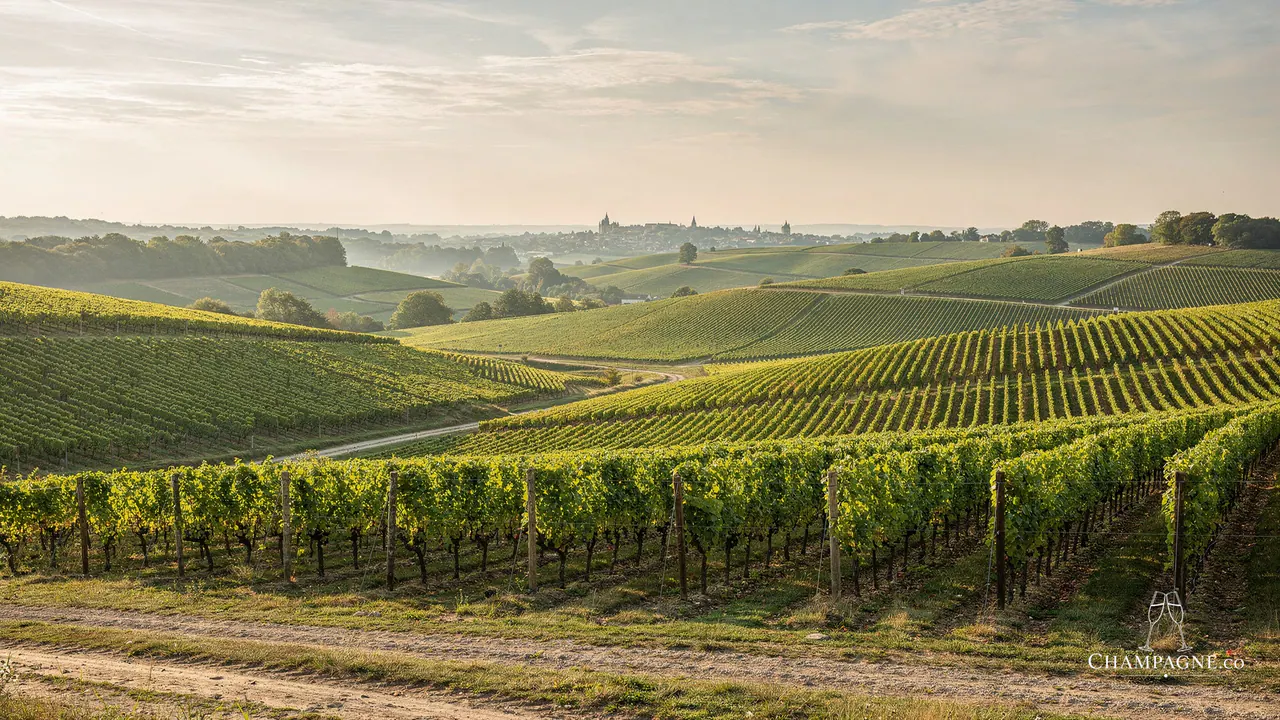
Jacquart describes its vineyard base as a mosaic maintained by partner winegrowers. The house does not present one contiguous estate vineyard as the centre of its identity; instead it relies on a wide network of terroirs and makes selection at the level of villages, parcels and finished base wines.
The current house page also documents a long-running technical programme with partner growers. Dedicated technicians and engineers work with the cooperative wineries in the group on vineyard management, including alternatives to agrochemicals, vine-development monitoring and environmental certification initiatives. The house recorded 20% of vineyard area as sustainably certified in 2017, but that historical percentage should not be treated as the current certified share without newer data.
For the public profile, the important point is not a blanket sustainability badge but the structure: Jacquart's style depends on long-term relationships with a broad grower base and on selection from many separately vinified origins.
Cellar and blending
Current house material consistently identifies three technical themes: diversity of vineyard origin, a significant role for Chardonnay in the blends and extended maturation. Temperature-controlled stainless-steel fermentation and malolactic fermentation are specified on the principal current technical pages.
The core Mosaïque blend illustrates the approach. The current Mosaïque Brut page gives 40% Chardonnay, 35% Pinot Noir and 25% Meunier, including 25–35% reserve wines, followed by at least three years on lees in bottle. Mosaïque Extra-Brut uses the same stated grape proportions and reserve-wine range for the current release but extends bottle maturation to at least four years and lowers the dosage.
Signature moves the same broad blend into a base-year format and longer ageing. The current Signature Brut B018 page identifies the 2018 harvest as its base, with 40% Chardonnay, 35% Pinot Noir and 25% Meunier, 25–35% reserve wines, a dosage of 6 g/l and at least five years on lees. Those figures belong to B018; older B016 and B015 releases remain in circulation and should not be conflated with it.
Champagne.co analysis
Jacquart's distinction is not simply that it is Chardonnay-led. The more interesting point is how a young Reims house turns a very broad sourcing base into a controlled set of increasingly specific wines. Mosaïque is the broad house expression; Signature adds a base-year identity and more ageing; Blanc de Blancs isolates Chardonnay and vintage; Alpha pushes selection and maturation further.
That architecture gives the range a logical progression without relying on inherited prestige language. It also explains why vineyard diversity and Chardonnay can coexist rather than conflict: a wide network of origins supplies the blending palette, while Chardonnay acts as a recurring structural thread through the house's principal wines.
The producer's youth is part of the story. Founded in 1964, Jacquart has had to establish its own visual, cellar and range identity within living memory. The chronology from the 1978 Blanc de Blancs vintage, through Mosaïque, to Alpha and the current Signature editions shows a house actively refining that identity rather than simply preserving an old one.
Buying guidance
For a first bottle, Mosaïque Brut is the logical starting point because it is the broadest expression of the current house blend. Mosaïque Extra-Brut is useful as a direct comparison when the reader wants to see what lower dosage and an additional period on lees do within a closely related composition.
Move to Signature Brut B018 for a more release-specific reading of the house, with the 2018 base year and longer maturation clearly identified. Readers interested specifically in Chardonnay should look to Blanc de Blancs 2018, while Cuvée Alpha Brut sits at the more selective, long-aged end of the current range.
For rosé, Signature Rosé is the main current reference, with Cuvée Alpha Rosé occupying the prestige tier. Because Jacquart continues to sell older base editions and vintages, the exact bottle code or vintage is important: B018, B016 and a 2018 Blanc de Blancs should never be treated as interchangeable technical records.
Loading current Champagne range…
Spotted something wrong? Report a correction
Every report goes to a human review queue. Nothing on this page changes automatically.