Jacques Lassaigne
Champagne Jacques Lassaigne is a Montgueux producer whose wines are made by Emmanuel Lassaigne. Comité Champagne currently records Emmanuel as owner of approximately 4.5 hectares in the village and describes Montgueux as a chalk hill in the Aube. The…
Editorial profile
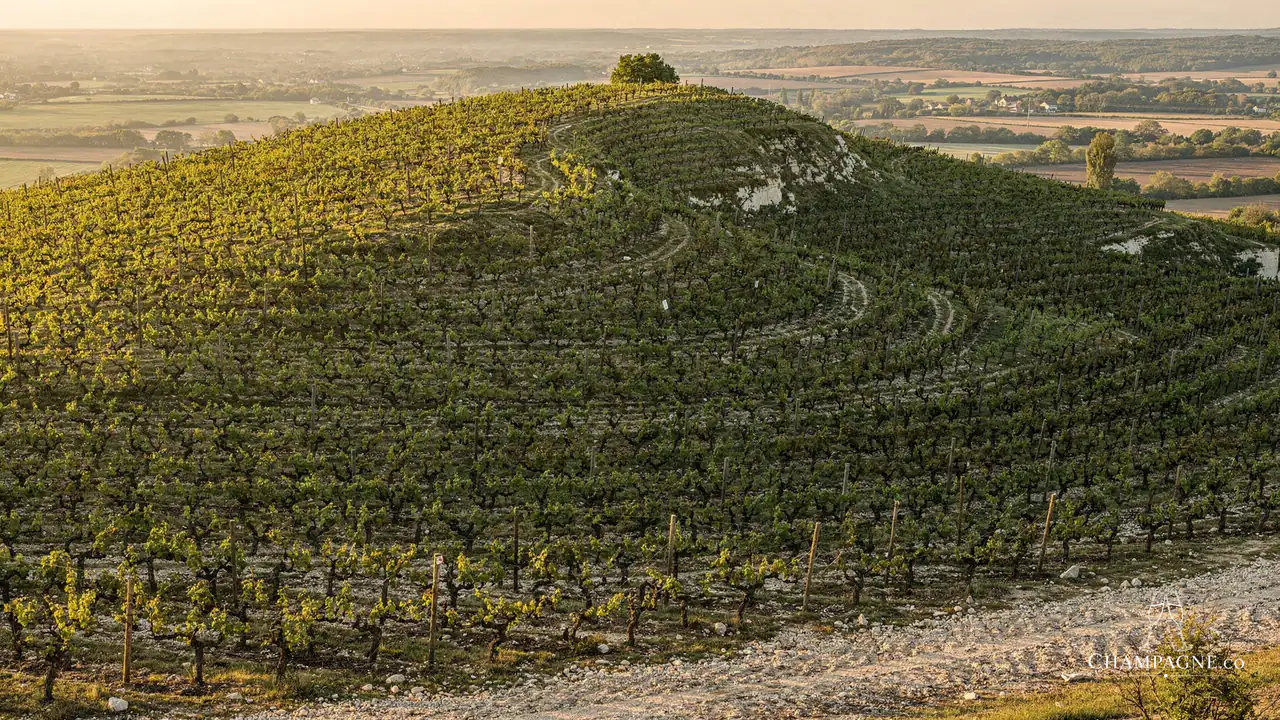
Champagne Jacques Lassaigne is a Montgueux producer whose wines are made by Emmanuel Lassaigne. Comité Champagne currently records Emmanuel as owner of approximately 4.5 hectares in the village and describes Montgueux as a chalk hill in the Aube. The producer's own site makes that hill, rather than a broad regional blend, the organising idea of the range.
Montgueux sits apart from the better-known Chardonnay villages of the Côte des Blancs. Jacques Lassaigne therefore offers a particularly clear way to study Chardonnay on a separate chalk outcrop in southern Champagne, with wines that move from multi-parcel blends to individual vineyards, vintage selections and experimental cuvées.
Why this producer matters
The strongest reason to follow Jacques Lassaigne is geographic precision. Current authoritative material ties the estate directly to Montgueux and repeatedly emphasises parcel expression. The producer's live range makes that idea concrete: Les Vignes de Montgueux combines several sites, Le Cotet isolates one vineyard, Clos Sainte-Sophie comes from a walled site, and the vintage programme selects only a small number of parcels from one harvest.
That progression makes the domaine useful for readers who want to understand how one village can be interpreted at different scales. It also avoids the need for borrowed prestige language: Montgueux, parcel identity, vineyard age where documented and release structure provide enough substance on their own.
Montgueux and the vineyard
Comité Champagne records Emmanuel Lassaigne as owner of around 4.5 hectares at Montgueux. The village is characterised by its chalk hill, and the current producer site presents Chardonnay as the major grape on that slope.
the current page says only vines older than forty years are used for that vintage cuvée.
The broader Les Vignes de Montgueux combines fruit from seven to nine different parcels and three successive vintages. That makes it a useful estate-wide reference before moving to the more narrowly defined site wines.
Cellar and cuvée logic
The producer's current public material is more explicit about range structure and vineyard selection than about one universal cellar recipe. That is appropriate for a domaine where cuvées are deliberately differentiated by parcel and harvest.
Les Vignes de Montgueux is currently described as an Extra-Brut Blanc de Blancs blended from seven to nine distinctive parcels and three successive vintages. Le Cotet is an Extra-Brut Blanc de Blancs from one vineyard. Clos Sainte-Sophie is a vintage Brut Nature Blanc de Blancs from the enclosed site.
The vintage programme uses only two or three single vineyards to represent one harvest and the producer states that these wines receive a minimum of eight years in bottle.
Champagne.co analysis
Jacques Lassaigne is best understood as a study of one hill rather than as a conventional house with a fixed prestige ladder. The wines move from an assembly of several Montgueux parcels, to a single vineyard, to a Clos, to vintage selections and then to deliberately temporary experiments. The subject is therefore resolution: how closely the producer chooses to focus on place in any given cuvée.
That makes Les Vignes de Montgueux particularly important. It establishes the broader Montgueux reference against which Le Cotet and Clos Sainte-Sophie can be understood. Without that first step, the single-site wines risk becoming isolated names; with it, they form a coherent progression from hill to parcel.
The domaine is also a useful reminder that Chardonnay in Champagne is not synonymous with the Côte des Blancs. Montgueux offers a geographically separate chalk context, and Jacques Lassaigne has built a range that keeps that distinction visible.
Buying guidance
For a first bottle, choose Les Vignes de Montgueux. It is the clearest estate-wide reference and gives the best starting point for understanding the Montgueux hill before moving to individual sites.
For a single-vineyard comparison, Le Cotet is the logical next step. Clos Sainte-Sophie is the more specialised choice for readers interested in an enclosed site, vintage identity and Brut Nature presentation.
The Millésime wines suit buyers interested in the relationship between one harvest, a small number of selected vineyards and long bottle ageing. The Cuvées éphémères are best treated as individual releases rather than as rungs on a permanent hierarchy: the exact Acte, Scène, vintage and technical information matter.
Because the domaine's range is strongly site- and release-led, collectors should preserve parcel, vintage, disgorgement and dosage information at bottle level rather than assuming that one edition represents all future releases.
Editorial QA record
Outcome: REMEDIATED — PASS
Fresh research completed against current Comité Champagne, producer-controlled and 2026 tourism material. The previous public body was dominated by internal catalogue cautions and process instructions and incorrectly suggested that a reliable current range could not be established. the producer's live site now exposes a clear range architecture. Exact vintage, disgorgement, dosage and experimental-cuvée details remain release-specific. Similar-name producer risk is retained internally and not exposed as reader-facing process copy.
Loading current Champagne range…
Spotted something wrong? Report a correction
Every report goes to a human review queue. Nothing on this page changes automatically.