Jacques Selosse
Domaine Jacques Selosse is a family Champagne estate based in Avize, with 8.3 hectares spread across 54 parcels in Avize, Cramant, Oger, Le Mesnil-sur-Oger, Aÿ, Mareuil-sur-Aÿ and Ambonnay. The current domaine presentation gives 7.3 hectares to Chardonnay…
Editorial profile
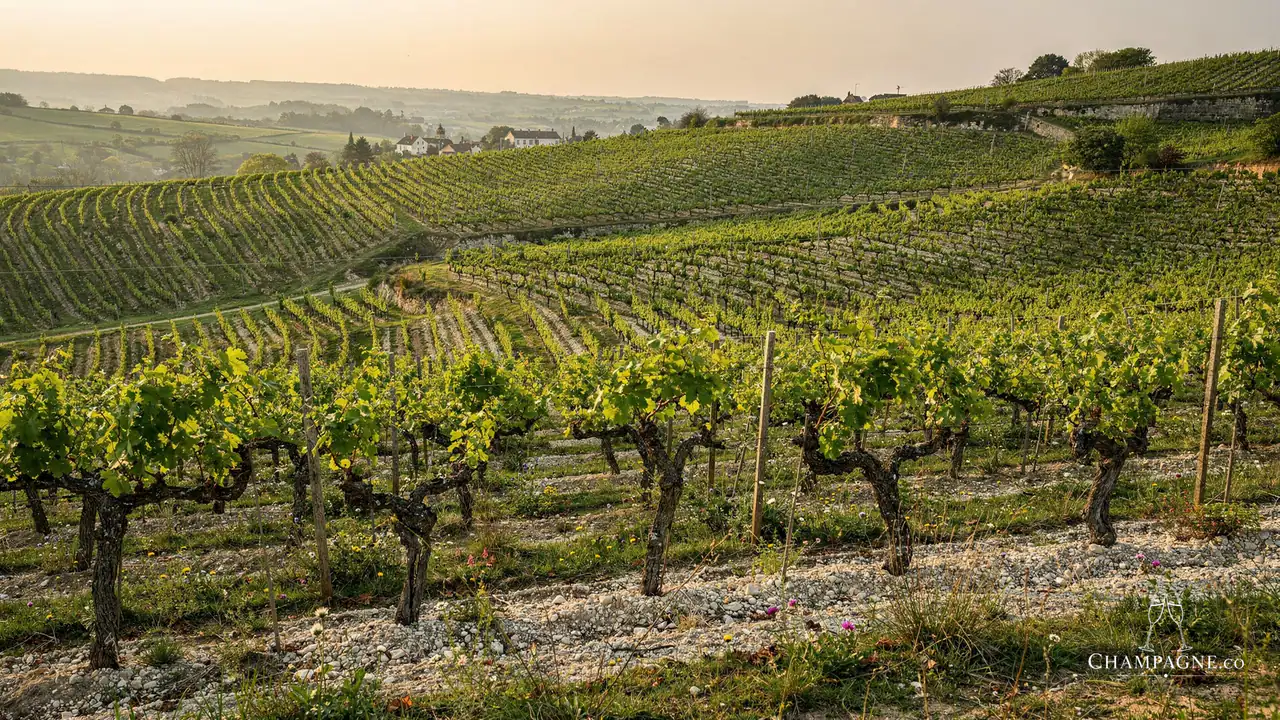
Domaine Jacques Selosse is a family Champagne estate based in Avize, with 8.3 hectares spread across 54 parcels in Avize, Cramant, Oger, Le Mesnil-sur-Oger, Aÿ, Mareuil-sur-Aÿ and Ambonnay. The current domaine presentation gives 7.3 hectares to Chardonnay and 1.0 hectare to Pinot Noir, with an average vine age above 55 years and some plantings dating to 1922.
The estate's significance is inseparable from the way Anselme Selosse has treated viticulture as an evolving practice rather than a fixed doctrine. After a period of agrobiology from 1990 to 1996, he turned to biodynamic methods, then distanced himself from biodynamic doctrine from 2002. The domaine now describes a system based on observation and adaptation to the circumstances of each plot. Guillaume Selosse has worked alongside his father since 2012 as the next generation prepares to carry that approach forward.
Why this producer matters
Jacques Selosse matters because the estate combines a compact vineyard with an unusually explicit parcel framework. Since 2010 the six-wine Lieux-Dits collection has made individual origins central to the range, crossing both Chardonnay villages of the Côte des Blancs and Pinot Noir villages around the Montagne de Reims and Grande Vallée de la Marne.
The domaine is equally distinctive for its rejection of an easy farming label. Its own chronology documents periods of agrobiology and biodynamic practice, followed by a deliberate move away from doctrine. The current philosophy is empirical: intervene according to the needs of the vineyard rather than conforming to a certification identity. That is more precise than describing Selosse simply as biodynamic today.
Vineyards and terroir
The current domaine page records 8.3 hectares and 54 parcels. Chardonnay accounts for 7.3 hectares, principally in Avize but also in Cramant, Oger and Le Mesnil-sur-Oger. Pinot Noir accounts for 1.0 hectare in Aÿ, Mareuil-sur-Aÿ and Ambonnay. The domaine also records more than 70,000 Chardonnay vines and around 9,500 Pinot Noir vines.
The six Lieux-Dits make the geographic spread particularly legible. On the Chardonnay side, Chemin de Châlons comes from Cramant, Les Carelles from Le Mesnil-sur-Oger and Les Chantereines from Avize. On the Pinot Noir side, Sous Le Mont comes from Mareuil-sur-Aÿ and La Côte Faron from Aÿ. Le Bout du Clos in Ambonnay is the exception to a pure Pinot Noir model: the domaine describes the parcel as planted to 80% Pinot Noir and 20% Chardonnay.
This arrangement turns the collection into more than a set of prestige bottlings. It lets the reader compare six named origins across different villages and grape contexts within one producer's vineyard work.
Farming and cellar philosophy
The family carried out its first vinification in 1964, and Anselme joined the domaine a decade later. The current producer account describes his career as a continual process of observation, trial and reassessment in both vineyard and cellar.
From 1990 to 1996 the estate followed agrobiological principles; from 1996 it turned toward biodynamics; from 2002 Anselme moved away from biodynamic doctrine in favour of a less prescriptive approach influenced by observation of natural systems and permaculture thinking. The domaine now states that its cultivation follows no fixed recipe but adapts to the circumstances of the season and individual plots.
The current vinification philosophy is expressed in similarly restrained terms: the objective is to avoid masking what is already present in the grape juice. That supports an editorial emphasis on origin and vineyard differentiation without inventing a universal technical recipe for every cuvée. Exact vessel, dosage, disgorgement and ageing details should remain attached to the specific release when authoritative bottle-level information is available.
Champagne.co analysis
Jacques Selosse is best understood through two linked ideas: changing scale and refusal of formula. At the broadest level, Initial, V.O. and Substance establish the domaine's Chardonnay-dominant identity. The Lieux-Dits then narrow the view to six parcels across six villages, including a shift from Côte des Blancs Chardonnay to Pinot Noir sites farther north and west.
The farming history follows a similar logic. Selosse has moved through recognised schools of thought but the current domaine deliberately resists being defined by one of them. That makes the estate's identity less about a label such as biodynamic and more about continual adaptation to individual vineyards.
The combination matters. A parcel-focused range only has real editorial meaning if the producer also treats parcels as different farming environments. Selosse's current presentation makes that relationship explicit: origin is not merely a name on the label but the organising principle connecting vineyard observation, grape variety and cuvée structure.
Buying guidance
For a first bottle, Initial is the most useful reference because it introduces the domaine before the range becomes highly site-specific. V.O. is a logical second route for readers who want another current Blanc de Blancs expression within the broader estate range.
Readers focused on individual vineyards should move to the Lieux-Dits. The three Chardonnay sites — Chemin de Châlons, Les Carelles and Les Chantereines — allow comparison within the Côte des Blancs, while Sous Le Mont and La Côte Faron move into Pinot Noir. Le Bout du Clos is particularly useful for understanding why exact vineyard composition matters, because the producer documents the Ambonnay parcel as a mixed planting rather than pure Pinot Noir.
Substance belongs among the domaine's central names but should be bought with attention to the exact disgorgement and release documentation rather than assumptions carried over from older bottles. The same rule applies to vintage Selosse: the year on the bottle is essential information, not a generic house specification.
Availability is unusually controlled at source. The domaine's current contact page states that Champagne Jacques Selosse is sold by allocation to professional customers and that hotel guests at Les Avisés cannot be guaranteed off-sale bottles. That makes exact release identification especially important in the secondary and specialist market.
Editorial QA record
Outcome: REMEDIATED — PASS
Fresh research completed against current producer-controlled sources. The estate is not described as currently certified biodynamic: its own chronology explicitly records a move away from biodynamic doctrine from 2002. Release-sensitive dosage, disgorgement, vintage and cellar details remain bounded to exact current evidence.
Loading current Champagne range…
Spotted something wrong? Report a correction
Every report goes to a human review queue. Nothing on this page changes automatically.