Jacquesson
Champagne Jacquesson is one of Champagne's historic houses, founded in 1798 by Claude and Memmie Jacquesson and now based in Dizy. Its modern identity is built around a deliberately unconventional idea: the principal wine changes with the harvest rather…
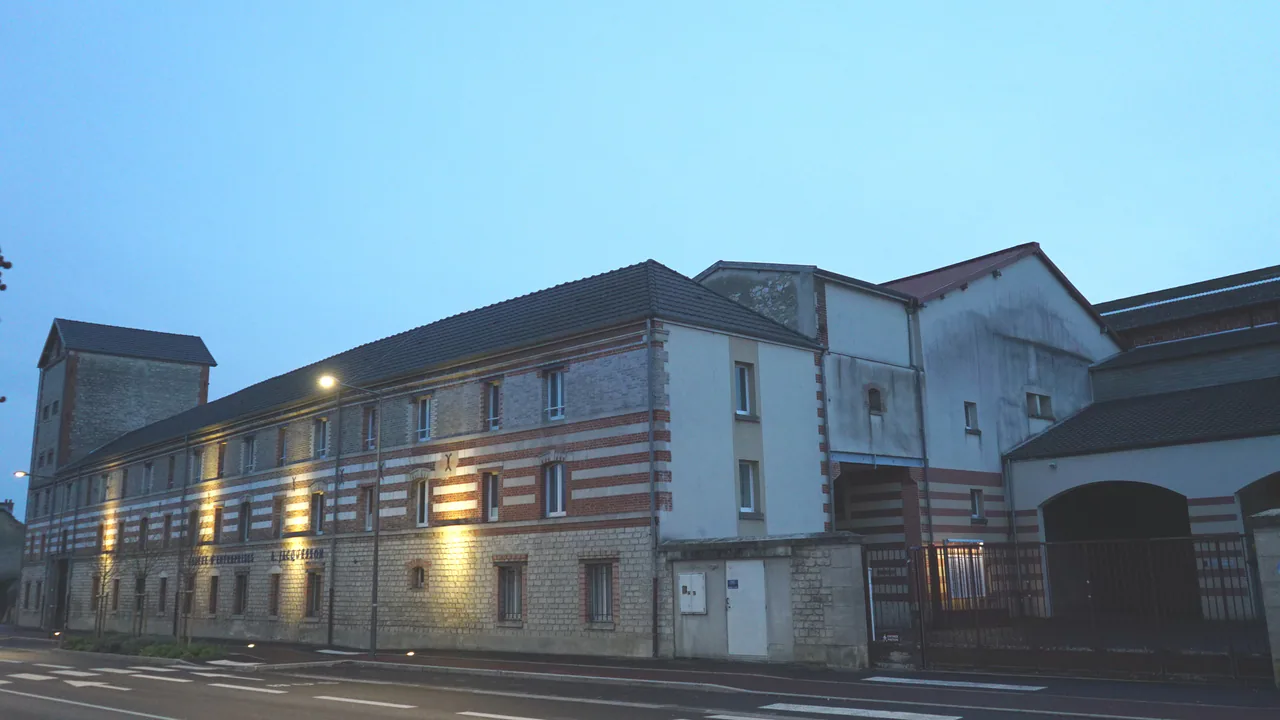
Jacquesson — Champagne producer profile image.
Editorial profile
Champagne Jacquesson is one of Champagne's historic houses, founded in 1798 by Claude and Memmie Jacquesson and now based in Dizy. Its modern identity is built around a deliberately unconventional idea: the principal wine changes with the harvest rather than being forced into a fixed non-vintage recipe. Since Cuvée 728, the numbered Cuvées 700 have treated the base year as an essential part of the wine's identity.
The current 2026 house programme records 36 hectares of Grand Cru and Premier Cru vineyards across Avize, Aÿ, Oiry, Dizy, Champillon and Hautvillers. It also states that the vineyard has held organic certification since 2010. Since the end of 2022 the house has belonged to Artémis Domaines, with Jean Garandeau as managing director, Mathilde Prier directing the vineyard and Yann Le Gall directing the wines.
Why this producer matters
Jacquesson matters because it rejects one of the traditional assumptions of non-vintage Champagne: that successive releases should reproduce a stable house style. The house describes Cuvée 700 as the opposite of that model. A single harvest forms the base, supplemented by reserve wines from earlier numbered cuvées, but the objective is to preserve the character of that year rather than erase it.
The numbering system makes this philosophy unusually transparent. Cuvée 728 was based on the 2000 harvest; every subsequent number identifies a new edition. Late-disgorged DT versions then return to an earlier numbered cuvée after substantially longer lees ageing. Jacquesson's lieux-dits add a third layer by isolating individual parcels and exact harvests.
History and ownership
The house was founded at Châlons-sur-Marne in 1798. The current official history also credits Adolphe Jacquesson with patenting the wire muselet in 1844, an innovation that became standard across sparkling wine production.
The Chiquet family took control in 1974 and ran the house from Dizy until 2022. During that period Jacquesson developed the numbered Cuvée 700 concept that defines its modern range. Since the end of 2022 the house has formed part of Artémis Domaines.
The change of ownership has not removed the 700-series model. The current 2026 programme continues the sequence with Cuvée 749 and explicitly describes the numbered wines as expressions of their base vintage rather than exercises in consistency for its own sake.
Vineyards and farming
The current 2026 programme gives the estate vineyard at 36 hectares, all in Grand Cru and Premier Cru villages: Avize, Aÿ, Oiry, Dizy, Champillon and Hautvillers. These holdings span the Côte des Blancs and Grande Vallée de la Marne and provide Chardonnay and Pinot Noir from several contrasting sites.
The same current first-party source states that the estate has been organically certified since 2010. It describes a viticultural programme designed around soil health, plant resilience and parcel diversity. The estate is also currently experimenting with UV-C vineyard technology intended to stimulate natural vine defences and reduce reliance on copper and sulphur treatments.
Those newer technical developments are best understood as additions to an already certified farming framework rather than as a new certification claim.
Cellar and the Cuvée 700 system
Jacquesson states that only first pressings are used for Cuvée 700. The wines are vinified and matured on their lees in large wooden vats and are generally not filtered or fined. The current house description emphasises long ageing, low dosage and a prolonged period of rest after disgorgement.
The general 700-series model uses one harvest as the base, normally forming the large majority of the blend, with reserve wines from previous numbered cuvées added without masking the character of the base year. The exact reserve proportion changes from release to release and must therefore remain attached to the specific cuvée number.
Jacquesson releases the same numbered idea at two stages of maturity. Standard Cuvée 700 is disgorged after roughly three-and-a-half to four-and-a-half years from the base harvest under the current house description. Cuvée 700 DT is held substantially longer and disgorged about four years later, effectively doubling lees ageing before disgorgement.
Champagne.co analysis
Jacquesson's range is unusually easy to misunderstand if the numbers are treated as mere labels. The number is the organising principle. No. 749 is not simply a replacement package for No. 748: it begins with a different harvest, uses a different reserve composition and carries its own technical record. The house therefore asks readers to think about continuity through method rather than continuity through flavour replication.
The DT programme extends that idea through time. Instead of creating a separate prestige cuvée, Jacquesson revisits an earlier numbered wine after much longer lees ageing. The lieux-dits move in the opposite direction, reducing the blend to one named vineyard and one harvest. Together the three approaches — numbered blend, late disgorgement and single parcel — form a coherent way of examining vintage, time and place.
The 2026 programme also shows continuity after the transition to Artémis Domaines. The ownership has changed, but the numbered system, low-intervention cellar model, organic vineyard base and release-specific philosophy remain central to the house's own current presentation.
Buying guidance
For a first current bottle, Cuvée No. 749 is the essential Jacquesson reference because it represents the present 700-series release and the house's central idea. The number should always be recorded alongside the bottle; buying 'Jacquesson 700' without the edition loses important information.
Cuvée No. 744 DT is the logical comparison for readers interested in the effect of substantially longer lees ageing on an earlier numbered cuvée.
For a site-specific view, the current Avize Champ Caïn 2015 moves away from the six-village blend and into one Chardonnay parcel. Older releases of Champ Caïn, Corne Bautray, Vauzelle Terme and Terres Rouges can be valuable for comparison, but the vintage and disgorgement are essential because these are not timeless technical templates.
When buying any Jacquesson wine, record the exact cuvée number or lieu-dit, base harvest or vintage, DT status where applicable and disgorgement information. Those details are part of the wine's identity, not secondary catalogue metadata.
Editorial QA record
Outcome: REMEDIATED — PASS
Fresh research completed against the current 2026 first-party programme and house material. The previous profile was anchored to the 2025 programme and therefore no longer represented the current release set. The new article updates the principal cuvée from No. 748 to No. 749 and keeps all reserve percentages, base years, dosage, lees ageing and disgorgement details tied to exact releases. Historic lieu-dit and œnothèque records are separated from the 2026 current programme. Image information remains outside the public editorial programme.
Loading current Champagne range…
Spotted something wrong? Report a correction
Every report goes to a human review queue. Nothing on this page changes automatically.