Jean Josselin
Champagne Jean Josselin is a family grower in Gyé-sur-Seine in the Côte des Bar. The family's winegrowing history in the village dates to 1854, when it acquired its first vineyard, while the Champagne Jean Josselin brand itself dates to 1957.
Editorial profile
Champagne Jean Josselin is a family grower in Gyé-sur-Seine in the Côte des Bar. The family's winegrowing history in the village dates to 1854, when it acquired its first vineyard, while the Champagne Jean Josselin brand itself dates to 1957.
The estate has since passed through several generations. Jean-Pierre Josselin took over in 1980; Jean-Félix, an oenologist, joined the operation in 2010; and current independent records state that Jean-Pierre transferred the domaine in 2023 to his daughter Lucile and son Jean-Félix.
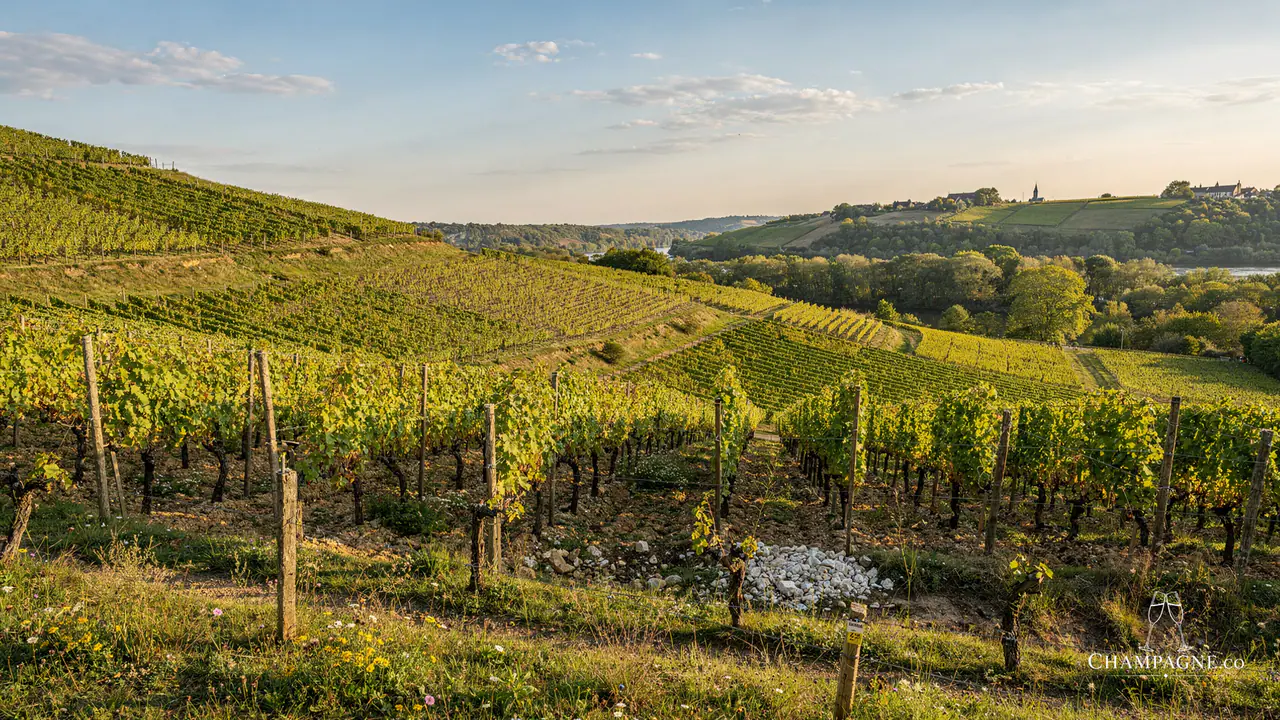
Today the domaine is close to 12 hectares. Vignerons Indépendants records 18 parcels, all within Gyé-sur-Seine, and states that the family works only its own vines and vinifies the whole crop. This is an important part of the producer's identity: the geographical story is tightly concentrated around one Côte des Bar commune rather than spread across a broad sourcing map.
Why this producer matters
Jean Josselin combines a long family history with an unusually concentrated modern vineyard footprint. Eighteen parcels in one commune allow the estate to explore site and vintage differences without losing a clear Gyé-sur-Seine centre.
The 2023 handover to Lucile and Jean-Félix also makes this a current generational story rather than a static historical profile. Parcel-by-parcel vinification, estate-grown fruit and environmental certification provide the main framework for understanding the domaine today.
Vineyard and environmental approach
Current Vignerons Indépendants material describes the 18 parcels as managed under the Terra Vitis framework and identifies the estate as a Haute Valeur Environnementale operation. The producer's own philosophy page also identifies Terra Vitis as its chosen environmental certification.
The estate describes parcel-by-parcel vinification and separate élevage as tools for expressing grape variety, site and vintage. That is a more useful way to understand Jean Josselin than through generic stylistic adjectives: the domaine is increasingly organised around keeping individual vineyard material legible through the cellar.
Champagne.co analysis
Jean Josselin is best read as an estate-grown, one-commune Côte des Bar producer whose range is becoming increasingly parcel-conscious. The concentration of 18 parcels within Gyé-sur-Seine gives the family enough internal variation to work with site identity while keeping the overall geographical story coherent.
The transfer to Lucile and Jean-Félix strengthens that direction. Rather than relying on a large fixed catalogue, the most informative current bottles are those whose parcel, vintage and release details are explicit.
Buying guidance
Start with Cuvée des Jean Extra-Brut when you want a bottle that connects directly to the family's established Pinot Noir identity. Choose Aux Origines 2019 Extra-Brut when the interest is a specific vintage and parcel expression.
For other Jean Josselin bottles, check the exact current release rather than assuming older blend or dosage data still apply. Because the estate's public catalogue is not fully exposed online, precise bottle-level information is more useful than a reconstructed house hierarchy.
Loading current Champagne range…
Spotted something wrong? Report a correction
Every report goes to a human review queue. Nothing on this page changes automatically.