Jean Lallement
Jean Lallement et Fils is a family récoltant-manipulant in Verzenay Grand Cru, on the Montagne de Reims. The producer's own history traces the Lallement family in Verzenay to 1694. Jean Lallement began making and keeping Champagne under the family name in…
Editorial profile
Jean Lallement et Fils is a family récoltant-manipulant in Verzenay Grand Cru, on the Montagne de Reims. The producer's own history traces the Lallement family in Verzenay to 1694. Jean Lallement began making and keeping Champagne under the family name in the early 1930s; Jean-Charles joined in the early 1960s; and Jean-Luc Lallement, together with Paula-Alexandra, has continued the family business since 1999.
The current range makes the estate's priorities unusually clear. Pinot Noir is the dominant grape, with Chardonnay used as a supporting component in several wines, and the producer's live site presents five principal cuvées: Brut Tradition, Brut Réserve, Rosé, Millésime 2012 and Les Perthois.
Why this producer matters
Jean Lallement et Fils is a compact example of Verzenay expressed through a grower's own range rather than through a large-house blend. The wines move from an 80/20 Pinot Noir–Chardonnay house framework toward increasingly specific Pinot Noir expressions, culminating in the single-site Les Perthois.
The long family chronology matters, but the more useful contemporary story is how a small Grand Cru producer separates house blends, old-vine material, vintage Champagne and a parcel wine.
Vineyard and cellar approach
The producer describes hand harvesting and on-site pressing, followed by vinification without added yeast, filtration or refrigeration. The wines are racked repeatedly before bottling. These are retained as current first-party descriptions of the estate's working method rather than converted into broader claims about "natural" or certified organic winemaking.
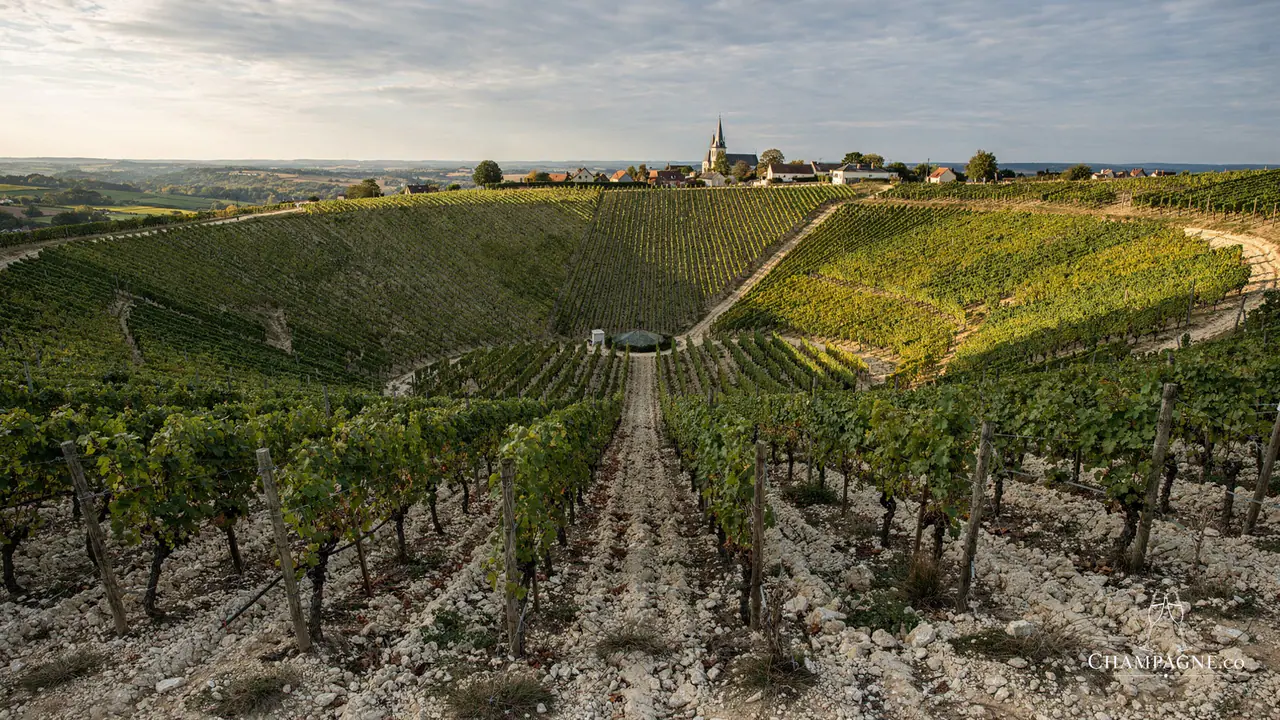
The vineyard story is inseparable from Verzenay. As a Grand Cru village on the northern Montagne de Reims, it is a major Pinot Noir reference point, and Lallement's present range reflects that emphasis directly.
Champagne.co analysis
Jean Lallement et Fils is best understood as a Pinot Noir-led Verzenay grower with a progressively narrowing range. Brut Tradition and Brut Réserve establish the house framework; Rosé removes Chardonnay from the equation; Millésime adds harvest specificity; Les Perthois finally isolates a parcel and vintage.
That sequence makes the estate unusually easy to navigate.
Buying guidance
Start with Brut Tradition for the broadest house benchmark. Choose Brut Réserve if older-vine material is the interest, or Rosé for a pure-Pinot Noir route.
Move to Millésime 2012 when vintage specificity matters, and to Les Perthois 2019 for the most parcel-focused current bottle. For both, check the exact year and release details rather than transferring technical information from older or later bottlings.
Loading current Champagne range…
Spotted something wrong? Report a correction
Every report goes to a human review queue. Nothing on this page changes automatically.