Jean Moutardier
Champagne Jean Moutardier is a family grower based in Le Breuil, in the Vallée du Surmelin. The family traces its roots in the village to the eighteenth century, and the modern domaine developed through four generations of winegrowers. William and Simon…
Editorial profile
Champagne Jean Moutardier is a family grower based in Le Breuil, in the Vallée du Surmelin. The family traces its roots in the village to the eighteenth century, and the modern domaine developed through four generations of winegrowers. William and Simon now represent the current generation.
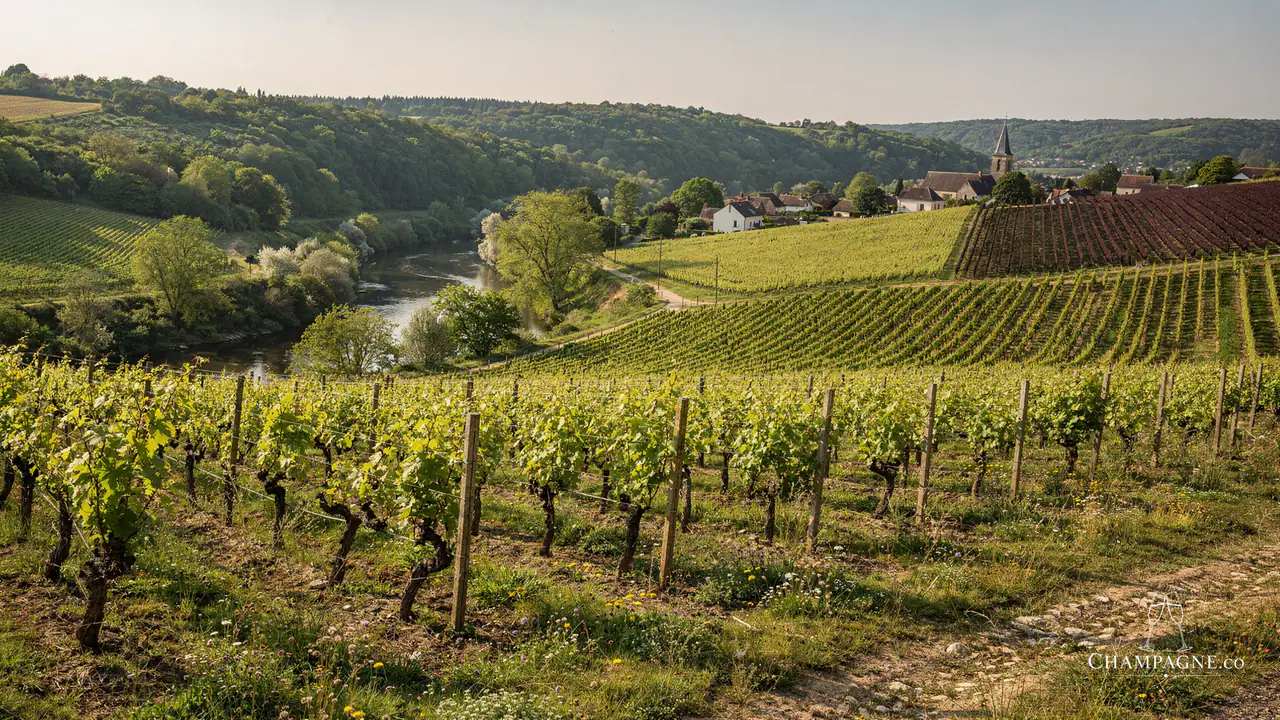
The estate farms 18 hectares around Le Breuil, on predominantly limestone and clay subsoils. Meunier defines the vineyard at roughly 80% of plantings, with Chardonnay and Pinot Noir each accounting for about 10%.
Why this producer matters
Jean Moutardier is a clear example of a Meunier-led estate whose identity comes directly from the Surmelin Valley. The family’s long history in Le Breuil and the dominance of Meunier make the grape more than a component in a blend here: it is the central thread linking vineyard, range and house identity.
The current generation has also formalised the estate’s environmental programme. Both the producer and Comité Champagne currently identify HVE and Viticulture Durable en Champagne certification.
Vineyard and terroir
The domaine’s 18 hectares lie in Le Breuil and its immediate surroundings. The producer describes the subsoils as predominantly limestone and clay and links that setting directly to the strong Meunier presence in the vineyard.
Current plantings are approximately 80% Meunier, 10% Chardonnay and 10% Pinot Noir. That balance gives the estate enough Chardonnay and Pinot Noir to build blends while keeping Meunier as the unmistakable signature grape.
Cellar and winemaking
The range spans non-vintage Champagne, vintage wines, Brut Nature, Extra-Brut, rosé and Coteaux Champenois. Because those categories use different blends, dosage levels and vintages, technical detail is most useful when attached to the exact cuvée.
For example, the current Millésime 2013 page specifies 80% Meunier and 20% Chardonnay for that vintage, while the current rosé page likewise identifies its own release-specific blend and dosage. Those figures should not be carried across to other wines or future releases.
Champagne.co analysis
Jean Moutardier is most compelling when viewed through Meunier and place rather than through a conventional prestige hierarchy. An 18-hectare vineyard with 80% Meunier gives the producer a strong and coherent agricultural identity, while the range shows how that same base can be expressed through Brut, Brut Nature, vintage and still-wine formats.
The Coteaux Champenois wines are particularly useful context because they show that the domaine’s relationship with its grapes extends beyond sparkling Champagne alone.
Buying guidance
Carte d’Or is the logical first bottle for the broad house style. Pure Meunier Brut Nature is the clearest next step for buyers who want to focus on the estate’s signature grape without dosage.
For vintage Champagne, choose by the exact year currently offered rather than assuming an older specification remains current. Keep the Coteaux Champenois wines separate from the sparkling range and check their vintage individually when buying.
Loading current Champagne range…
Spotted something wrong? Report a correction
Every report goes to a human review queue. Nothing on this page changes automatically.