Jean Velut
Champagne Jean Velut is a family grower based in Montgueux, the isolated chalk hill just west of Troyes. The family has produced wine in the region since the sixteenth century, while Jean Velut and his wife Huguette were among the generation that helped…
Editorial profile
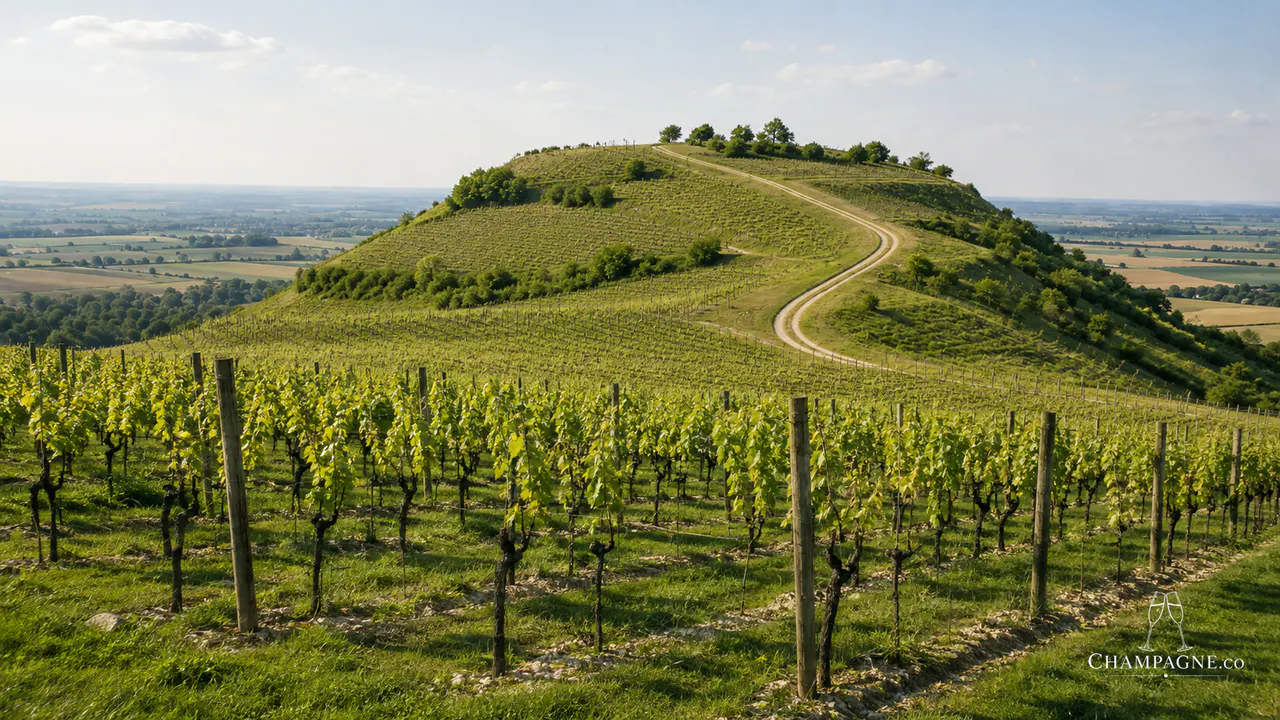
Champagne Jean Velut is a family grower based in Montgueux, the isolated chalk hill just west of Troyes. The family has produced wine in the region since the sixteenth century, while Jean Velut and his wife Huguette were among the generation that helped redevelop viticulture on Montgueux in the twentieth century. Their son Denis began producing Champagne in 1976, and Benoît Velut leads the estate today.
Montgueux is the defining feature of the domaine. The village has about 214 hectares of vineyard and is dominated by Chardonnay, which covers more than 90% of the local vineyard. Jean Velut’s range uses that Chardonnay identity as its main reference point while also working with Pinot Noir.
Why this producer matters
Jean Velut offers one of the clearest grower perspectives on Montgueux, a terroir geographically separate from the better-known Côte des Blancs but similarly associated with Chardonnay and chalk.
The family’s role in the modern revival of Montgueux gives the producer historical significance locally, while the current range shows the village through several different cellar and dosage choices rather than through a single Blanc de Blancs bottling.
Vineyard and terroir
Montgueux rises above the plains around Troyes and sits on Turonian chalk dating back roughly 90 million years. The producer describes the village as Champagne’s most isolated vineyard sector and its most southerly Chardonnay-dominated terroir.
Those village statistics should not be confused with an exact estate planting breakdown. Jean Velut’s current range includes both Chardonnay-led wines and Pinot Noir bottlings, but the producer’s public terroir material is most precise at village level rather than as a fixed percentage for the domaine itself.
Cellar and winemaking
The estate uses blending, reserve wines, vintage selection, barrel vinification and several dosage levels depending on the cuvée. This makes release-level detail essential.
For example, the current Premier Temps release is 86% Chardonnay and 14% Pinot Noir with 6 g/L dosage, while the current Lumière et Craie is 100% Chardonnay from reserve wines with 5 g/L dosage. Those figures belong specifically to those current bottlings and should not be treated as permanent house formulas.
Champagne.co analysis
Jean Velut is best understood as a Montgueux specialist rather than simply a Chardonnay producer. The village’s isolated Turonian chalk hill gives the estate a geographic identity that is quite different from the Côte des Blancs, even though Chardonnay dominates both areas.
The range is also deliberately comparative. Premier Temps shows blending, Lumière et Craie focuses on reserve Chardonnay, Témoignage isolates a vintage, L’Oubliée adds barrel influence, and Noir de Craie demonstrates what Pinot Noir can do on the same chalk hill.
Buying guidance
Start with Premier Temps for the broadest introduction to the domaine. Lumière et Craie is the more focused choice for Chardonnay and reserve-wine character, while Témoignage is the vintage route.
Noir de Craie is the natural comparison for buyers who want to see Pinot Noir from Montgueux. For L’Oubliée, Témoignage and other release-specific wines, check the exact current vintage and technical details before relying on older specifications.
Loading current Champagne range…
Spotted something wrong? Report a correction
Every report goes to a human review queue. Nothing on this page changes automatically.