Jérôme Blin
Champagne Jérôme Blin is a small grower based in Vincelles in the Vallée de la Marne. The family’s viticultural history in Vincelles dates to 1671, while Jérôme returned to the family operation in the 1990s and began developing his own domaine and wines…
Editorial profile
Champagne Jérôme Blin is a small grower based in Vincelles in the Vallée de la Marne. The family’s viticultural history in Vincelles dates to 1671, while Jérôme returned to the family operation in the 1990s and began developing his own domaine and wines from there.
He formally committed the estate to organic certification in 2010 and released the first 500 bottles under his own name that same year. The first certified-organic harvest followed in 2013. The current 2026 Association des Champagnes Biologiques record lists 2.43 hectares certified AB, while the producer describes the present estate as just under 3 hectares in total.
Why this producer matters
Blin’s domaine is notable for combining a strongly Meunier-led Vincelles identity with certified organic farming and an unusually broad interest in Champagne’s lesser-planted varieties. Alongside Meunier, Chardonnay and Pinot Noir, the vineyard includes Pinot Gris and experiments with other historic grapes.
The estate is also highly parcel-conscious. Rather than building a large fixed hierarchy, Blin separates wines by grape, site and farming status, with both Champagne and Coteaux Champenois in the range.
Vineyard and terroir
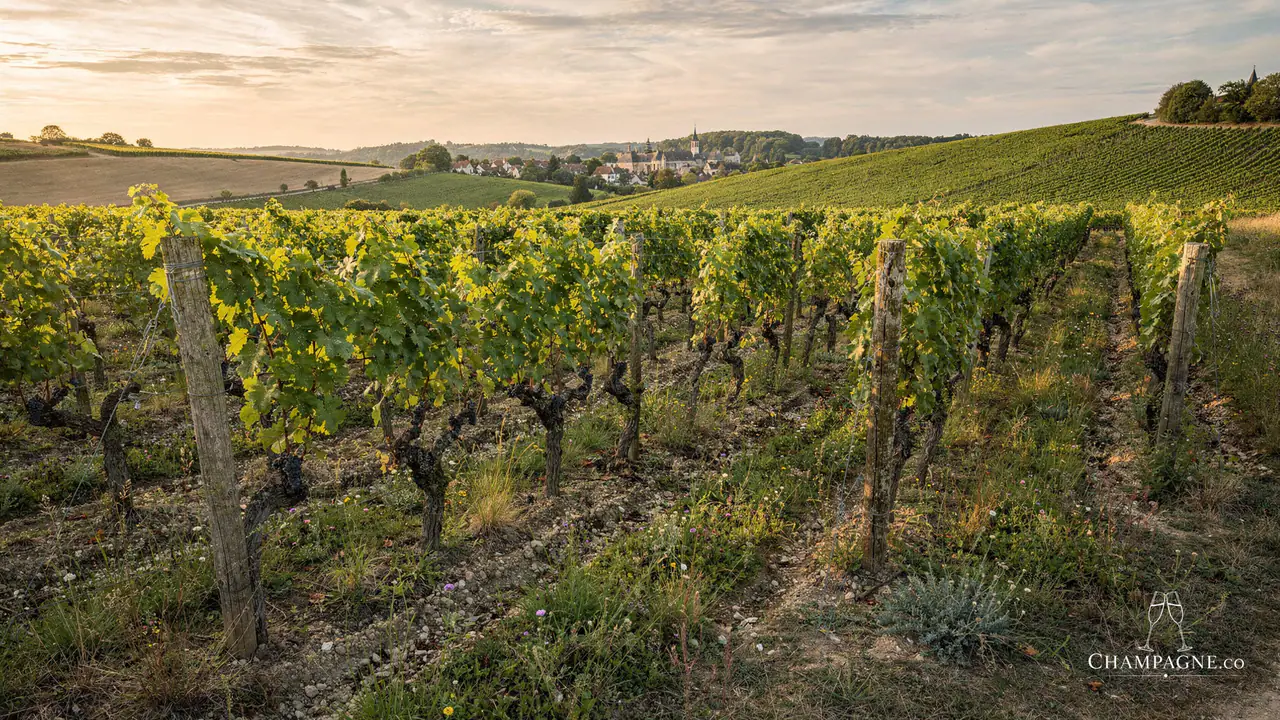
Vincelles supplies more than half of the current vineyard. The producer describes a mix of alluvial silt near the Marne, calcareous stones on mid-slope sites and green clay higher on the slopes.
Meunier is the leading grape, followed by Chardonnay and Pinot Noir, with Pinot Gris and other old varieties adding further diversity. The 2026 organic-association record lists certified plantings across Meunier, Pinot Noir, Pinot Gris and Chardonnay and records 2.43 hectares certified AB.
Cellar and winemaking
The grapes are pressed by the village cooperative before Jérôme Blin takes the musts back to his own cellar for vinification. The producer describes a low-intervention approach using indigenous yeasts, minimal sulphur, no fining and little or no filtration where possible.
He works with both barrels and jars, and the range includes parcel-led micro-vinifications. Exact vessel, vintage, dosage and ageing nevertheless remain specific to each cuvée and release.
Champagne.co analysis
Jérôme Blin is best understood through experimentation anchored in a very small Vallée de la Marne vineyard. Meunier remains the natural centre of gravity, but the estate deliberately stretches beyond it through Chardonnay, Pinot Noir, Pinot Gris, complantation and still wines.
The organic chronology is also important: conversion began in 2010, the first certified harvest came in 2013, and the certified surface has continued to evolve. That makes current certification figures more reliable than older static acreage quoted elsewhere.
Buying guidance
Apogée and Meunier sur Sable are the most direct choices for buyers interested in the domaine’s Meunier identity. Octave offers the clearest Chardonnay contrast, while Les Ports is the more unusual option for a complanted parcel.
For Coteaux Champenois, identify whether the current Œil de Perdrix is the white or red still wine. As with the parcel cuvées, check the exact current vintage, dosage and technical sheet rather than carrying specifications from an older release.
Loading current Champagne range…
Spotted something wrong? Report a correction
Every report goes to a human review queue. Nothing on this page changes automatically.