Jérôme Prévost / La Closerie
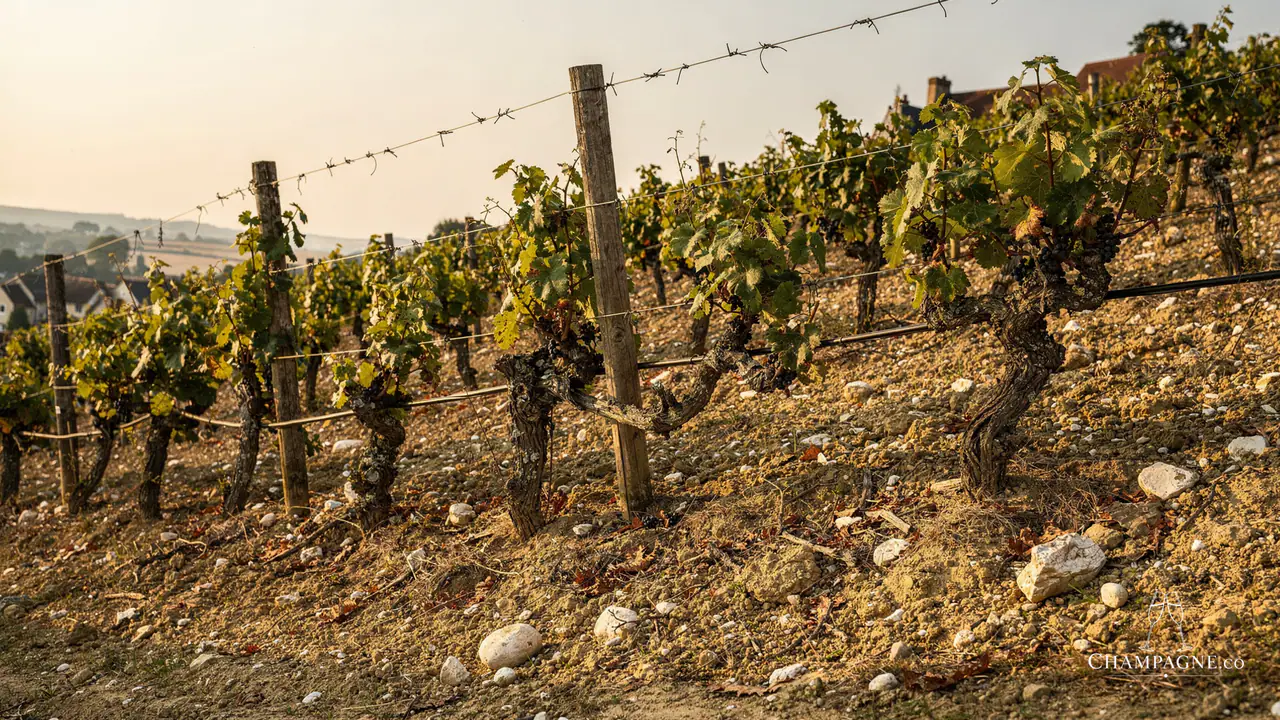
La Closerie is the Gueux domaine of Agnès and Jérôme Prévost, centred on the single contiguous Les Béguines vineyard at the western edge of the Champagne appellation. The parcel covers about 2 hectares at roughly 120 metres altitude on Thanetian calcareous…
Editorial profile
La Closerie is the Gueux domaine of Agnès and Jérôme Prévost, centred on the single contiguous Les Béguines vineyard at the western edge of the Champagne appellation. The parcel covers about 2 hectares at roughly 120 metres altitude on Thanetian calcareous sand.
Pinot Meunier is the dominant grape, accounting for 94% of Les Béguines, with small plantings of Pinot Gris and Chardonnay. The principal Meunier vines were planted in 1964, while the smaller Pinot Gris and Chardonnay components date from 2000.
Why this producer matters
La Closerie is unusually concentrated: one principal parcel, one dominant grape and a small number of wines. That makes Les Béguines itself the key to understanding the estate rather than a broad hierarchy of labels.
Jérôme Prévost’s first harvest from the parcel was in 1987, while the first wine under his own production dates from 1998. The domaine’s subsequent reputation has grown around a very small production built from this single Gueux site.
Vineyard and terroir
Les Béguines sits on paleocene calcareous sand from the Thanetian period, near the edge of the Champagne appellation. The producer records a north-south row orientation and planting densities between 8,333 and 10,000 vines per hectare.
The vineyard has been worked without herbicides since 1996 and without insecticides since 1994. Soil cultivation, mycorrhizal work and restrained copper use form part of the producer’s current vineyard description.
Cellar and winemaking
The main Les Béguines wine undergoes spontaneous fermentation and about ten months of fermentation and ageing in wooden vessels on full lees. Malolactic fermentation is allowed rather than systematically required.
Bottling is carried out slowly by gravity, and the producer has used Extra-Brut dosage since the first wine in 1998. The current first-party technical record gives 2.5 grams of dosage per bottle for Les Béguines; that figure should remain attached to the current producer specification.
Champagne.co analysis
La Closerie is a useful reminder that Champagne can be understood at the scale of a single field. Les Béguines is not merely one cuvée among many: it is the agricultural and stylistic centre of the domaine.
The interest lies in how one Meunier-dominated Gueux parcel is carried through wood fermentation, low dosage and, in the case of Fac-Similé, a rosé variation using red wine from the same site.
Buying guidance
Les Béguines is the essential starting point and the bottle that best represents La Closerie. Fac-Similé is the natural comparison for buyers interested in the rosé interpretation of the same parcel.
Given the domaine’s scale and allocation-based sales, availability changes quickly. Check the exact current release rather than relying on older merchant descriptions for vintage, dosage, disgorgement or production quantity.
Loading current Champagne range…
Spotted something wrong? Report a correction
Every report goes to a human review queue. Nothing on this page changes automatically.