Juillet-Lallement
Champagne Juillet-Lallement is a family grower based in Verzy, on the Montagne de Reims. The domaine farms a little over four hectares across nine parcels in Verzy and Sillery, both Grand Cru villages. The producer gives an average vine age of about 40…
Editorial profile
Champagne Juillet-Lallement is a family grower based in Verzy, on the Montagne de Reims. The domaine farms a little over four hectares across nine parcels in Verzy and Sillery, both Grand Cru villages. The producer gives an average vine age of about 40 years and identifies its oldest parcel as having been planted in 1949.
Current sources differ slightly on the vineyard mix: the domaine gives 50% Pinot Noir, 45% Chardonnay and 5% Meunier, while Club Trésors lists 55% Pinot Noir, 40% Chardonnay and 5% Meunier. The useful conclusion is therefore broader than either exact split: Pinot Noir is the largest component, Chardonnay is close behind, and Meunier occupies a small share.
The family history reaches back to the early twentieth century. Pierre Lallement succeeded in 1963, the domaine joined the organisation now known as Club Trésors in 1973, and Jean Lallement took over in 2003. Jean and Virginie Lallement represent the current family generation.
Why this producer matters
Juillet-Lallement offers an unusually compact view of two Grand Cru terroirs from a small family holding. Verzy and Sillery provide the entire vineyard base, while the near balance between Pinot Noir and Chardonnay gives the range scope to explore both varieties separately as well as in blends.
Its membership of Club Trésors is also meaningful because Special Club sits alongside a broader range that includes Blanc de Blancs, Blanc de Noirs and the varietal Belle de Juillet wines. That makes the domaine useful for readers interested in how one grower interprets the same small vineyard base through different blend and single-variety formats.
Vineyards and terroir
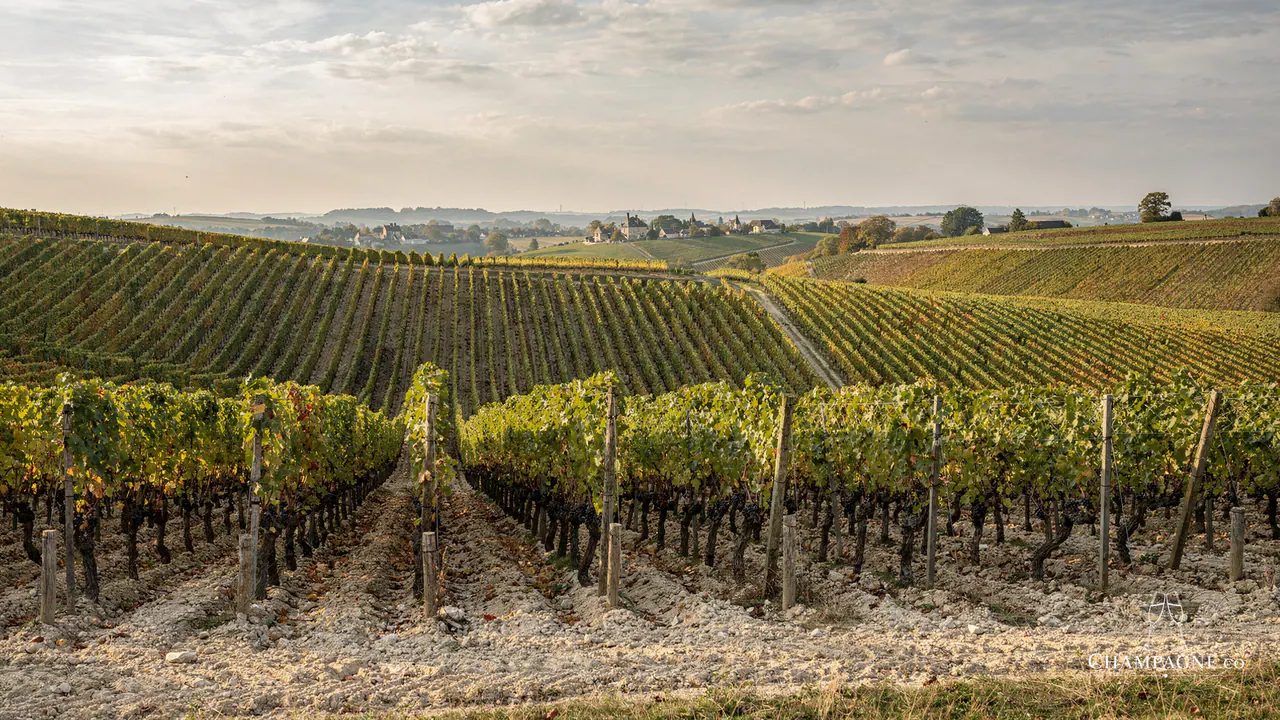
The estate's nine parcels are divided between Verzy and Sillery. Both villages lie on the Montagne de Reims and carry Grand Cru status. The domaine describes chalky subsoil across its holdings and practises a reasoned approach to cultivation intended to respect natural cycles.
The producer's own current vineyard figures are a little over four hectares, with vines averaging around 40 years of age. Its oldest cited parcel dates to 1949. Those are more useful markers of the estate's scale and maturity than attempting to force an exact varietal percentage where two current authoritative sources disagree.
Winemaking and cellar approach
The technical information published for individual wines shows that Juillet-Lallement does not use one cellar recipe across the range. Stainless steel is important for several cuvées, while oak appears selectively. Malolactic fermentation is used on the currently documented Blanc de Noirs and Blanc de Blancs releases, but release-specific details should not be treated as permanent rules for every wine.
That release-by-release approach matters when reading the range: dosage, reserve-wine proportion and oak use can change with the cuvée, so the identity of the wine is better understood from its stated variety, terroir and format than from a single generalized winemaking formula.
Champagne.co analysis
Juillet-Lallement's interest comes from concentration rather than scale. A little over four hectares, nine parcels and two Grand Cru villages create a narrow geographical frame, yet the range explores that frame through blends, single-variety wines and Special Club.
The close balance of Pinot Noir and Chardonnay is particularly useful. Rather than being a domaine whose identity can be reduced to one dominant grape, Juillet-Lallement can show how the two principal varieties of its holdings behave both separately and together. The small Meunier component becomes more conspicuous when it is isolated in a Belle de Juillet release.
Buying guidance
For a first look at the producer, Blanc de Noirs and Blanc de Blancs provide the clearest side-by-side comparison of the domaine's two principal grapes across its Grand Cru base. Sélection is the more direct route into the blended house range.
Readers looking for the estate's more release-specific expressions should look to Special Club and Belle de Juillet. Because vintages and technical specifications vary by bottling, check the exact release when dosage, oak use or vintage is important to a purchase decision.
Loading current Champagne range…
Spotted something wrong? Report a correction
Every report goes to a human review queue. Nothing on this page changes automatically.