L. Aubry Fils
L. Aubry Fils is a family grower based in Jouy-lès-Reims, on the western side of the Montagne de Reims. Its modern identity is unusually easy to recognise: alongside the familiar Champagne trio of Chardonnay, Pinot Noir and Meunier, the Aubry family has…
Editorial profile
L. Aubry Fils is a family grower based in Jouy-lès-Reims, on the western side of the Montagne de Reims. Its modern identity is unusually easy to recognise: alongside the familiar Champagne trio of Chardonnay, Pinot Noir and Meunier, the Aubry family has made the region’s historic permitted varieties a serious part of its work rather than a curiosity on the margins.
That gives the domaine two complementary faces. There is a broad, approachable house range built from its Premier Cru villages, and there are more specialised bottlings that explore Arbane, Petit Meslier, Pinot Blanc and Pinot Gris alongside the better-known varieties. The result is a producer whose interest lies as much in Champagne’s viticultural diversity as in conventional prestige cues.
Why this producer matters
The Aubry family’s long-running historic-variety programme gives drinkers a practical way to understand how much broader Champagne can be than the standard three-grape shorthand suggests. These varieties are not simply mentioned in an archive: they appear in current commercial wines.
For Champagne.co, that makes Aubry particularly useful as a bridge between traditional regional history and contemporary grower Champagne. The strongest bottles are compelling because the unusual varieties are tied to identifiable villages, vintages and production choices rather than being treated as a marketing theme.
Vineyards and grape diversity
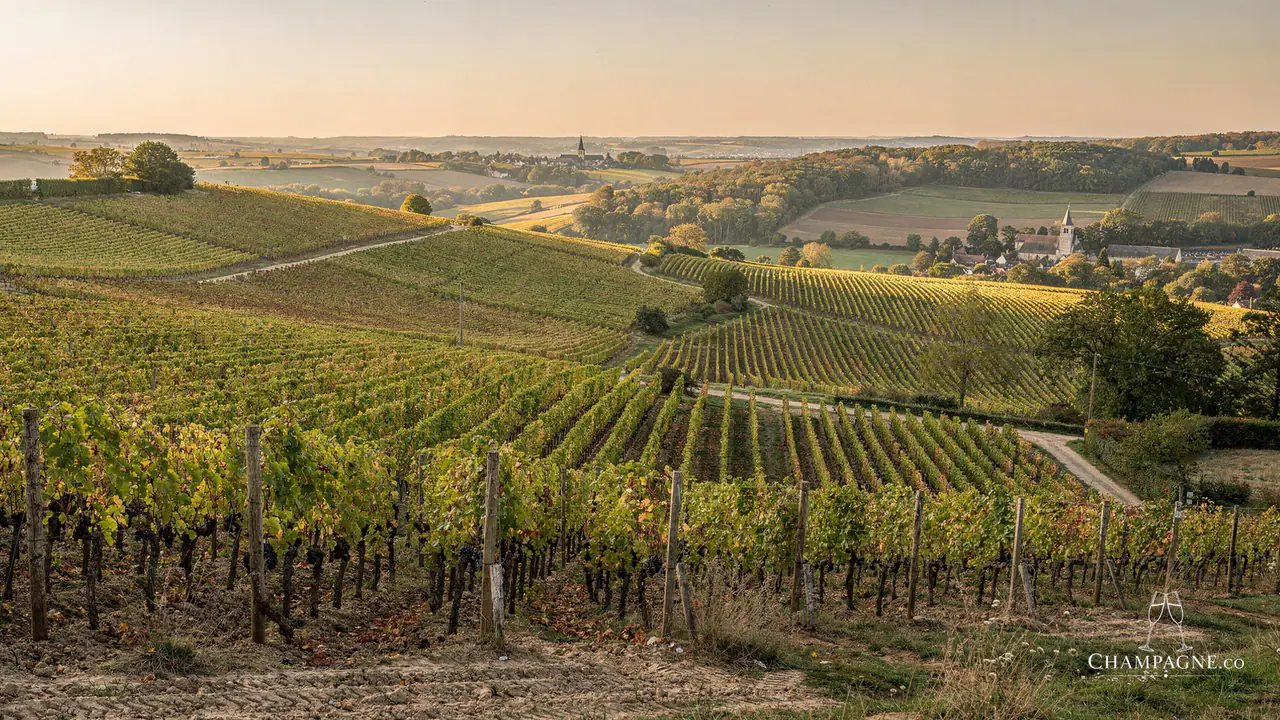
The domaine’s current material describes more than 12 hectares spread across nearly 50 parcels. Its vineyards include Premier Cru sites around Jouy-lès-Reims and neighbouring villages on the western Montagne de Reims.
The key point is diversity. Aubry works with Chardonnay, Pinot Noir and Meunier but also maintains plantings of Arbane, Petit Meslier, Pinot Blanc and Pinot Gris, the latter historically known in Champagne by names including Fromenteau. Those varieties become especially visible in the Nombre d’Or wines.
Cellar and winemaking
Aubry’s technical approach should be read wine by wine rather than reduced to a single house formula. Current releases show meaningful differences in blend, dosage, bottle pressure and lees ageing.
That release-specific approach is important because the specialist wines are deliberately distinct. The Sablé bottlings use lower pressure than standard Champagne, while other wines use conventional pressure and different dosage levels.
Champagne.co analysis
Aubry is most interesting when approached as a producer of ideas as well as bottles. The historic grapes matter because they change the composition of actual wines and illuminate a part of Champagne that is easy to overlook. The domaine therefore deserves attention from drinkers who already know the major houses and want to explore the region’s less standardised side.
The sensible distinction is between the accessible core range and the more exploratory Nombre d’Or wines. The latter are the clearest statement of what makes Aubry different, but their technical details should always be checked by vintage because blends, dosage and ageing are not safe to generalise.
Buying guidance
For a first bottle, the regular Brut/Extra-Brut offers the simplest introduction to the producer. Buyers specifically interested in Champagne’s historic varieties should prioritise the Nombre d’Or releases, checking the vintage and exact cuvée rather than assuming one technical specification applies to all of them.
Sablé Blanc des Blancs is particularly relevant for drinkers interested in the combination of old varieties and lower-pressure Champagne. Le Nombre d’Or Brut is the more direct choice for anyone wanting a single wine that incorporates all seven varieties currently highlighted by the domaine.
Loading current Champagne range…
Spotted something wrong? Report a correction
Every report goes to a human review queue. Nothing on this page changes automatically.