Laherte Frères
Champagne Laherte Frères is a family grower based in Chavot-Courcourt, south of Épernay. The family dates its winegrowing history to 1889 and describes seven generations working across a highly fragmented vineyard base of about 75 parcels.
Editorial profile
Champagne Laherte Frères is a family grower based in Chavot-Courcourt, south of Épernay. The family dates its winegrowing history to 1889 and describes seven generations working across a highly fragmented vineyard base of about 75 parcels.
The estate's modern identity is deliberately parcel-conscious. Rather than presenting one broad house blend as the whole story, Laherte Frères separates its wines into three families: Ultradition, Singulières & Originales, and Cœurs de Terroir. Those groups move from multi-parcel house wines toward varietal, low-dosage and site-specific expressions.
Wood is a major part of the cellar programme. The producer currently states that about 80% of the domaine's wines are fermented and aged in wood, using roughly 350 oak barrels together with foudres and other larger vessels. Massal selection, parcel vinification, immediate pressing and generally low dosage are recurring elements of the estate's working approach rather than a fixed recipe for every bottle.
Why this producer matters
Laherte Frères matters because it combines a broad family vineyard with a range designed to keep grape, place and cellar choices visible. Meunier, Chardonnay and Pinot Noir all have important roles, while permitted heritage varieties such as Petit Meslier, Pinot Blanc, Pinot Gris and Arbanne appear in specific wines rather than being treated as curiosities.
The producer also provides a useful contrast between continuity and experimentation. Ultradition gives the house a recognisable multi-vintage baseline; the Singulières & Originales wines isolate grape or cellar ideas; and Cœurs de Terroir narrows the focus further toward individual parcels and old-vine material.
Vineyards and cellar approach
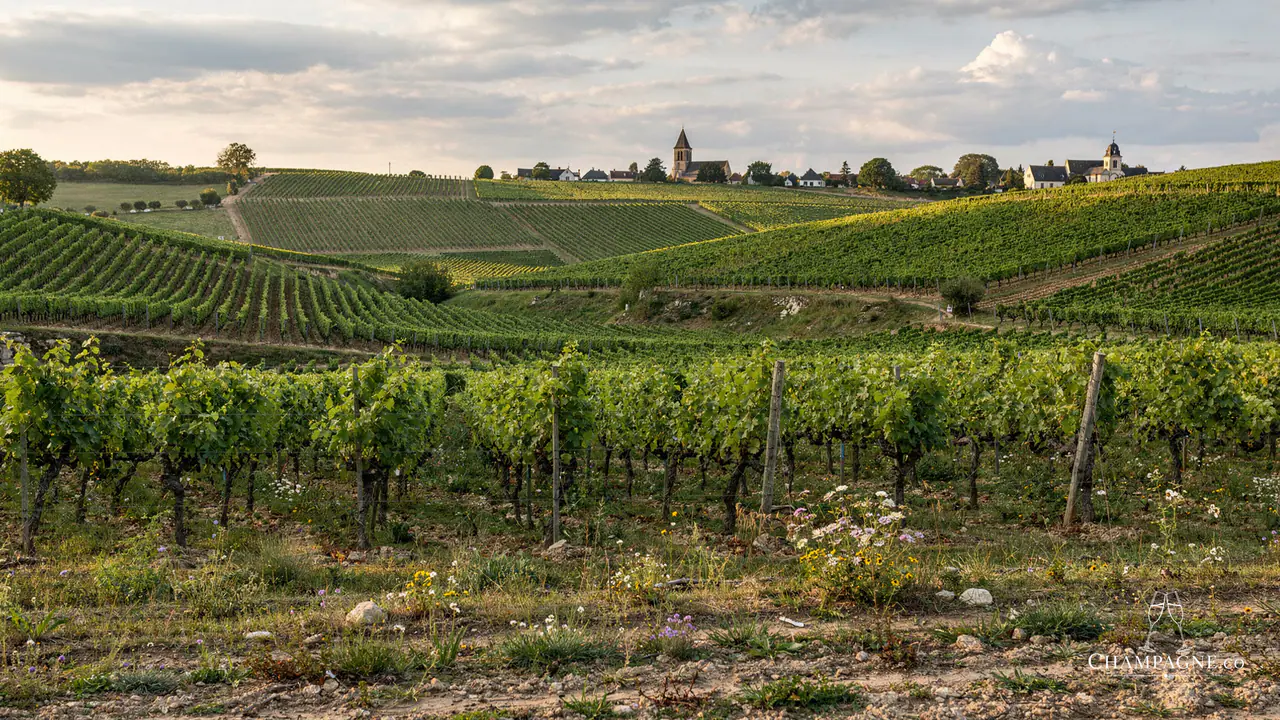
The estate works across the Coteaux Sud d'Épernay, the Vallée de la Marne and selected neighbouring sectors. The 75-parcel structure means soil and exposure can vary substantially, which is why the domaine places unusual emphasis on parcel separation and individual élevage.
About 80% of the wines are currently fermented and matured in wood. The producer also uses reserve wines extensively in several multi-vintage cuvées, while malolactic fermentation can be partial or omitted depending on the wine. These choices should be read cuvée by cuvée rather than converted into one universal house rule.
Champagne.co analysis
Laherte Frères is best understood as a range of increasingly precise views of the same family vineyard culture. Ultradition shows how the domaine handles multi-parcel, multi-vintage blending. Singulières & Originales changes one or more variables — grape, dosage or cellar treatment — while Cœurs de Terroir asks the reader to focus on an individual parcel, old vines or a less common varietal combination.
That structure is more informative than treating the wines as a simple quality ladder. A Petit Meslier bottling, a solera of seven varieties and an old-vine Meunier Champagne are not merely 'higher' versions of Ultradition; they answer different questions about the estate's grapes and sites.
Buying guidance
Start with Ultradition Brut for the broadest picture of the house, or Ultradition Brut Blanc de Blancs if Chardonnay is the priority. Extra Brut Ultradition gives a useful lower-dosage comparison with the core blend.
Choose Blanc de Blancs Brut Nature, Blanc de Noirs Brut Nature or Rosé de Meunier Extra-Brut when you want a more grape-specific route. Petit Meslier Extra Brut is the obvious choice for readers exploring Champagne's less common permitted varieties.
For the most terroir-specific bottles, move to Les Rouges Maisons, Les Vignes d'Autrefois, Les Grandes Crayères or the other Cœurs de Terroir wines. Les 7 is the distinctive choice if the interest is heritage grape diversity and the estate's solera approach. With all of these wines, check the exact release because vintage, dosage and reserve composition can change.
Loading current Champagne range…
Spotted something wrong? Report a correction
Every report goes to a human review queue. Nothing on this page changes automatically.