Lamiable
Champagne Lamiable is a family grower in Tours-sur-Marne, a Grand Cru village on the Montagne de Reims. The family has deep roots in the village, but its Champagne story begins in the early 1950s when Pierre Lamiable planted vines at Les Vignes des…
Editorial profile
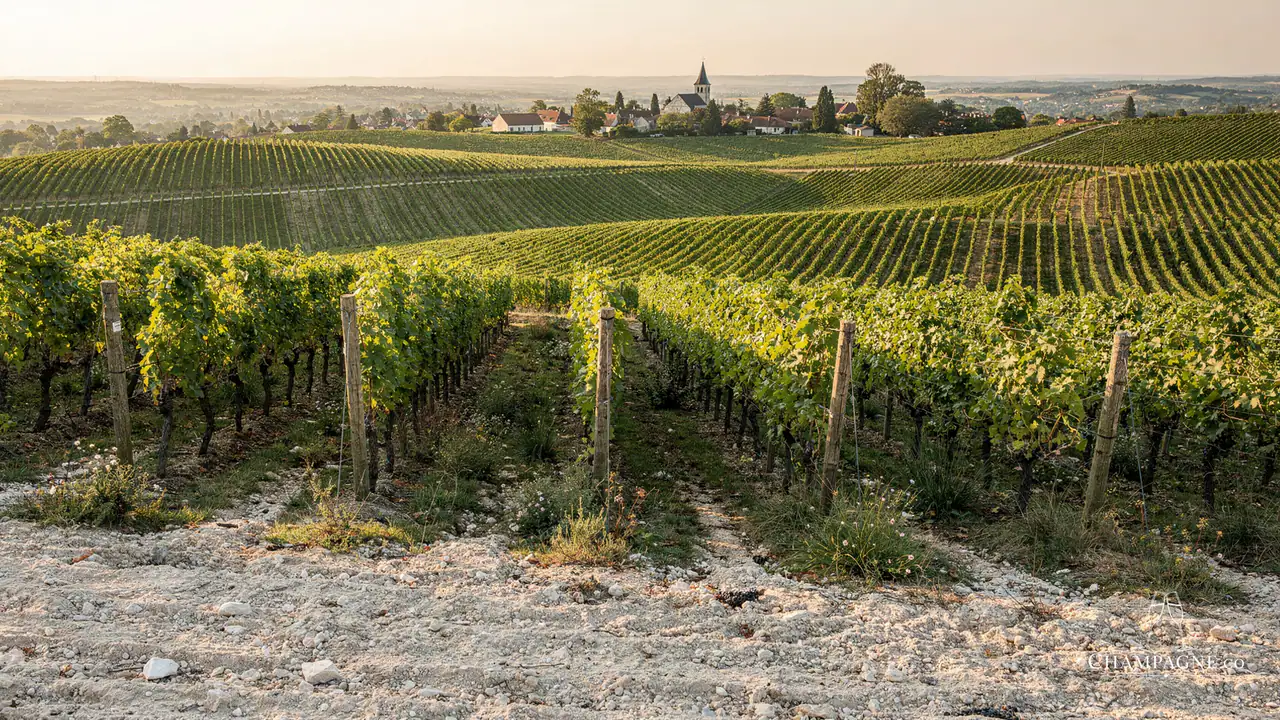
Champagne Lamiable is a family grower in Tours-sur-Marne, a Grand Cru village on the Montagne de Reims. The family has deep roots in the village, but its Champagne story begins in the early 1950s when Pierre Lamiable planted vines at Les Vignes des Meslaines. His son Jean-Pierre later developed estate bottling and sales, and the current generation centres on Ophélie, working with her husband Arnaud.
The house makes its identity unusually easy to read through place. Tours-sur-Marne is the anchor, with Bouzy also contributing Grand Cru fruit, while the family's wider activity includes Premier Cru vineyards at Billy-le-Grand. The current Champagne.fr record lists both Haute Valeur Environnementale and Viticulture Durable en Champagne credentials.
Why this producer matters
Lamiable is a useful example of how a family grower can move from a village blend toward increasingly specific expressions without abandoning its historic core. The range begins with a reserve-wine-driven house blend and then narrows toward single-parcel, old-vine and vintage wines.
The most important reference point is Les Meslaines. It comes from the first family parcel planted by Pierre Lamiable in 1953 and turns the producer's history into a specific wine rather than merely a backstory. That gives buyers a direct connection between the estate's origins and its contemporary range.
Terroir and cellar
The producer presents terroir as the organising principle of its Champagnes, with Tours-sur-Marne at the centre. Its vaulted chalk cellars and production facilities remain at 8 rue de Condé in the village.
The wines use different routes depending on cuvée: perpetual reserve wine plays a substantial role in Terre d'Étoiles, while Les Meslaines is a single-parcel, single-harvest Pinot Noir. Long lees ageing is important for the more ambitious vintage wines, and oak appears selectively rather than as a universal house recipe.
Champagne.co analysis
Lamiable is best understood by moving from broad to narrow. Terre d'Étoiles shows the house through blending and reserve wine; Les Meslaines reduces the story to one historic Pinot Noir parcel; the Héliades wines explore a more specialised vintage and cellar-led direction.
That progression gives the range more coherence than a simple quality ladder. It allows a buyer to choose according to what they want to investigate: the house blend, the founding parcel, grape balance or a more specialised vinification. Tours-sur-Marne remains the common thread.
Buying guidance
For a first bottle, Terre d'Étoiles is the clearest introduction to the house blend and reserve-wine approach. For the most direct expression of Lamiable's history and vineyard identity, choose Les Meslaines. Buyers looking for a more specialised vintage style should explore Héliades, while rosé drinkers can distinguish between the broader Éclat d'Étoiles Rosé and the much more narrowly made Héliades Rosé.
When comparing bottles, keep vintage, parcel, blend, reserve-wine percentage and ageing data tied to the exact cuvée and release. Lamiable's range deliberately uses different methods for different wines, so one technical sheet should not be treated as a permanent recipe for the whole estate.
Loading current Champagne range…
Spotted something wrong? Report a correction
Every report goes to a human review queue. Nothing on this page changes automatically.