Lancelot Perceval
Lancelot Perceval is a label identity used for selected wines from the Lancelot-Pienne family domaine in Cramant, rather than evidence of a second independent vineyard estate. Current specialist records identify wines such as Les Gouttes d'Or under the…
Editorial profile
Lancelot Perceval is a label identity used for selected wines from the Lancelot-Pienne family domaine in Cramant, rather than evidence of a second independent vineyard estate. Current specialist records identify wines such as Les Gouttes d'Or under the Lancelot Perceval name, while the parent producer's current first-party site continues to present Champagne Lancelot-Pienne and its Cramant-based vineyard and cuvée range.
That distinction matters for Champagne.co. The vineyard, family and cellar belong to the Lancelot-Pienne domaine.
Why this producer matters
The Lancelot Perceval identity is most useful as a marker for more narrowly defined wines within the wider Lancelot-Pienne story. Current specialist material links Les Gouttes d'Or to a single Chardonnay plot in Cramant, while recent independent listings also identify La Dame du Lac under the Lancelot Perceval name.
The name itself has a family connection: Céline Perceval is part of the Lancelot-Pienne family history, and specialist importer material explains the Lancelot Perceval labelling as a tribute to that side of the family. The result is a label whose meaning is familial and parcel-led rather than a separate vineyard business.
Vineyard and terroir context
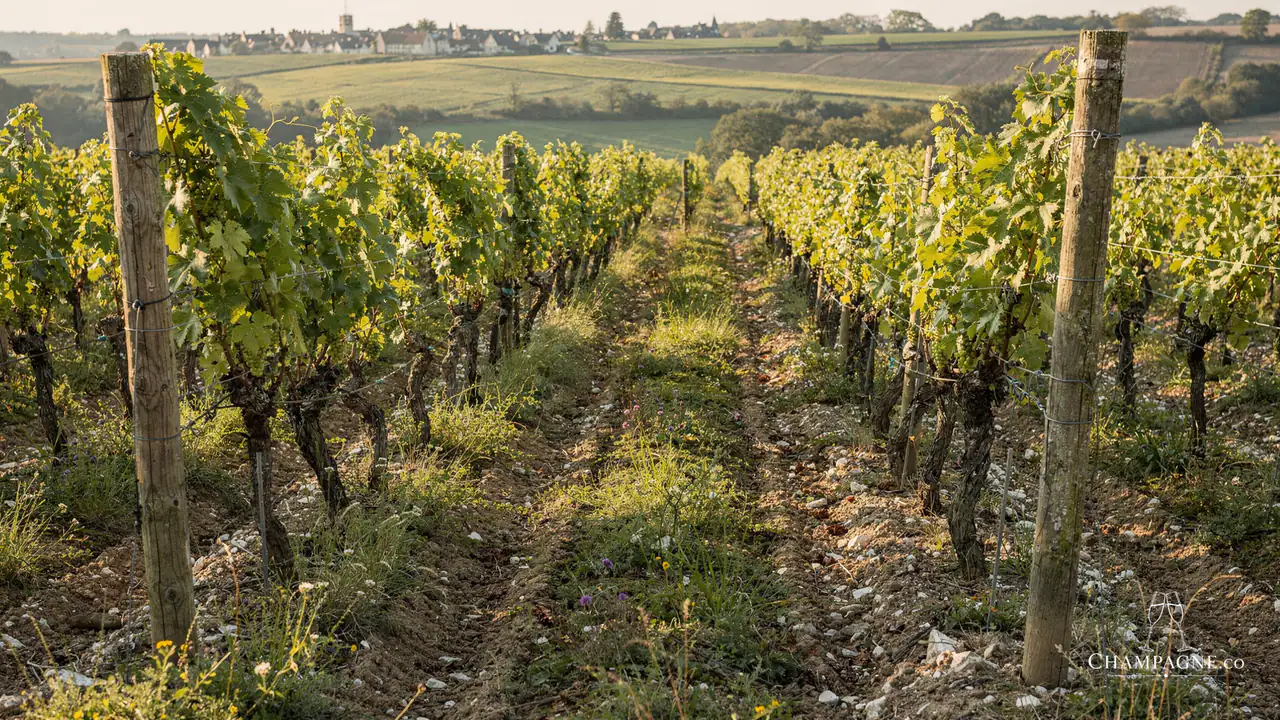
The parent Lancelot-Pienne domaine currently reports 8.5 hectares divided into more than 60 parcels across three broad sectors: Boursault in the Vallée de la Marne; Monthelon and Mancy on the Coteaux Sud d'Épernay; and Cramant, Chouilly, Avize and Cuis in the Côte des Blancs.
Those figures describe the parent domaine, not an independent Lancelot Perceval holding. For the label itself, the strongest current parcel evidence concerns Les Gouttes d'Or in Cramant, a Chardonnay site on the eastern side of the village's main ridge. Exact parcel age, farming detail and vintage should remain attached to the specific release.
Winemaking and cellar approach
Lancelot-Pienne's current cellar philosophy centres on parcel-by-parcel vinification in temperature-controlled stainless steel, with malolactic fermentation decided according to the individual wine rather than applied as a universal rule. That provides the production context for Lancelot Perceval-labelled releases without implying that every bottle follows the same treatment.
Release specificity remains essential. The current parent-domaine Perceval 2020 cuvée, for example, is a 50/50 Chardonnay–Pinot Noir vintage wine from Cramant and Boursault with its own published maturation and dosage. That wine is part of the Lancelot-Pienne range and should not be confused automatically with every bottle carrying the Lancelot Perceval label.
Champagne.co analysis
Lancelot Perceval is a case where catalogue identity matters as much as wine style. Treating it as an entirely separate estate would duplicate the Lancelot-Pienne vineyard and family story; treating it merely as a typo would lose a label that is genuinely used for selected wines.
The most useful editorial approach is therefore relational: Lancelot-Pienne provides the estate context, while Lancelot Perceval identifies particular releases or market presentations. For readers, the exact label, cuvée and vintage on the bottle are more reliable than assuming a permanent standalone range.
Buying guidance
Check the physical label or current technical record when comparing La Dame du Lac, Perceval or other wines that may appear under different family naming conventions in different markets. Do not transfer Lancelot-Pienne's estate area, certifications or one cuvée's technical data onto every Lancelot Perceval-labelled bottle.
Loading current Champagne range…
Spotted something wrong? Report a correction
Every report goes to a human review queue. Nothing on this page changes automatically.