Lanson
Lanson is a historic Reims Champagne house founded in 1760. Its current cellar master is Hervé Dantan, who took the role in 2013 and has overseen the evolution of the house's core Black Label into the numbered Le Black Création series.
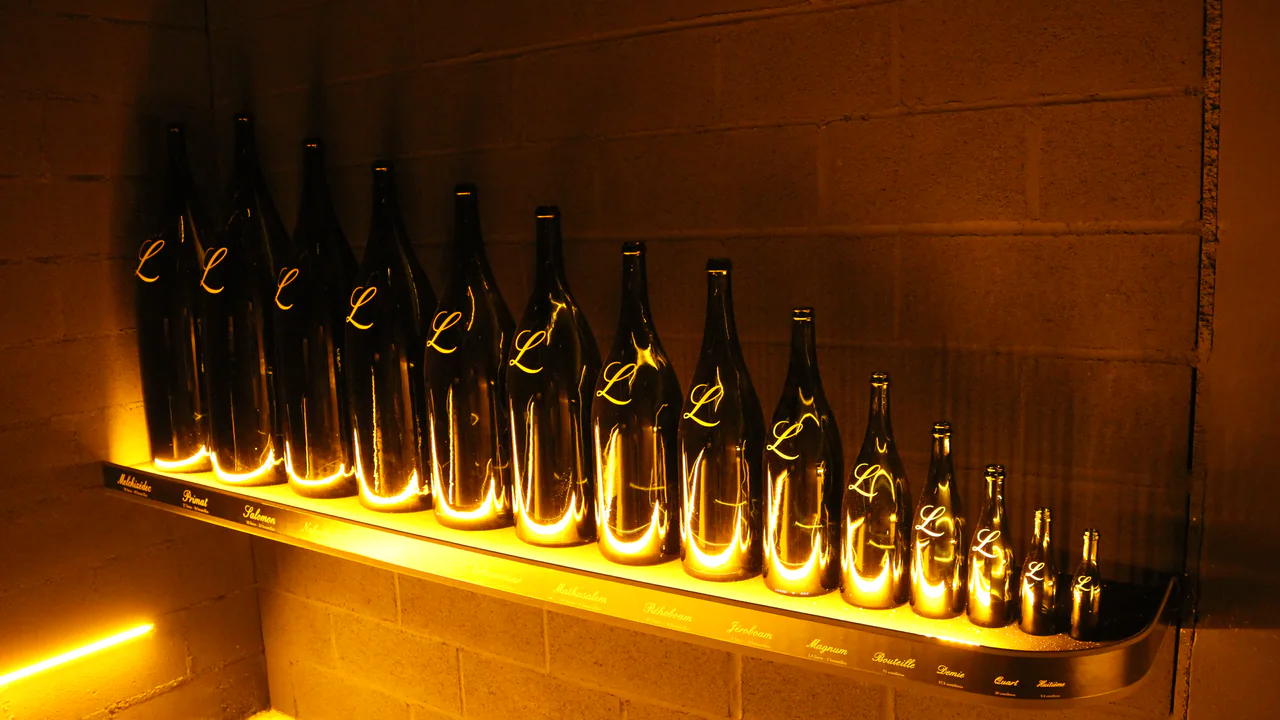
Lanson — Champagne producer profile image.
Editorial profile
Lanson is a historic Reims Champagne house founded in 1760. Its current cellar master is Hervé Dantan, who took the role in 2013 and has overseen the evolution of the house's core Black Label into the numbered Le Black Création series.
Freshness remains the central technical idea. Lanson continues to use a predominantly non-malolactic approach rather than claiming that every component wine avoids malolactic fermentation. That distinction is important: the current Le Réserve Extra Brut, for example, is documented as containing 75% wines made without malolactic fermentation, while the current Vintage 2014 is entirely non-malolactic.
Why this producer matters
Lanson combines large-house scale with several unusually specific winemaking markers. The house currently says its vineyard supply covers about 400 hectares, including 60 hectares of its own, drawn from a broad palette of crus. Reserve wines, extended cellar ageing and restricted malolactic fermentation are then used to preserve continuity and freshness across that broad sourcing base.
The portfolio also reaches beyond the standard multi-cru house blend. Le Clos Lanson provides a site-specific wine from a walled vineyard in Reims, Le Green Bio-Organic comes exclusively from the organically and biodynamically farmed Domaine de la Malmaison, and Noble Champagne forms the prestige tier.
Vineyard and sourcing identity
Lanson's current savoir-faire page describes a supply base of about 400 hectares, including 60 hectares owned by the house and 16 hectares under organic and biodynamic viticulture. The grapes come from a wide selection of crus, approximately half of them Grand Cru or Premier Cru; the current Le Réserve Extra Brut, for example, is documented as drawing on a selection of 80 crus.
That breadth makes Lanson a blending house first, but not exclusively. The Malmaison estate, acquired in 2010 and now certified organic and biodynamic, supplies Le Green Bio-Organic, while Le Clos Lanson isolates a single historic vineyard in Reims.
Winemaking and cellar approach
The defining house practice is the selective preservation of malic acidity. Lanson's current Black Création page describes a historically predominantly non-malolactic style, now combined with a smaller proportion of wines that have undergone malolactic fermentation where Hervé Dantan judges it useful.
Reserve wine and time in cellar are equally important. Each Black Création spends four years in the house cellars. The current Le Réserve Extra Brut contains at least 40% reserve wines and is aged for at least five years, while Le Vintage 2014 has spent at least ten years in cellar. Exact reserve proportions, malolactic percentages, dosage and ageing remain release-specific.
Champagne.co analysis
Lanson is best understood through the interaction of breadth and tension. A very large sourcing palette gives Hervé Dantan flexibility in blending, while reserve wine, long cellar ageing and selective restriction of malolactic fermentation maintain the freshness that the house considers central to its identity.
The modern range then narrows that broad model in different ways. Le Réserve Extra Brut sharpens dosage and reserve-wine emphasis, Le Green ties one wine to a certified estate, Le Clos Lanson isolates a single Reims site, and Noble Champagne moves into the prestige-vintage tier. These are distinct expressions rather than simply more expensive versions of Black Création.
Buying guidance
Start with Le Black Création for the clearest current house signature, keeping the Création number attached to the bottle. Choose Le Réserve Extra Brut for lower dosage and longer ageing, or Le Blanc de Blancs when Chardonnay is the priority.
Look to Le Green Bio-Organic for the Malmaison estate, Le Clos Lanson for site specificity and Noble Champagne for the prestige tier. For Le Vintage 2014 and every numbered or vintage release, retain the exact technical data rather than transferring it to later editions.
Loading current Champagne range…
Spotted something wrong? Report a correction
Every report goes to a human review queue. Nothing on this page changes automatically.