Launois Père & Fils
Launois Père et Fils is a family Champagne producer based in Le Mesnil-sur-Oger on the Côte des Blancs. Founded in 1872, it now describes eight generations of family continuity, with Séverine and Caroline Launois named by the estate as the contemporary…
Editorial profile
Launois Père et Fils is a family Champagne producer based in Le Mesnil-sur-Oger on the Côte des Blancs. Founded in 1872, it now describes eight generations of family continuity, with Séverine and Caroline Launois named by the estate as the contemporary generation carrying the business forward.
The producer’s identity is strongly tied to Grand Cru Chardonnay and Le Mesnil-sur-Oger, but its current range is broader than a simple Blanc de Blancs specialist label suggests. Alongside several Chardonnay wines, Launois lists Pinot Noir and rosé cuvées as well as wines drawing on fruit beyond the immediate village.
Why this producer matters
Launois combines a long-established Le Mesnil family identity with an unusually visible interest in Champagne’s material history. Its Musée de la Vigne et du Vin occupies chalk cellars and preserves historic vineyard and cellar equipment, including presses from the seventeenth, eighteenth and nineteenth centuries. Comité Champagne’s current directory independently confirms the museum and visitor offer.
For wine buyers, the more important point is the range itself: Launois can provide a traditional Grand Cru Chardonnay reference while also showing a less expected Pinot Noir side. That makes it useful for understanding both the dominant identity of Le Mesnil and the fact that a producer based there need not make only one style of Champagne.
House and vineyard identity
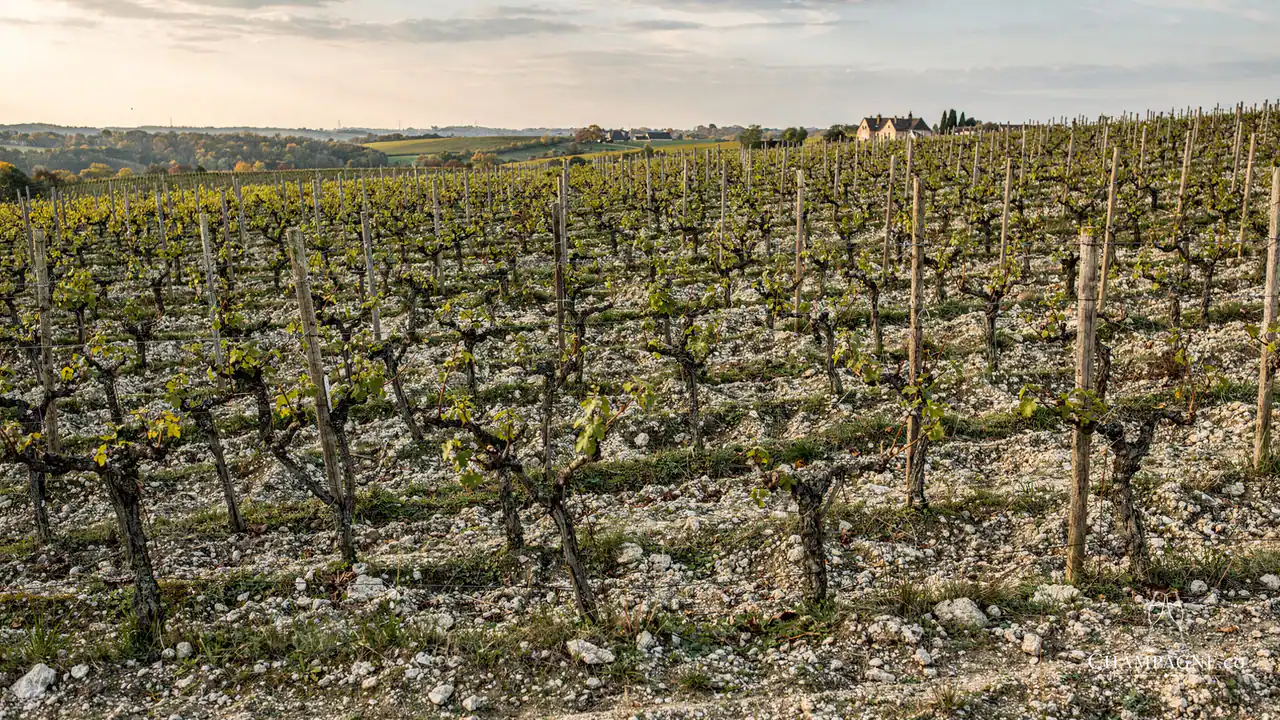
The estate describes its vineyards as Grand Cru and places them at the heart of the Côte des Blancs. Grapes are harvested from the family vineyards and pressed on the property. The current public material does not give a sufficiently clear up-to-date hectare figure, so the estate is better understood through its location and range than through older acreage estimates.
Le Mesnil-sur-Oger is the central reference point, and Chardonnay remains the core variety. The live portfolio nevertheless includes Pinot Noir wines and Vinum Dei, for which the producer identifies both Côte des Blancs and Coteaux du Sézannais origins.
Champagne.co analysis
Launois is most coherent when viewed as a traditional Le Mesnil house that refuses to be reduced to a single village stereotype. Cuvée Réservée, Mesnil-Quartz and the other Chardonnay wines establish the expected Côte des Blancs centre of gravity. Œil de Perdrix and Rosé Valentine then broaden the picture through Pinot Noir, while Vinum Dei extends the geographical frame beyond Le Mesnil alone.
The museum reinforces that sense of continuity, but it should not overshadow the wine. The practical distinction for readers is between the estate’s classic Chardonnay expressions, its more individual Chardonnay treatments such as Dorine, and the Pinot Noir wines that reveal a different side of the portfolio.
Buying guidance
For a first bottle, Cuvée Réservée is the clearest route into Launois’s Grand Cru Chardonnay identity. Choose Mesnil-Quartz when the explicit Le Mesnil connection is the priority, or Dorine for a Chardonnay expression shaped by extended oak maturation. Œil de Perdrix and Rosé Valentine are the useful choices for exploring the producer’s Pinot Noir side.
Loading current Champagne range…
Spotted something wrong? Report a correction
Every report goes to a human review queue. Nothing on this page changes automatically.