Leclaire-Thiefaine
Champagne Leclaire-Thiefaine is a small family grower based in Avize on the Côte des Blancs. The family traces its local winegrowing roots to 1878; the Leclaire-Thiefaine name itself dates from 1991, when Reynald Leclaire and Virginie Thiefaine married.…
Editorial profile
Champagne Leclaire-Thiefaine is a small family grower based in Avize on the Côte des Blancs. The family traces its local winegrowing roots to 1878; the Leclaire-Thiefaine name itself dates from 1991, when Reynald Leclaire and Virginie Thiefaine married. The next generation is now involved in the family business.
Chardonnay is the defining grape. The house presents a compact numbered range built around Grand Cru Avize and Cramant alongside Premier Cru material, with rosé providing the principal departure from the blanc-de-blancs theme. The result is a useful view of how one family interprets several Côte des Blancs origins without turning the range into a large catalogue.
Why this producer matters
Leclaire-Thiefaine is interesting less for scale than for clarity of place and range design. Avize provides the family base and one of the principal Grand Cru reference points, while Cramant appears as a separate expression rather than being folded into a generic Côte des Blancs blend. The numbered cuvées also make changes in origin, ageing and dosage comparatively easy to understand.
The producer's current presentation is firmly Chardonnay-led. That gives readers a focused way into the Côte des Blancs while still showing that vinification and dosage can materially alter the shape of wines made from the same principal grape.
House and vineyard identity
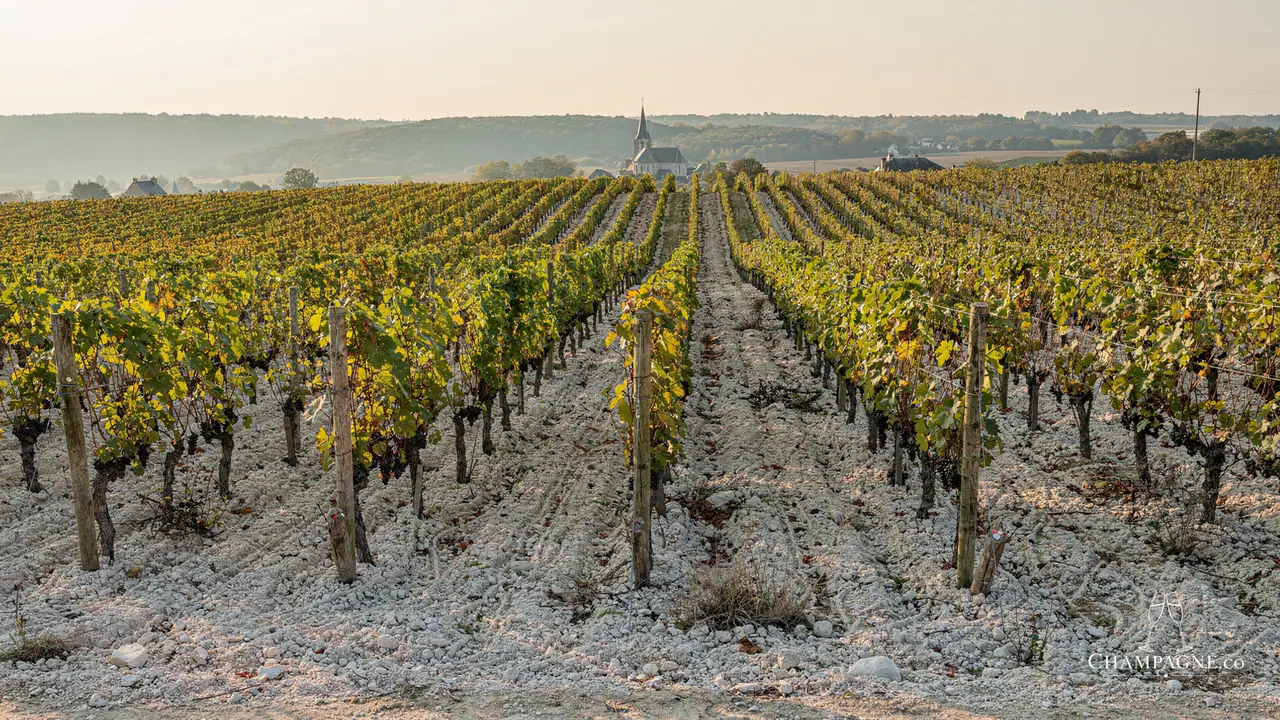
The Leclaire family has worked vines in Avize for five generations, with the family house dating its origins to 1878. Champagne Leclaire-Thiefaine was created under that name in 1991. The producer describes its Champagne production as drawing on a selected three hectares of estate vines.
Avize is the central reference in the range, but Cramant also has a dedicated Grand Cru cuvée and Premier Cru Chardonnay appears separately. This makes village and classification differences part of the producer's public identity rather than background detail.
Winemaking and cellar approach
The range is deliberately differentiated rather than governed by one technical recipe. Most current cuvées are low-dosage Chardonnay wines, while cellar ageing varies by bottling. Cuvée 03 Constantin is particularly distinctive because the producer specifies nine months of vinification in oak vats before extended cellar ageing; that treatment should be understood as specific to Constantin rather than a house-wide practice.
The producer's published technical information also shows dosage ranging from very low Extra-Brut levels upward depending on the cuvée. These figures are best read as specifications for the currently documented bottlings, not permanent formulas for every future release.
Champagne.co analysis
Leclaire-Thiefaine's strength is the legibility of its range. Apolline establishes Avize; Constantin shifts the village focus to Cramant and adds a clearly different oak-vat treatment; Mayeul introduces Premier Cru Chardonnay; the Millésimé adds the dimension of a declared vintage; and Cuvée 06 pushes dosage lower. Guillemette then provides the rosé counterpoint.
That makes this a producer to approach comparatively.
Buying guidance
For a first bottle, Cuvée 01 Apolline is the clearest introduction to the producer's Avize identity. Cuvée 03 Constantin is the more relevant choice for readers specifically interested in Cramant and the additional dimension of oak-vat vinification. Cuvée 04 Mayeul offers the Premier Cru Chardonnay branch of the range, while Cuvée 05 Le Millésimé is the bottle to consider when a vintage expression is the priority; check the declared year on the actual release.
For the lowest-dosage end of the numbered range, look to Cuvée 06 Extra-Brut Grand Cru. Readers wanting the house's rosé interpretation should choose Cuvée 02 Guillemette Rosé, whose current documented composition remains Chardonnay-led.
Loading current Champagne range…
Spotted something wrong? Report a correction
Every report goes to a human review queue. Nothing on this page changes automatically.