Lenoble
LENOBLE is a family Champagne house founded in Damery in 1920 by Armand-Raphaël Graser. The house name grew from his conviction that Champagne was the noblest of wines, and the modern company still presents itself as a deliberately limited-production,…
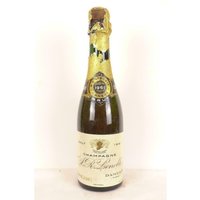
Representative Champagne from Lenoble
Editorial profile
LENOBLE is a family Champagne house founded in Damery in 1920 by Armand-Raphaël Graser. The house name grew from his conviction that Champagne was the noblest of wines, and the modern company still presents itself as a deliberately limited-production, craft-led house rather than a volume brand.
Its identity is unusually easy to read through geography. Damery anchors the house in the Vallée de la Marne; Grand Cru Chouilly supplies its most important Chardonnay; and Premier Cru Bisseuil provides a contrasting Pinot Noir source on the Montagne de Reims. That three-part structure gives LENOBLE a broader palette than its Damery address alone suggests.
Why this producer matters
LENOBLE combines the scale and continuity of a small family house with unusually strong estate terroirs. The current range makes those distinctions explicit: multi-harvest Vendange wines sit alongside vintage Blanc de Noirs from Premier Cru material, Grand Cru Blanc de Blancs and small-production prestige bottlings.
The house also places significant emphasis on reserve wines and long maturation. Earlier A.R. Lenoble releases became known for reserve components aged in magnums under cork; the present range has been reorganised and renamed, so older technical specifications should not automatically be carried forward. The enduring point is the house's use of mature reserve material to build depth while retaining freshness.
Vineyard and terroir
The estate's historic vineyard base spans three important sectors. Damery contributes the Vallée de la Marne dimension and its Meunier heritage. Chouilly, one of Champagne's Grand Cru villages, supplies the Chardonnay at the centre of LENOBLE's Blanc de Blancs programme. Bisseuil, a Premier Cru village, supplies Pinot Noir for the house's Blanc de Noirs.
Current house material emphasises healthy soils as the starting point for wine quality. The distribution of vineyards across these contrasting sites is more important to understanding LENOBLE than treating it as a single-village house: its blends and varietal wines are built from deliberately different Champagne landscapes.
Cellar and winemaking
LENOBLE says its annual production is deliberately limited to around 300,000 bottles, with pressing, vinification, ageing, blending, disgorgement, bottling and dispatch all carried out at the historic Damery site by a small team. The current Vendange collection receives at least three years in the cellars, while vintage and prestige wines are held substantially longer when the cuvée requires it.
Reserve wine is central to the house style, but exact proportions, vessels, base harvests, maturation and dosage must be read at release level. This is particularly important because the present V.-numbered wines make the harvest identity visible and the current range differs from older A.R. Lenoble catalogues.
Champagne.co analysis
LENOBLE is most interesting as a bridge between grower-like vineyard specificity and the blending resources of a small Champagne house. Damery, Chouilly and Bisseuil give it three distinct building blocks, while the reserve programme and long cellar ageing provide continuity between harvests.
The current catalogue is also unusually useful for comparative drinking. Extra Brut and Dosage Zéro show two approaches to multi-harvest blending; Blanc de Blancs and Blanc de Noirs isolate the house's strongest white- and black-grape terroirs; the older vintages and prestige wines then add maturity and selection. That structure makes LENOBLE a good house for readers who want to explore how origin, reserve wine and ageing interact without moving between unrelated producers.
Buying guidance
Begin with Extra Brut V.21 for the broad house signature. Choose Dosage Zéro V.19 if the priority is a drier expression, or Blanc de Blancs Grand Cru V.20 to focus on Chouilly Chardonnay. The Blanc de Noirs Premier Cru 2016 is the more direct route into the Bisseuil Pinot Noir side of the house.
For mature Champagne, the Blanc de Blancs Grand Cru 2012 offers a logical step up before the rarer Gentilhomme and Les Aventures. Keep the V.-number, vintage or edition attached when buying or cataloguing these wines: LENOBLE's technical composition is release-specific, and older A.R. Lenoble specifications should not be assumed to describe the current bottle.
Loading current Champagne range…
Spotted something wrong? Report a correction
Every report goes to a human review queue. Nothing on this page changes automatically.