Lilbert-Fils
Champagne Lilbert-Fils is a tiny Grand Cru grower based in Cramant, in the Côte des Blancs. The Lilbert family has cultivated vines in the village for centuries; current specialist records trace the written family vineyard history to 1746, while commercial…
Editorial profile
Champagne Lilbert-Fils is a tiny Grand Cru grower based in Cramant, in the Côte des Blancs. The Lilbert family has cultivated vines in the village for centuries; current specialist records trace the written family vineyard history to 1746, while commercial estate bottling is documented from the early twentieth century.
Today the domaine is led by Bertrand Lilbert, working in Cramant. The estate farms about 3.5 hectares of Chardonnay in the Grand Cru villages of Cramant, Chouilly and Oiry and makes only Blanc de Blancs Champagne from its own grapes.
Why this producer matters
Lilbert-Fils is unusual for its narrowness. There is no broad multi-grape house range: one grape, three neighbouring Grand Cru villages and three principal wine identities form the core of the estate.
That concentration makes the differences between the wines easier to understand. The non-vintage Blanc de Blancs shows the full three-village estate; Perle isolates older-vine material and lower bottle pressure; the vintage wine narrows the origin further to Cramant alone.
Vineyards and cellar approach
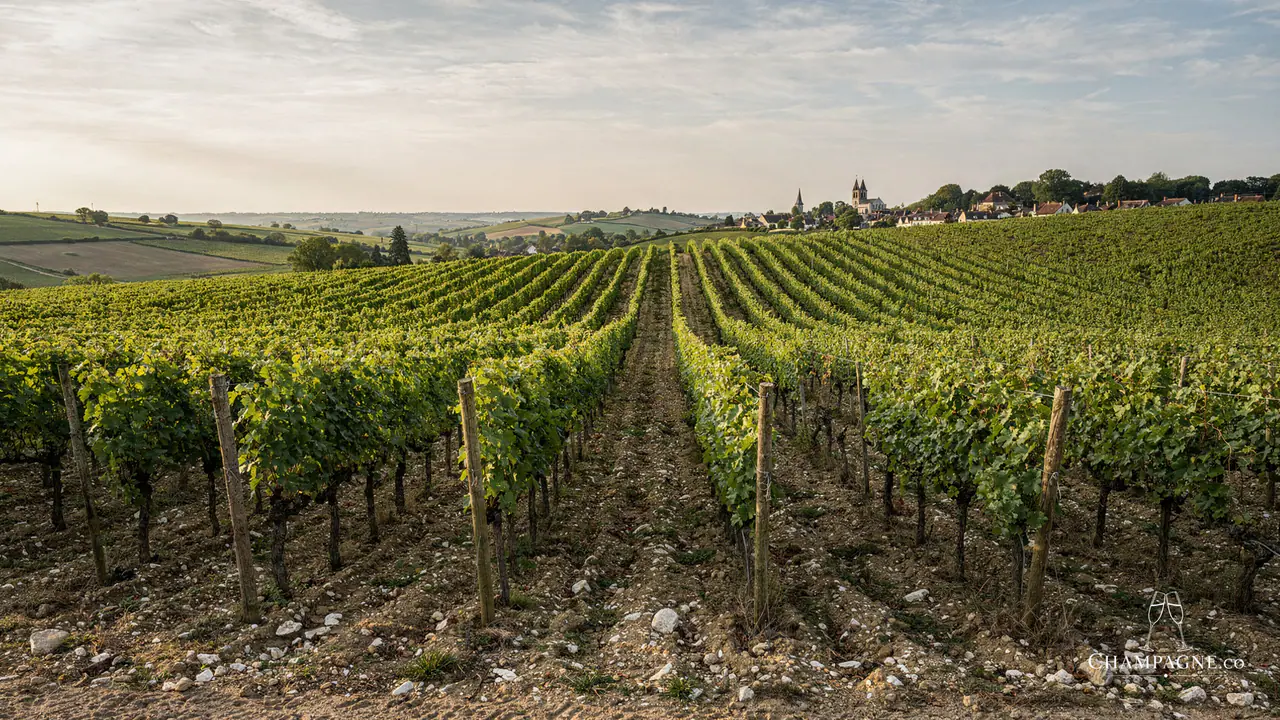
Current specialist importer material places roughly 60% of the vineyard in Cramant, 30% in Chouilly and 10% in Oiry, spread across around 15 parcels. Chardonnay is the only grape.
The estate follows a restrained farming approach described by its importer as lutte raisonnée. Vinification takes place in stainless steel, the wines undergo malolactic fermentation, riddling is carried out by hand and disgorgement is performed without freezing.
Champagne.co analysis
Lilbert-Fils is best understood as a study in progressive narrowing. The regular Blanc de Blancs draws together Cramant, Chouilly and Oiry. Perle keeps the same broad geography but changes vine age and pressure. The vintage wine then reduces the map to Cramant alone.
That makes the estate particularly useful for readers trying to understand Côte des Blancs Chardonnay without the distraction of a sprawling portfolio. The differences between cuvées come from source, vine age, ageing and pressure rather than from changing grape variety.
Buying guidance
Start with the Grand Cru Blanc de Blancs Extra Brut NV for the complete estate picture. Choose Perle if the interest is older vines and lower-pressure Champagne, and look for the Vintage Grand Cru Blanc de Blancs when you want the most Cramant-specific expression.
With Lilbert-Fils, exact base year, dosage and disgorgement matter. Those details have changed over time and should remain attached to the specific release rather than treated as permanent formulas.
Loading current Champagne range…
Spotted something wrong? Report a correction
Every report goes to a human review queue. Nothing on this page changes automatically.