Lombard
Maison Lombard is an Épernay house founded in 1925 and now led by the fourth generation of the family. Its present identity is built around a terroir-first reading of Champagne: fruit is separated by origin, villages and named parcels are followed…
Editorial profile
Maison Lombard is an Épernay house founded in 1925 and now led by the fourth generation of the family. Its present identity is built around a terroir-first reading of Champagne: fruit is separated by origin, villages and named parcels are followed individually, and the range moves from blended house cuvées towards increasingly specific cru and lieu-dit bottlings.
Thomas Lombard joined the house in 2017 and succeeded his father Thierry in 2020. The current direction develops work that had already begun under Thierry, including vineyard expansion in Premier and Grand Cru sectors and early trials of vinifying origins separately. The result is a house that uses its négociant reach not to blur provenance, but to compare it.
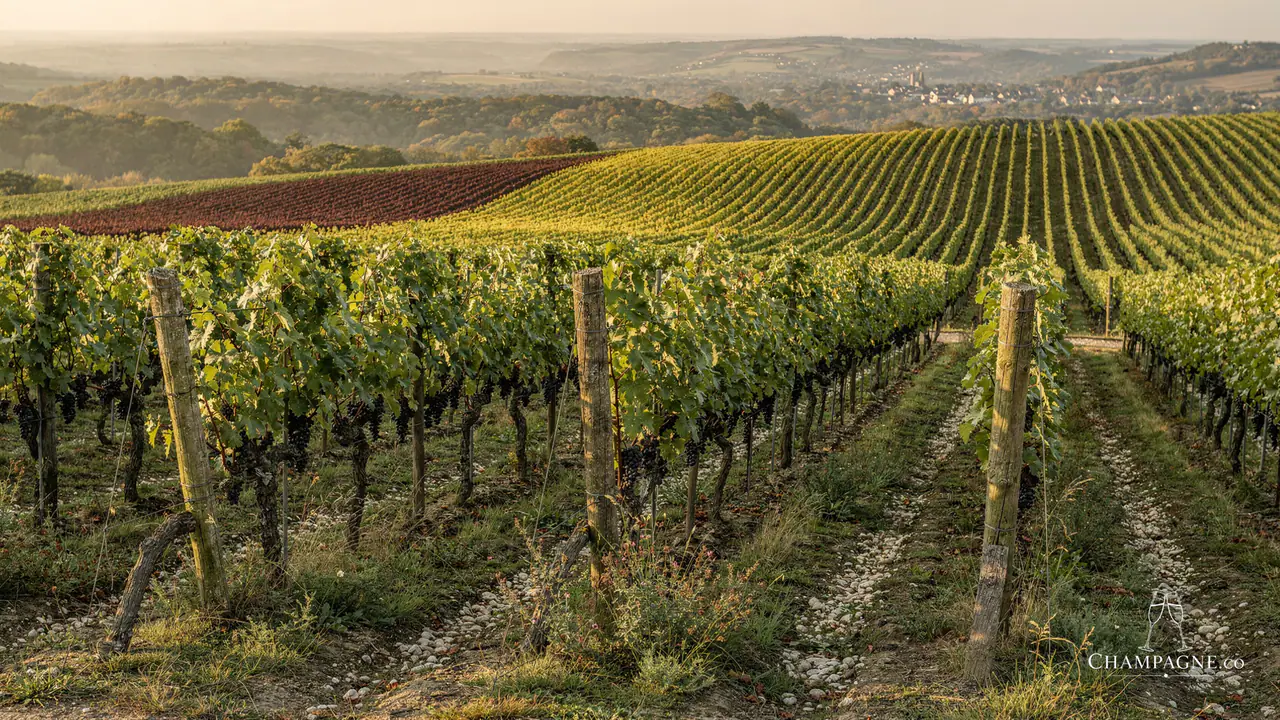
Lombard also has a meaningful estate-vineyard base of its own. The house states that it owns around six hectares, mostly Premier Cru, principally on the western side of the Montagne de Reims. These vineyards have been certified organic since the 2022 harvest. The estate plantings are approximately 60% Meunier, 30% Pinot Noir and 10% Chardonnay, with an average vine age of about 35 years.
Why this producer matters
Lombard is useful because its range is structured as a progression in geographic resolution. The Signature wines show the house working with blends from several terroirs; the Terroir range narrows the lens to individual villages and named parcels; and the Millésime collection preserves selected vintages from the cellar. That architecture lets a drinker compare Champagne not only by grape variety, but by origin.
The house's own vineyards add another layer to that identity. Villedommange, Pargny-lès-Reims, Jouy-lès-Reims, Coulommes-la-Montagne and Vrigny sit within the western Montagne de Reims area, where Meunier is particularly important to Lombard's estate mix. At the same time, grower partnerships extend the range into Chardonnay-dominant Côte des Blancs villages and Pinot Noir sites such as Verzenay.
Vineyard and terroir approach
Lombard separates grapes by origin from harvest onward and has built a cellar around that objective. Sixty stainless-steel vats, ranging from 25 to 250 hectolitres, allow small crus and lieux-dits to be handled independently rather than forced into a single large ferment. The house also works with grower partners through parcel visits that consider soil, topography and viticulture before the wines are assembled or bottled.
This origin-by-origin approach is most visible in the Brut Nature Terroir wines. The current house range includes village expressions from Le Mesnil-sur-Oger, Cramant, Chouilly and Verzenay, followed by named parcels including Les Ribauds in Villedommange, Les Marquises and Les Corettes in Verzenay, and Les Bauves in Cramant. The house's direct boutique also lists additional parcel bottlings from Avize, Le Mesnil-sur-Oger, Chouilly, Villeneuve-Renneville-Chevigny and Vertus.
Winemaking and cellar approach
Lombard favours cool alcoholic fermentation, with the house citing a range of roughly 14–16°C, and does not routinely initiate malolactic fermentation. The exact malolactic proportion varies by cuvée, so the individual technical sheet matters more than a blanket house rule.
The barrel cellar contains about 140 barrels, used for six-to-eight-month élevage where appropriate, alongside stainless steel. The underground cellars extend for roughly 1.5 kilometres over two levels. Lombard's detailed house material states that wines destined for Extra Brut receive at least three years in cellar and Brut Nature wines at least five years; individual current cuvée pages may state longer or release-specific maturation.
Champagne.co analysis
Lombard's strongest idea is not simply low dosage. It is the use of low dosage, separate vinification and a deliberately segmented range to make origin easier to read. The Signature wines give context; the village wines isolate a cru; the lieu-dit wines narrow the comparison again. That makes the portfolio unusually well suited to side-by-side exploration.
The estate-vineyard mix also prevents the house from being reduced to a Côte des Blancs story. Meunier is the largest share of Lombard's own plantings, while the wider range reaches into Chardonnay and Pinot Noir strongholds elsewhere in Champagne. In practical terms, a drinker can move from Villedommange Meunier to Verzenay Pinot Noir to Cramant or Le Mesnil Chardonnay without leaving the same producer's framework.
Buying guidance
For a first bottle, the Signature range is the clearest starting point because it shows how Lombard handles blends before the range becomes more site-specific. Brut Nature Grand Cru is the logical bridge into the house's zero-dosage direction, while Brut Nature Grand Cru Blanc de Blancs provides a Chardonnay-led reference point.
For terroir comparison, choose by place rather than by presumed hierarchy. Verzenay Grand Cru and Les Corettes keep the focus on Pinot Noir; Le Mesnil-sur-Oger, Cramant and Chouilly give three different Chardonnay village references; Les Ribauds is the clearest route into Lombard's Meunier-led western Montagne de Reims identity. The named parcels make most sense when bought as comparisons rather than as isolated trophies.
The Millésime and Collection wines are a different proposition. Their value is in vintage and cellar history, so check the exact bottle, format, disgorgement or current technical sheet where supplied, and availability before treating an older listing as representative of the house's everyday range.
Loading current Champagne range…
Spotted something wrong? Report a correction
Every report goes to a human review queue. Nothing on this page changes automatically.