Louis de Sacy
Louis de Sacy is a family Champagne house based in Verzy, one of the Grand Cru villages of the Montagne de Reims. The family traces its vineyard presence in Champagne to 1633. The modern estate took shape in the 20th century: André Sacy began producing…
Editorial profile
Louis de Sacy is a family Champagne house based in Verzy, one of the Grand Cru villages of the Montagne de Reims. The family traces its vineyard presence in Champagne to 1633. The modern estate took shape in the 20th century: André Sacy began producing Champagne in 1962 under the Sacy Père et Fils name, before the business became Champagne Louis de Sacy. Today Alain Sacy remains chairman, while Yaël and Jonathan Sacy share management and cellar responsibilities.
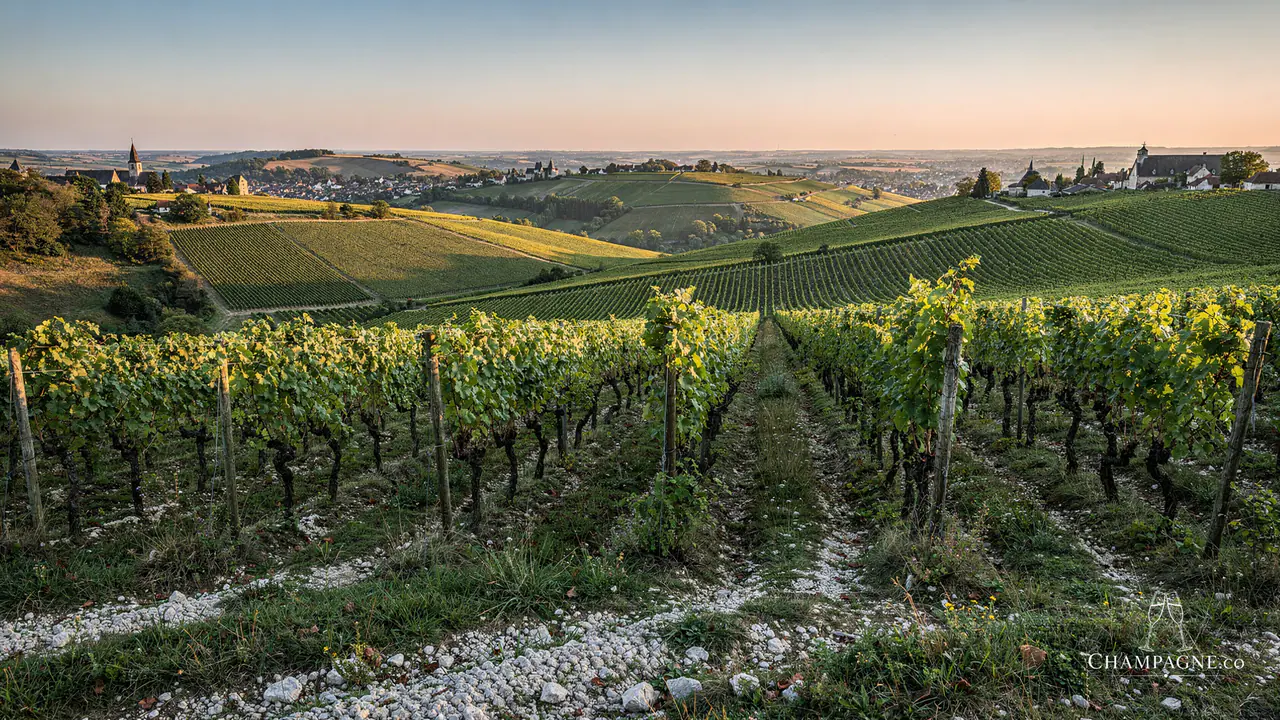
The estate currently works 18 hectares across six villages and 27 identifiable plots. Verzy is the historic centre of gravity, but the vineyard base also reaches Cernay on the Mont de Berru, Damery and Fleury-la-Rivière in the Marne Valley, Treslon in the Ardre Valley and Bligny in the Côte des Bar. Average vine age is about 33 years. That breadth explains why the range moves between specifically Verzy-focused wines and broader multi-village blends rather than presenting every bottle as a single expression of the home village.
Environmental work has become an increasingly visible part of the current estate identity. Louis de Sacy holds HVE and Viticulture Durable en Champagne certification, and part of the vineyard — including its Verzy and Cernay holdings — has been organically certified since the 2023 harvest, with other sectors in conversion. The estate also works with grass cover, cover crops and selected soil cultivation, together with an interest in agroforestry.
Why this producer matters
Louis de Sacy combines a long Verzy family history with a contemporary range that is unusually easy to read through origin and method. The Grand Cru bottling and Rosé de Saignée focus directly on Verzy, while Originel draws on three other villages and Les Courtisols introduces a parcel-led strand. The result is a portfolio that lets a reader compare the house's home-village Pinot Noir identity with a broader set of Champagne terroirs.
The cellar approach adds another layer. Fruit is separated by grape variety, village and, for some wines, individual parcel. The estate uses 35 small stainless-steel tanks, alongside barrels and demi-muids for selected lots, and keeps part of its reserve wine in 228-litre barrels. Bottled wines generally spend at least 24 months on lees, while vintage wines can remain for a decade or more. That combination of detailed parcel separation and flexible élevage gives the range more structure than its relatively compact scale might suggest.
Vineyards and terroir
Verzy remains the essential reference point. The village sits on the Montagne de Reims and is especially associated with Pinot Noir; Louis de Sacy uses it for the Grand Cru Brut, the Rosé de Saignée and parcel-focused wines. The wider vineyard base also shows why the non-Grand-Cru cuvées should not be read simply as lesser versions of Verzy wines: they can draw on distinct sectors with different soils and exposures across Champagne.
The estate describes its soils broadly as clay-limestone and limestone-marl. Current holdings include Verzy, Cernay, Damery, Fleury-la-Rivière, Treslon and Bligny. This geographical spread gives the house a useful range of blending options, while the identifiable-plot approach allows selected parcels to be kept separate when the material warrants it.
Winemaking and cellar approach
Louis de Sacy's current cellar philosophy is based on keeping options open rather than forcing every wine through one recipe. Grapes are sorted after harvest by variety, village and, where appropriate, parcel. Fermentation takes place principally in small stainless-steel vats, with barrels and demi-muids used for certain cuvées. Some reserve wines are aged for several months in 228-litre barrels.
The approach is deliberately adaptable from year to year. In the range, that flexibility appears in several forms: Originel is a low-dosage multi-village blend; Grand Cru narrows the focus to Verzy; the Rosé de Saignée uses skin maceration and Pinot Noir; Les Courtisols moves into parcel-led vintage territory; and mature prestige wines such as Grand Soir and XII extend cellar ageing further. The Champagnes generally rest for a minimum of 24 months on lees, with vintage wines capable of ten years or more.
Champagne.co analysis
Louis de Sacy is most interesting when approached as a comparison between two scales of Champagne identity. At one scale is Verzy: Grand Cru Pinot Noir country, expressed directly through the Grand Cru Brut, the saignée rosé and parcel work. At the other is an 18-hectare estate spread over six villages, which gives the family the raw material for blends such as Originel and allows different parts of Champagne to play different roles.
That duality prevents the range from collapsing into a single house formula. Low dosage is an important recurring theme, but it is not the whole story; parcel selection, rosé maceration, reserve-wine élevage and long ageing for vintage bottles all create separate routes through the portfolio. The most coherent way to understand Louis de Sacy is therefore not as a ladder from basic to prestigious, but as a set of increasingly specific choices about origin, method and maturity.
Buying guidance
For a first bottle, Originel is the most useful overview of the broader estate because it combines three grape varieties and three villages in a low-dosage style. To understand what Verzy means to Louis de Sacy, move next to Grand Cru Brut; it is the cleanest home-village reference point in the core range.
Choose Rosé de Saignée Grand Cru when the interest is specifically Pinot Noir, skin maceration and a dry rosé style rather than a blended rosé. Les Courtisols is the more appropriate step for readers interested in parcel and vintage specificity. Grand Soir and XII belong to the mature end of the cellar, so check the exact vintage or base year on the bottle when buying. Nue, when available, is the clearest choice for readers who specifically want the house at zero dosage.
Loading current Champagne range…
Spotted something wrong? Report a correction
Every report goes to a human review queue. Nothing on this page changes automatically.