Louise Brison
Louise Brison is a family estate in Noé-les-Mallets, in the Côte des Bar, with a particularly clear identity: vintage Champagne, organic farming and vinification in oak. The family history reaches back to Louise Brison herself, who maintained vines around…
Editorial profile
Louise Brison is a family estate in Noé-les-Mallets, in the Côte des Bar, with a particularly clear identity: vintage Champagne, organic farming and vinification in oak. The family history reaches back to Louise Brison herself, who maintained vines around 1900. A decisive modern step came in 1991, when Francis Brulez began producing vintage Champagnes aged in barrel. Today Delphine Brulez, an agronomist and oenologist, continues the estate and its move toward organic viticulture.
The domaine began organic conversion in 2017 and has been certified organic since the 2020 vintage. That date matters because recent 2020 wines now carry the organic identity directly, while older library vintages pre-date certification and should be understood on their own terms.
The range is unusually focused on vintage rather than on a permanent non-vintage house blend. Current wines include A l'Aube de la Côte des Bar, Chardonnay, Pinot Noir and maceration rosé, while a substantial library keeps earlier vintages in circulation. For readers, vintage is therefore not a special tier at Louise Brison; it is the organising principle of the house.
Why this producer matters
Louise Brison offers a distinctive Côte des Bar model built around three decisions that reinforce one another: each principal wine carries a vintage, the wines are vinified and aged in oak, and recent vintages come from organically certified vineyards. That creates a range where year, grape and cellar treatment are more important than a conventional hierarchy of non-vintage, vintage and prestige cuvées.
The mature-release programme adds another dimension. The estate continues to offer older bottles through its Mémoire de la Côte des Bar collection, allowing readers to compare different harvests over a long period. That library is particularly valuable because the house's oak-led, vintage-first philosophy is designed around evolution with age rather than immediate uniformity.
Vineyard and organic approach
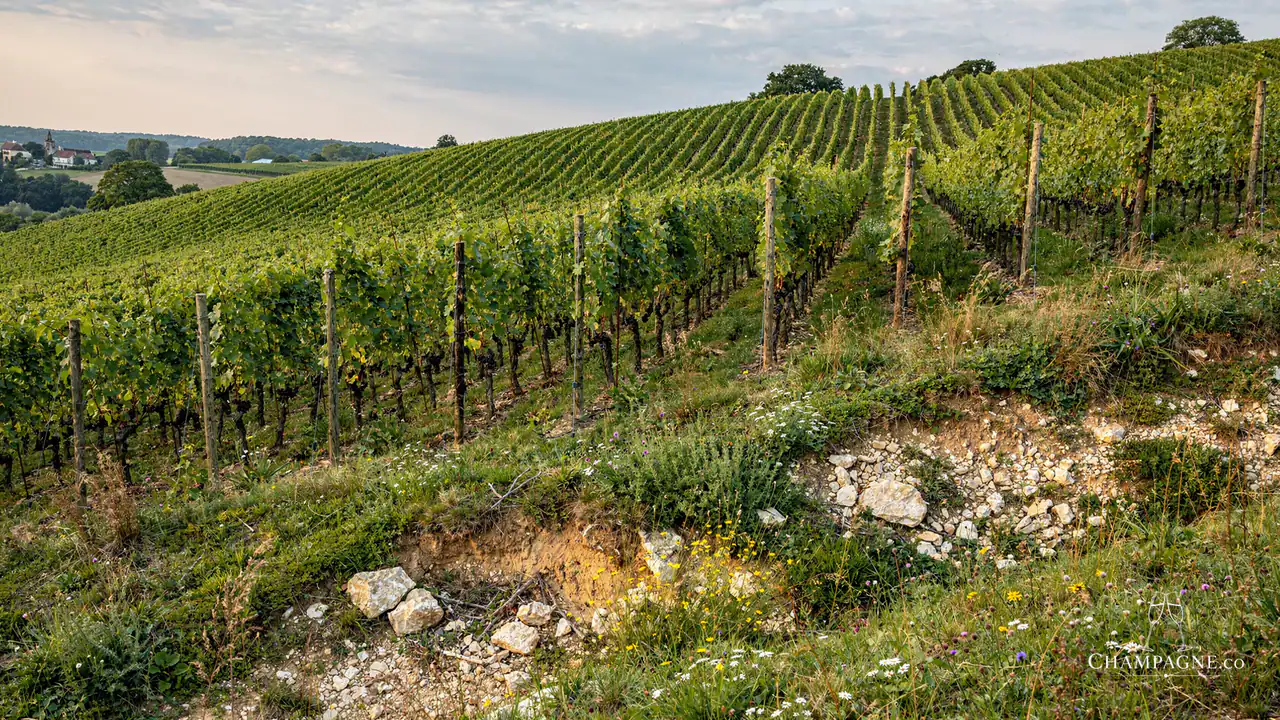
The estate is based in Noé-les-Mallets in the southern Côte des Bar. Its current farming philosophy places soil life and biodiversity at the centre of vineyard work. Organic conversion began in 2017, after a longer period of reduced-impact farming, and certification applies from the 2020 vintage.
Current vineyard practice includes organic amendments, shredded prunings returned to the soil, mechanical soil cultivation and microbial fertilisation. The estate also describes preventive canopy and yield management as part of its disease strategy. These practices are most useful to the reader as context for the current wines: the 2020 vintage marks the point at which organic certification and the established barrel-vinification approach meet in the bottle.
Winemaking and cellar approach
Oak is structural at Louise Brison rather than reserved for a special cuvée. The estate vinifies and ages its wines in oak barrels, tracking barrels by vineyard plot and grape variety. Barrel ageing lasts for roughly nine months before bottling, after which the wines receive prolonged bottle ageing; the domaine describes a minimum of around six years for its vintage Champagnes.
That long timetable helps explain the breadth of the library. A newly released Louise Brison vintage is already conceived as a mature, gastronomic Champagne, while older vintages remain part of the active offer rather than disappearing once the next year arrives.
Champagne.co analysis
Louise Brison is easiest to understand by reversing the usual Champagne hierarchy. Here, vintage is the baseline rather than the exception. The annual harvest is allowed to remain visible, oak is a constant part of the cellar vocabulary, and long ageing gives the wines time to develop before and after release.
That philosophy makes comparisons especially rewarding. A l'Aube shows how Pinot Noir and Chardonnay work together; Chardonnay isolates the white-grape side of the estate; the maceration rosé changes both grape emphasis and method; and the library demonstrates how the same producer's approach behaves across very different years.
The move to organic certification from the 2020 vintage adds a clear dividing point in the estate's recent history. It does not make older bottles less relevant — indeed, the library is one of Louise Brison's strengths — but it gives current buyers a useful way to distinguish the present farming era from earlier releases.
Buying guidance
For a first bottle, choose A l'Aube 2020 Brut Nature Bio if you want the fullest current picture of the house: two grapes, vintage specificity, certified-organic fruit, oak vinification and zero dosage in one wine.
Choose Chardonnay 2020 for a more focused Blanc de Blancs comparison, or Rosé 2020 when maceration rosé is the priority. M20 Extra Brut offers a smaller-format introduction with slightly more dosage than the Brut Nature wines.
For mature Champagne, the Mémoire de la Côte des Bar library is the most interesting route. Buy these wines by exact vintage and format, because a 1990s Chardonnay, a 2000s A l'Aube and a recent organic release represent genuinely different chapters of the estate rather than interchangeable stock.
Loading current Champagne range…
Spotted something wrong? Report a correction
Every report goes to a human review queue. Nothing on this page changes automatically.