Maison Raday
Maison Raday is a very small Champagne micro-négoce associated with Valentin Tribaut and based in the Vallée de la Marne. Its public range is deliberately narrow: the producer’s current site presents two cuvées, Ramosa Ripa and Meunier d’Ailleurs. Rather…
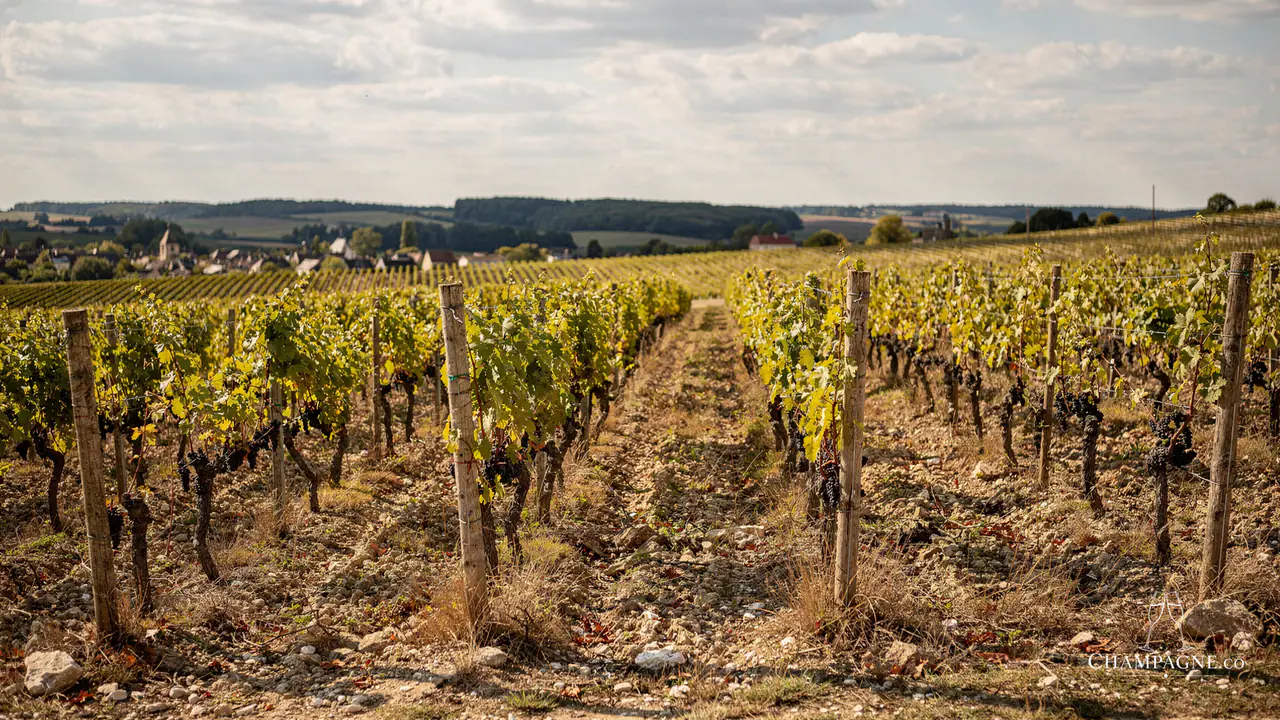
Editorial profile
Maison Raday is a very small Champagne micro-négoce associated with Valentin Tribaut and based in the Vallée de la Marne. Its public range is deliberately narrow: the producer’s current site presents two cuvées, Ramosa Ripa and Meunier d’Ailleurs. Rather than building a broad house blend from a large supply network, Raday works at micro-production scale with specific growers and parcels, making the identity of the fruit source central to understanding each wine.
The project dates from 2018, when Tribaut established his own label after growing up around his family’s Champagne activity in Romery. The Raday name refers to the small watercourse running through villages connected with that family landscape. The resulting wines are best read release by release because farming, parcel, élevage and disgorgement details can change with the source and base year.
Why this producer matters
Maison Raday is an example of the increasingly visible micro-négociant model in Champagne: the producer is defined not by a large owned estate but by close work with a very small number of outside growers and carefully identified vineyard sources. That makes provenance unusually important. The farming credentials of a particular wine belong first to the grower and parcel supplying it rather than automatically to Maison Raday as a whole.
The scale is also genuinely small. Recent release information for both principal wines points to production measured in roughly the low thousands of bottles rather than conventional house volumes. For buyers, that means availability and release details can matter as much as the nominal cuvée name.
Fruit sourcing and cellar approach
Ramosa Ripa is associated with fruit from Valentin Tribaut’s cousin Aurélien Lurquin, including the Les Crayères du Levant site at Romery. Meunier d’Ailleurs is sourced from Régis Poissinet and the Les Froids Vents vineyard at Cuchery. Current specialist release documentation identifies biodynamic farming at these source vineyards, but those claims should remain attached to the relevant grower, parcel and release rather than being converted into a blanket estate certification for Raday.
Recent documented releases have been vinified and matured in oak before extended bottle ageing, with no dosage at disgorgement. The exact duration in barrel and bottle has varied between documented bases, so those figures are best treated as release-specific technical information rather than a permanent recipe.
Champagne.co analysis
Raday’s interest lies in the separation of roles. Tribaut is the Champagne maker and selector, while the vineyard identity can belong to another grower whose farming is part of the wine’s provenance. That is different from the conventional grower-producer story in which one domaine controls both vineyard and cellar.
The two-wine range makes comparison unusually clear. Ramosa Ripa brings Chardonnay and Pinot Noir from the Romery side of the project; Meunier d’Ailleurs shifts the focus to a single grape and a different grower at Cuchery. The useful question is therefore not which cuvée sits higher in a hierarchy, but how two distinct fruit sources are interpreted through a similarly small-scale cellar approach.
Buying guidance
Maison Raday is a producer to buy by cuvée and release, not by generic house specification. Choose Ramosa Ripa if the Chardonnay/Pinot Noir collaboration and Romery source are the attraction; choose Meunier d’Ailleurs for the 100% Meunier expression from Cuchery.
Because quantities are small and technical details vary by base year, check the base, disgorgement and source information on the specific offer.
Loading current Champagne range…
Spotted something wrong? Report a correction
Every report goes to a human review queue. Nothing on this page changes automatically.