Mandois
Champagne Mandois is an independent family house in Pierry whose winegrowing history reaches back to 1735. Nine generations later, the business remains family controlled under Claude Mandois, with a substantial vineyard base that gives it more direct…
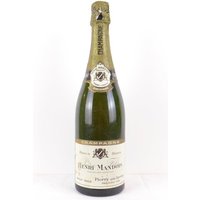
Representative Champagne from Mandois
Editorial profile
Champagne Mandois is an independent family house in Pierry whose winegrowing history reaches back to 1735. Nine generations later, the business remains family controlled under Claude Mandois, with a substantial vineyard base that gives it more direct control over fruit than many négociant houses.
Current 2026 material from the Association des Champagnes Biologiques records a 37-hectare vineyard, around 70% Chardonnay, with 23 hectares certified organic. Conversion began in 2017 and the first certified-organic harvest was 2020. The house’s own vineyards provide much of its supply, with partner growers complementing the estate fruit, so Mandois is best understood as a vineyard-rich house rather than a wholly estate-grown domaine.
Why this producer matters
Mandois combines three strands that do not always sit together in Champagne: a long family history, meaningful vineyard ownership and a modern organic programme. Its Chardonnay-heavy plantings give the range a clear centre of gravity, but Pinot Noir and Meunier remain important—not least in the 1.5-hectare Clos Mandois at Pierry, which is devoted to Meunier.
The house also provides a useful contrast between broad blended wines and increasingly specific origin-led bottlings. Pierry is the family base, while current Chardonnay cuvées extend the conversation to villages including Vertus and Chouilly.
Family, vineyards and organic farming
The Mandois family traces its Champagne vineyard history to Jean Mandois in 1735. In the early twentieth century Victor-Auguste Mandois established the operation at Pierry with its own press and cellar, and the current generation continues from the same village.
The Association des Champagnes Biologiques’ 2026 material gives the clearest current vineyard picture: 37 hectares in total, 23 hectares certified organic and Chardonnay accounting for roughly 70% of plantings. The certified area includes Chardonnay, Pinot Noir and Meunier. These are estate-level figures; they should not be converted into the blend of an individual Champagne.
Clos Mandois
The most distinctive parcel in the estate is Clos Mandois, a 1.5-hectare south-facing vineyard within Pierry. The family assembled the clos over several generations, beginning with about half a hectare acquired in 1905 and reaching its present form in 1982. It is planted to Pinot Meunier on Upper Campanian chalk with overlying alluvium.
The first dedicated Clos Mandois Champagne came from the 2004 vintage after earlier trials. In suitable years the fruit is vinified in demi-muids without malolactic fermentation, followed by prolonged lees ageing. The producer describes the wine as an exceptional-vintage bottling rather than an annual release, so vintage and technical details should always be checked bottle by bottle.
Champagne.co analysis
Mandois is most interesting when viewed through the relationship between vineyard ownership and range architecture. A 37-hectare estate with a strong Chardonnay majority gives the house a meaningful agricultural identity; the growing organic surface makes that identity increasingly explicit. Yet the range does not stop at an estate-wide house style. Village Chardonnay bottlings and Clos Mandois progressively narrow the focus from regional blending to individual origin.
Clos Mandois is particularly revealing because it prevents the house from being reduced to a Chardonnay story. Meunier, grown in a specific south-facing Pierry site and given unusually long maturation, sits at the most site-specific end of the range. That tension—Chardonnay-dominant estate, but a Meunier clos as a singular reference—is one of the producer’s clearest points of distinction.
Buying guidance
Brut Origine is the best first bottle for understanding Mandois at house level, while Non Dosé Origine offers a drier comparison within the core range. Buyers specifically interested in the estate’s Chardonnay emphasis should move toward Blanc de Blancs, then compare the village-led Vertus Premier Cru and Chouilly Grand Cru bottlings with the exact vintage shown.
For the most site-specific purchase, look for Clos Mandois and verify the vintage: it is not intended as an every-year cuvée. Victor Blanc de Blancs and Victor Rosé are better approached as vintage-specific, longer-aged wines rather than fixed technical formulas. Organic certification should likewise be checked against the named release instead of assumed across every bottle.
Loading current Champagne range…
Spotted something wrong? Report a correction
Every report goes to a human review queue. Nothing on this page changes automatically.