Marc Hébrart
Marc Hébrart is a family grower based in Mareuil-sur-Aÿ, founded in 1963 and today run by Jean-Paul Hébrart. The estate combines the intimacy of a grower Champagne with a notably broad vineyard map: Club Trésors de Champagne records 14.5 hectares, planted…
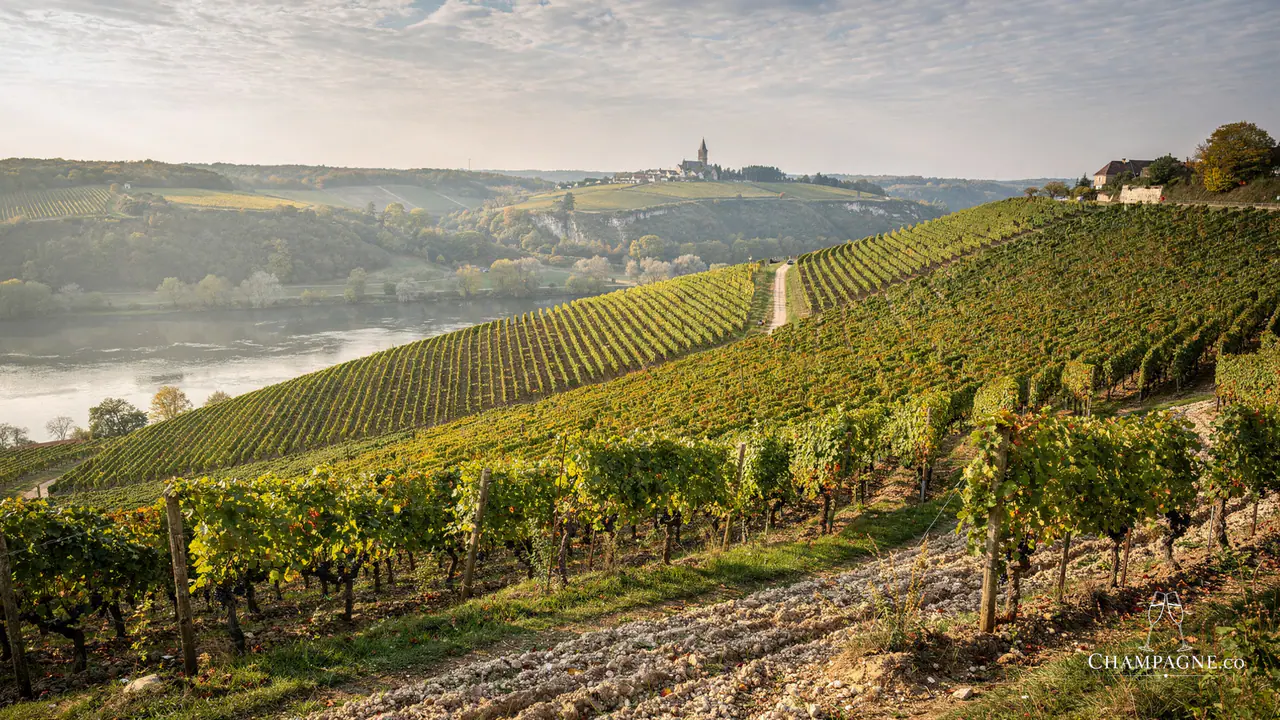
Editorial profile
Marc Hébrart is a family grower based in Mareuil-sur-Aÿ, founded in 1963 and today run by Jean-Paul Hébrart. The estate combines the intimacy of a grower Champagne with a notably broad vineyard map: Club Trésors de Champagne records 14.5 hectares, planted roughly 70% Pinot Noir and 30% Chardonnay, across ten Grand and Premier Cru villages.
Those holdings are the key to understanding the wines. Hébrart is not confined to one slope or one grape. Pinot Noir comes from important Vallée de la Marne and Montagne de Reims sites including Aÿ, Mareuil-sur-Aÿ, Avenay-Val-d'Or, Dizy and Louvois, while Chardonnay holdings extend into Avize, Oiry and Chouilly as well as other sectors of the estate. That geographic reach allows Jean-Paul Hébrart to make both broad house blends and increasingly precise wines built around a grape, village or site.
The current range shows both sides clearly. Sélection, Blanc de Blancs, Mes Favorites and Rosé establish the house style; Noces de Craie, Rive Droite–Rive Gauche and Clos Le Léon narrow the focus; and Spécial Club places the estate within the prestige-cuvée tradition of Club Trésors de Champagne. A separate Coteaux Champenois bottling demonstrates that Hébrart also works beyond sparkling Champagne.
Why this producer matters
- The estate was founded in 1963 and is now led by the founder's son, Jean-Paul Hébrart.
- Club Trésors records 14.5 ha of vines across ten Grand and Premier Cru villages.
- The vineyard is approximately 70% Pinot Noir / 30% Chardonnay.
- Holdings cross several of Champagne's major terroir sectors rather than concentrating in a single village.
- Hébrart can therefore move convincingly between assemblage, Blanc de Blancs, Blanc de Noirs and more site-focused wines.
- Membership of Club Trésors de Champagne gives the house access to the Spécial Club category, whose wines are selected through the Club's collective approval process.
Vineyard and terroir
The current Club Trésors estate map names Aÿ, Louvois, Avize, Oiry and Chouilly among the Grand Cru sources, with Mareuil-sur-Aÿ, Bisseuil, Avenay-Val-d'Or, Dizy and Hautvillers among the Premier Cru holdings. That distribution is unusually useful for a grower of this scale because it crosses the classic Pinot Noir and Chardonnay axes of Champagne.
Mareuil-sur-Aÿ remains the estate's home base and is central to the house identity. Yet the wider map matters just as much. Aÿ gives Hébrart access to powerful Pinot Noir; the Côte des Blancs villages bring a different Chardonnay register; and the other Vallée de la Marne and Montagne sites add blending options. The result is a portfolio that can compare origin without forcing every wine into a single-parcel model.
That distinction helps explain the most interesting bottles. Mes Favorites is documented by the Club as an 80% Pinot Noir / 20% Chardonnay blend from Mareuil-sur-Aÿ, while Noces de Craie 2019 is a 100% Pinot Noir Blanc de Noirs from Aÿ. Rive Droite–Rive Gauche 2016 deliberately crosses grape and origin, combining equal parts Chardonnay and Pinot Noir from Aÿ, Oiry, Chouilly and Avize. Clos Le Léon 2016 moves in the opposite direction: 100% Chardonnay from a named Dizy site.
Cellar and winemaking
The current technical records show that Hébrart does not apply one cellar recipe to the entire range. Stainless steel is used for wines such as the documented Noces de Craie 2019 and Mes Favorites, while the documented Rive Droite–Rive Gauche 2016 and Clos Le Léon 2016 were raised in oak.
Malolactic fermentation is likewise handled according to the wine rather than by an inflexible house rule. It was completed for the documented Noces de Craie 2019 and Rive Droite–Rive Gauche 2016, while it was blocked for Clos Le Léon 2016. These are release-specific details, but together they show a producer prepared to adjust élevage to origin and intended expression.
Dosage is generally restrained in the more focused current Club bottlings: the documented Noces de Craie 2019 and Rive Droite–Rive Gauche 2016 are each listed at 4 g/L, while Clos Le Léon 2016 is listed at 3 g/L. Those figures belong to those releases rather than to the cuvée names indefinitely.
Champagne.co analysis
Marc Hébrart's strongest feature is not simply that the estate owns good villages; it is that those villages are used at different levels of resolution. Sélection and the core range make sense of the vineyard as a whole. Mes Favorites tightens the lens around Mareuil-sur-Aÿ. Noces de Craie isolates Pinot Noir from Aÿ. Clos Le Léon isolates Chardonnay from one Dizy site. Rive Droite–Rive Gauche then deliberately widens the frame again, pairing Pinot Noir and Chardonnay from opposite sides of the estate's geographic reach.
That makes the range unusually educational. Readers can move from house blend to grape, village, site and cross-region assemblage without leaving one producer. The 70/30 vineyard balance also explains why Hébrart can remain Pinot Noir-centred while taking Chardonnay seriously enough to produce both a Blanc de Blancs and a dedicated site wine.
The cellar choices reinforce that flexibility. Stainless steel, oak, completed or blocked malolactic fermentation and low dosage are tools rather than a manifesto. The important pattern is the producer's willingness to let the composition and origin of each wine determine how narrowly it is framed.
Buying guidance
- Best introduction: Sélection for the broadest view of the Hébrart house style.
- For the estate's Mareuil-sur-Aÿ centre of gravity: Mes Favorites.
- For Pinot Noir: Noces de Craie 2019, especially if you want the Aÿ side of the portfolio in a concentrated form.
- For Chardonnay: start with Blanc de Blancs; move to Clos Le Léon 2016 for the more site-specific, oak-raised expression.
- For the most revealing comparison: taste Noces de Craie alongside Rive Droite–Rive Gauche to see the difference between a single-grape Grand Cru concept and a deliberately cross-origin blend.
- For the Club prestige category: Spécial Club 2019, where available.
- For still wine: the Coteaux Champenois belongs to a different appellation and should be bought as a separate expression of the estate rather than as an alternative Champagne cuvée.
Loading current Champagne range…
Spotted something wrong? Report a correction
Every report goes to a human review queue. Nothing on this page changes automatically.