Marie Stuart
Marie Stuart is a Champagne house established in Reims in 1867 and today part of the Arvitis group. The Union des Maisons de Champagne records a 25-hectare vineyard estate, with Alain Thiénot as chairman, while the house's current range and winemaking are…
Editorial profile
Marie Stuart is a Champagne house established in Reims in 1867 and today part of the Arvitis group. The Union des Maisons de Champagne records a 25-hectare vineyard estate, with Alain Thiénot as chairman, while the house's current range and winemaking are overseen by Isabelle Mary, cellar master and oenologist, who joined the winery in 2005.
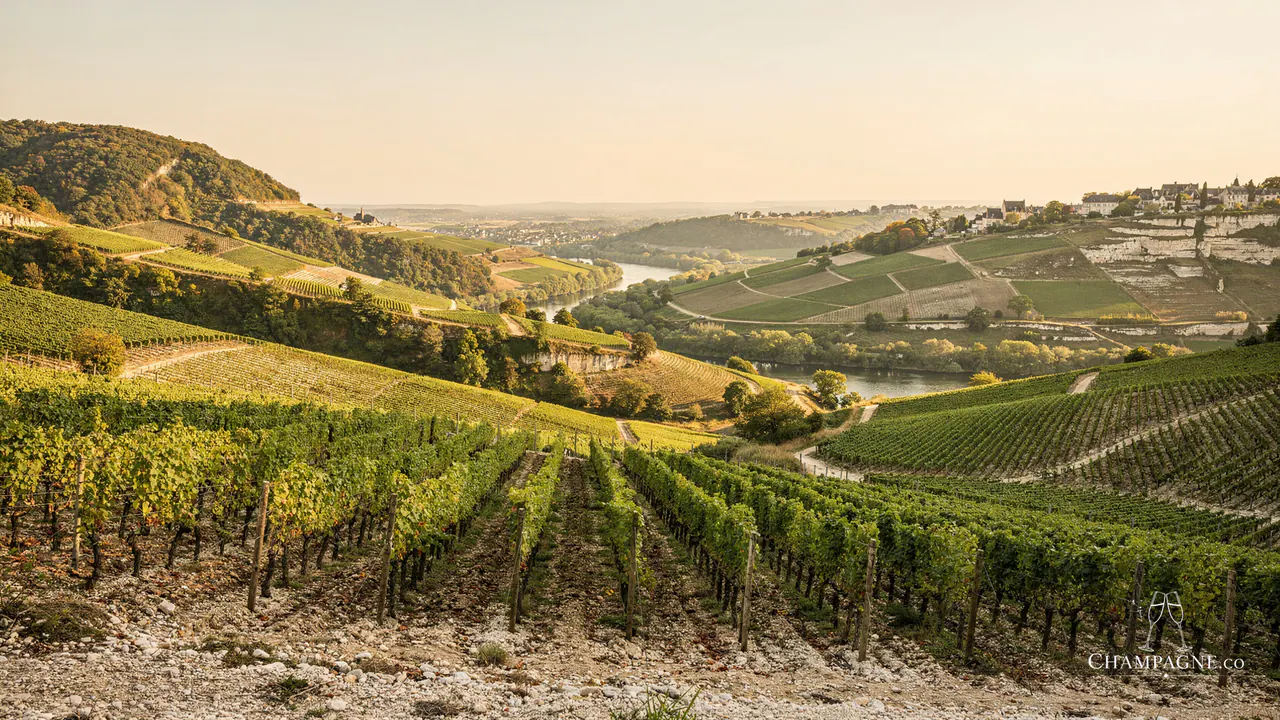
The sourcing model is broader than the estate figure alone suggests. UMC distinguishes both vineyard-estate activity and collaboration with winegrowers, while Marie Stuart's current site describes grape selection across the Montagne de Reims, Vallée de la Marne and Côte des Blancs. The 25 hectares therefore provide an important viticultural base without implying that every bottle is entirely estate-grown.
The current portfolio is compact and easy to read. Five wines form two families: Cuvée de la Reine covers Brut, Brut Rosé and a Premier Cru Brut, while Passion d'une Reine provides a white Brut and a Brut Rosé at the upper end of the range. This is a house built around blending rather than a catalogue of single-village or parcel wines, so the useful differences are grape balance, cru sourcing and rosé composition.
Why this producer matters
- Marie Stuart has operated as a Champagne house since 1867.
- It is now part of the Arvitis group while retaining a distinct consumer-facing identity.
- UMC records a 25-ha vineyard estate alongside collaboration with winegrowers.
- Isabelle Mary is the current cellar master and oenologist and has been at the winery since 2005.
- Current sourcing spans several of Champagne's major sectors rather than one home village.
- The five-cuvée range is unusually concise, making the stylistic distinctions between its blends easy to navigate.
House, sourcing and cellar
Marie Stuart's current headquarters remain in Reims, but the vineyard and sourcing footprint is regional. The house identifies the Montagne de Reims, Vallée de la Marne and Côte des Blancs among its grape sources, while individual cuvée pages also name areas such as the Sézannais and specific Premier Cru villages.
This broad sourcing suits a blend-led house. Meunier is particularly important across the range, but Pinot Noir and Chardonnay are used to shift weight and structure from one cuvée to another. The current Premier Cru wine, for example, is built from fruit identified with Cumières, Taissy, Vertus and Chigny, while the Passion range draws on Grand Cru and Premier Cru material from the Vallée de la Marne and Montagne de Reims.
The current public technical information focuses primarily on assemblage, origin and dosage rather than publishing a detailed house-wide fermentation or maturation manifesto. That makes it more useful to compare the five wines through their documented blends than to attribute undocumented cellar rules to the entire range.
Champagne.co analysis
Marie Stuart is best understood as a compact blending house with Meunier at its centre of gravity. Three of the five current wines put Meunier at 50% or more in the house's published blend, and even the rosés keep it prominent. That gives the range a clearer internal logic than a simple distinction between basic and prestige bottles.
The most revealing comparison is between the three Cuvée de la Reine wines. The standard Brut establishes the house blend. The Rosé shows how red wine is introduced without abandoning the Meunier-led structure. The Premier Cru then changes the sourcing quality and, on the current dedicated page, increases Meunier further rather than making the expected move toward Pinot Noir dominance.
Passion d'une Reine is better read as a second tier of blending choices than as a completely separate style. The white version retains a Meunier-led 50/20/30 structure, while the rosé gives Chardonnay a larger role and increases the separate red-wine component. For buyers, the range therefore rewards attention to composition rather than relying on the cuvée names alone.
Buying guidance
- Best introduction: Cuvée de la Reine Brut for the clearest view of the current house blend.
- For rosé at the core level: Cuvée de la Reine Brut Rosé.
- For named Premier Cru sourcing: Cuvée de la Reine Brut Premier Cru, especially if you want to compare how the house handles Cumières, Taissy, Vertus and Chigny fruit.
- For the upper white blend: Passion d'une Reine Brut.
- For the upper rosé: Passion d'une Reine Brut Rosé, whose current composition gives Chardonnay a larger role than the core rosé.
- When comparing bottles across vintages or markets: use the current technical information on the specific release. Blend and dosage data are product facts, not permanent house rules.
Loading current Champagne range…
Spotted something wrong? Report a correction
Every report goes to a human review queue. Nothing on this page changes automatically.