Maurice Vesselle
Champagne Maurice Vesselle is a family grower in Bouzy, founded in 1955 by Maurice Vesselle and now run by his sons Didier and Thierry Vesselle. The estate farms 7.5 hectares, all in Grand Cru villages, divided between Bouzy and Tours-sur-Marne on the…
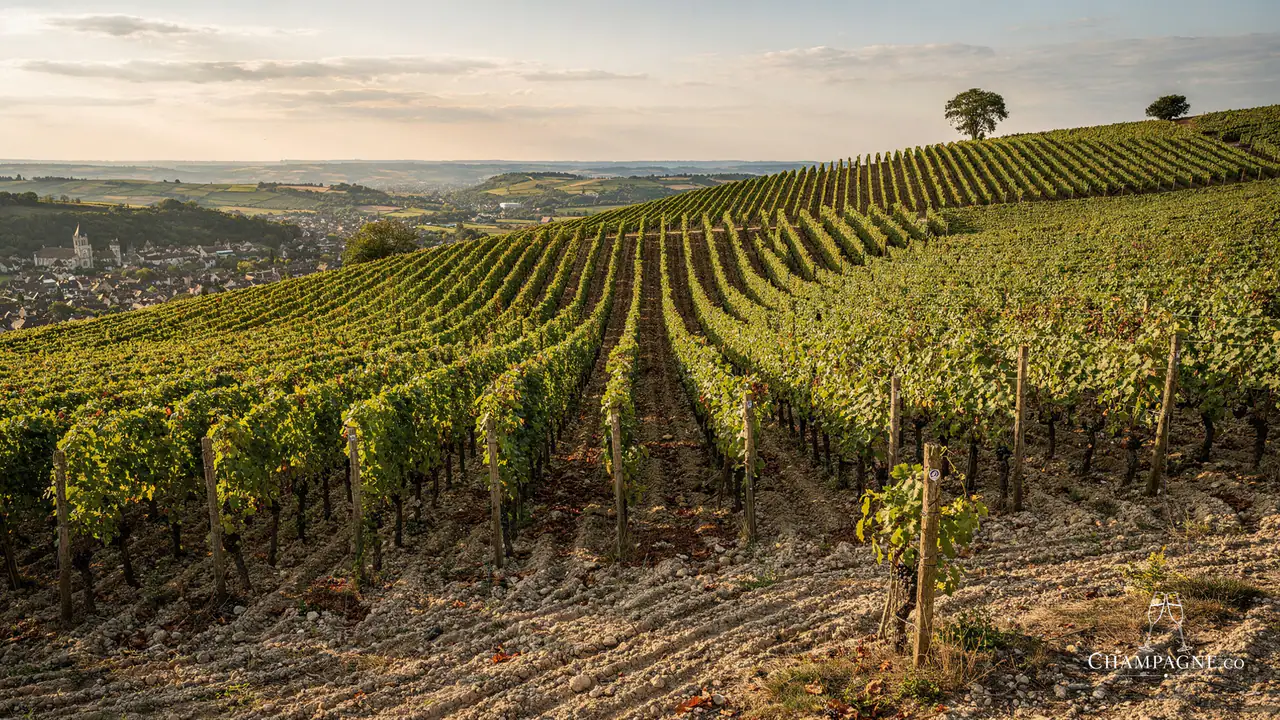
Editorial profile
Champagne Maurice Vesselle is a family grower in Bouzy, founded in 1955 by Maurice Vesselle and now run by his sons Didier and Thierry Vesselle. The estate farms 7.5 hectares, all in Grand Cru villages, divided between Bouzy and Tours-sur-Marne on the Montagne de Reims.
Pinot Noir is the domaine's defining grape, with Chardonnay providing the supporting white component. The family makes both Champagne and still Bouzy Rouge, so the identity is closely tied to the long-standing red-wine culture of Bouzy rather than to sparkling wine alone.
The house's most distinctive cellar decision is its stated avoidance of malolactic fermentation. Maurice Vesselle uses that choice in combination with extended cellar ageing to retain acidity and freshness as the wines mature. Comité Champagne currently describes five years of cellar ageing as part of the estate's approach, while the producer also maintains an unusually deep library of older vintages.
Why this producer matters
- A Bouzy family grower founded in 1955, now in the hands of Didier and Thierry Vesselle.
- A current 7.5-ha estate entirely in Grand Cru Bouzy and Tours-sur-Marne.
- A Pinot Noir-led range rooted in the Côte des Noirs, with Chardonnay used alongside it rather than as the central estate identity.
- A consistent no-malolactic cellar philosophy designed around freshness and long ageing.
- Traditional soil cultivation, including deep ploughing, remains part of the vineyard approach.
- The estate is HVE-certified and listed by Comité Champagne as a Vigneron Indépendant.
- The range stretches from a core non-vintage blend to rosé de macération, parcel Pinot Noir, mature vintage Champagne and Bouzy Rouge.
Vineyards and farming
Maurice Vesselle's 7.5 hectares sit only in Bouzy and Tours-sur-Marne, both Grand Cru villages. That is a relatively concentrated footprint, and it gives the range a coherent Montagne de Reims identity even when the wines vary considerably in age and format.
The estate describes Pinot Noir as the dominant variety, valued for the breadth and structure it brings in these villages, while Chardonnay supplies finesse and lift. The farming remains deliberately traditional in some respects: Didier and Thierry Vesselle continue to mound, unearth and plough their vineyard soils deeply, practices also noted by Comité Champagne.
The estate is currently Haute Valeur Environnementale (HVE) certified. That certification and the continued use of soil cultivation are best understood as parts of the present farming picture rather than as shorthand for a separate organic-certification claim.
Winemaking and cellar approach
The clearest house-wide technical marker is the decision not to carry out malolactic fermentation. In practical terms, that preserves more of the wine's natural acidity before secondary fermentation and ageing. Maurice Vesselle couples this with prolonged maturation, using time rather than malolactic softening to develop the wines.
That approach is particularly relevant because the domaine sells both current releases and mature vintages. The family site's library extends back through older bottlings, and the current range page still offers Collection wines alongside more recent vintage Champagne. The no-malolactic choice therefore is not an isolated technical curiosity; it is part of an ageing strategy visible in the way the range is sold.
The rosé is another useful point of distinction. Maurice Vesselle's Brut Rosé Grand Cru is made by short maceration rather than by simply blending a finished red wine into a white base. Bouzy Rouge, meanwhile, remains a separate still Coteaux Champenois expression.
Champagne.co analysis
Maurice Vesselle makes most sense as an estate organised around time, Pinot Noir and Bouzy identity. The compact 7.5-ha Grand Cru footprint supplies a strong geographic centre, while the no-malolactic cellar philosophy gives the wines a reason to spend meaningful time ageing rather than simply being released as early expressions of powerful Pinot Noir fruit.
The breadth of the range is unusually instructive. Cuvée Réservée establishes the house language, the maceration rosé shows another treatment of Pinot Noir, Les Hauts Chemins narrows the focus to a parcel-led pure Pinot expression, and the Collection wines demonstrate what the estate does with long cellar maturation. Bouzy Rouge then removes the bubbles altogether and connects the domaine to the village's still-red tradition.
That makes Maurice Vesselle less about a conventional prestige hierarchy than about different readings of the same Côte des Noirs foundation. For buyers, the useful question is not simply how far up the range to trade, but whether they want the core blend, a Pinot-focused parcel wine, a mature vintage or the still-wine side of Bouzy.
Buying guidance
- Start with Brut Cuvée Réservée for the clearest introduction to the estate's regular Champagne style.
- Choose Brut Rosé Grand Cru if you want to explore the family's short-maceration approach to rosé.
- Look for Les Hauts Chemins when you want the most focused Pinot Noir expression; always check the vintage and release details.
- Choose a current Millésimé for a vintage-specific view of the domaine, or a Collection bottle if mature Champagne is the objective.
- Bouzy Rouge is the natural purchase for readers interested in the still-red tradition behind the village's Pinot Noir reputation; it is Coteaux Champenois, not Champagne AOC.
- Because mature releases remain part of the estate's active offer, bottle age and vintage matter materially. Compare the exact release in front of you rather than assuming one technical specification applies across the library.
Loading current Champagne range…
Spotted something wrong? Report a correction
Every report goes to a human review queue. Nothing on this page changes automatically.