Michel Gonet
Champagne Michel Gonet is an Avize-based family domaine whose present identity separates two related dates: the family traces its Champagne activity to 1802, while Michel Gonet established his own operation in Avize in 1973. Today the family business is…
Editorial profile
Champagne Michel Gonet is an Avize-based family domaine whose present identity separates two related dates: the family traces its Champagne activity to 1802, while Michel Gonet established his own operation in Avize in 1973. Today the family business is led by Sophie Signolle-Gonet, Charles-Henri Gonet and Frédéric Gonet, with Champagne centred at the Avize address on Avenue Jean Jaurès.
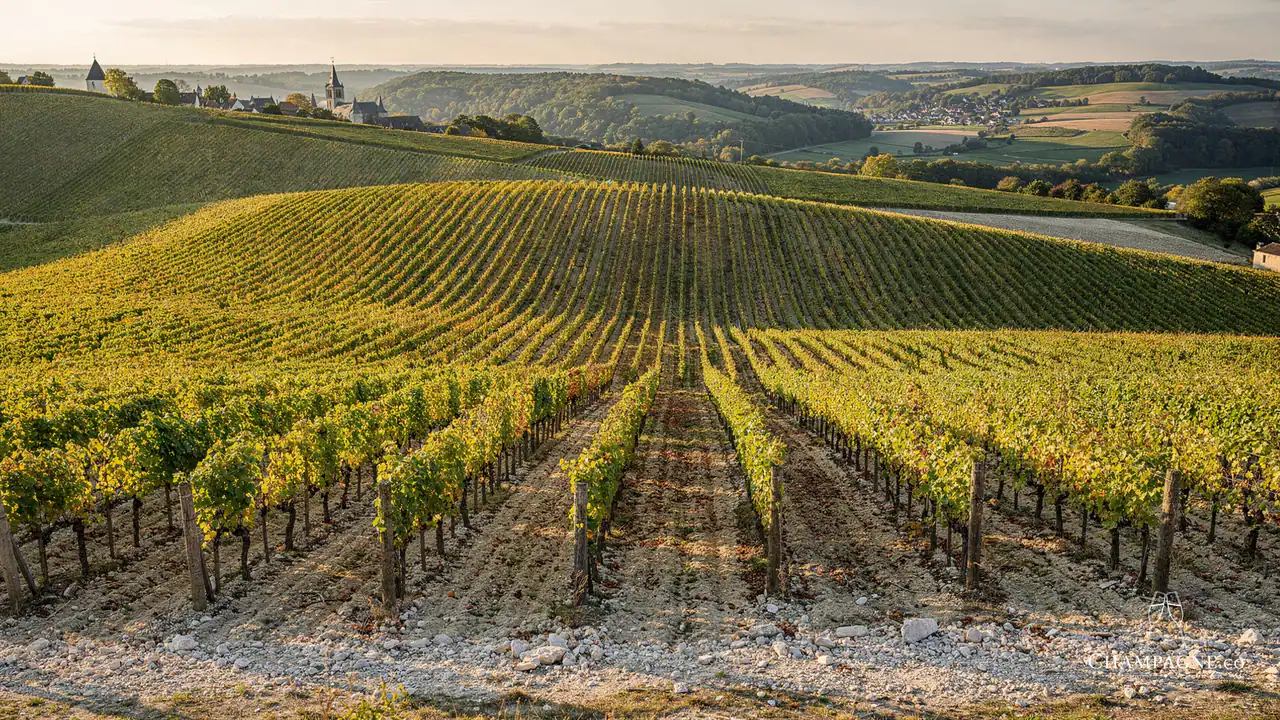
The domaine currently works 38 hectares spread well beyond the Côte des Blancs. Its vineyards include Chardonnay in Le Mesnil-sur-Oger, Oger and Avize, further Chardonnay in the Coteaux Sézannais at Vindey and at Montgueux, plus Pinot Noir in the Aube around Fravaux. That geographical spread is central to understanding the range: Michel Gonet does not present one undifferentiated blanc de blancs style, but uses different origins as distinct building blocks.
Why this producer matters
Michel Gonet is a useful counterpoint to the idea that an Avize-based grower must be narrowly Côte des Blancs in outlook. Chardonnay remains the estate's most visible thread, but the current range deliberately compares several very different chalk, clay-limestone and Aube origins, while Pinot Noir supports wines such as Fravaux “Le Varlan” and the house's rosé work.
The portfolio also moves between straightforward regional blends, Grand Cru Chardonnay, perpetual-reserve wine, extended-ageing releases and barrel-raised bottlings. That makes provenance and release identity more important here than any single house formula.
Vineyard and terroir
The current estate map gives 38 hectares across four main Champagne sectors.
In the Côte des Blancs, the domaine works Grand Cru Chardonnay in Le Mesnil-sur-Oger, Oger and Avize, with named parcels including Les Hautes Mottes, Les Coullemets, Vaucherot, Les Moissonnières and Chetillon. Vindey, in the Coteaux Sézannais, adds Chardonnay on clay-limestone and locally sandy soils. Montgueux, near Troyes, brings a separate Chardonnay source on marl-rich chalky ground. In the Aube, Fravaux supplies Pinot Noir, including the Le Varlan parcel used for a named Blanc de Noirs.
Cellar and winemaking
Michel Gonet's current technical material shows a cellar that changes approach according to wine and origin. Low-temperature fermentation is a recurring tool, while malolactic fermentation may be complete, partial or avoided depending on the cuvée. Oak is used selectively rather than universally, and certain wines receive prolonged bottle ageing.
The perpetual-reserve Anamnèse is a good example of the house's more structured cellar work: the current version is Chardonnay from Grand Cru Le Mesnil-sur-Oger, Oger and Avize, with a reserve system beginning in 2010 and incorporating successive vintages from 2014 onward. Authentique, by contrast, is a vintage Grand Cru Chardonnay from old vines in Le Mesnil-sur-Oger's Les Hautes Mottes and spends seven months in oak before extended ageing on lees. These are release-specific methods rather than rules for the entire range.
Champagne.co analysis
Michel Gonet is best understood through geography. The Avize base suggests Côte des Blancs first, but the actual estate reaches from Grand Cru Chardonnay villages to Vindey, Montgueux and the Aube. The current range makes those differences visible rather than hiding them inside one broad non-vintage blend.
That creates two useful ways into the domaine. One is comparative: wines such as Vindey–Montgueux and Les 3 Terroirs show how the estate combines different Chardonnay origins. The other is site- and cellar-specific: Fravaux “Le Varlan”, Anamnèse, Cœur de Mesnil and Authentique each isolate a more particular source or method. For a 38-hectare grower, that is a notably origin-conscious way to organise the portfolio.
Buying guidance
Start with Les 3 Terroirs if you want the broadest introduction to Michel Gonet's Chardonnay geography. Vindey–Montgueux narrows that comparison to two non-Côte-des-Blancs sources, while the Grand Cru Le Mesnil-sur-Oger wines move the focus back toward the domaine's classic Chardonnay heartland.
Choose Fravaux “Le Varlan” when Pinot Noir and the Aube side of the estate are the priority. Anamnèse is the more distinctive choice for reserve-system character, while Cœur de Mesnil, Authentique and Les Compères are better approached as specific limited releases whose vintage, ageing and parcel details matter. With older or small-production bottlings, check the exact label and release information rather than assuming one vintage's technical specification applies to another.
Loading current Champagne range…
Spotted something wrong? Report a correction
Every report goes to a human review queue. Nothing on this page changes automatically.