Moussé Fils
Famille Moussé is a long-established grower-producer in Cuisles, in the Vallée de la Marne. The family traces its winegrowing history to 1629 and its presence in Cuisles to 1880. Eugène Moussé bottled the family's first Champagne in 1923, with commercial…
Editorial profile
Famille Moussé is a long-established grower-producer in Cuisles, in the Vallée de la Marne. The family traces its winegrowing history to 1629 and its presence in Cuisles to 1880. Eugène Moussé bottled the family's first Champagne in 1923, with commercial sales beginning in 1926. The family story also includes a difficult wartime chapter: Eugène and Edmond Moussé were deported, Eugène died at Neuengamme in 1945, and Edmond returned to rebuild the domaine.
The modern estate is led by Cédric Moussé, who returned to the family business in 2003 after training that included work in the CIVC experimental cellar. The domaine's environmental evolution began earlier under Jean-Marc Moussé and has continued steadily; synthetic pesticides were abandoned entirely in 2014, and the estate is now EU-organic certified.
Cuisles and Meunier are the two strongest threads in the current range. Most of the principal Champagnes are Blanc de Noirs, while Chardonnay appears in a smaller but important role through Anecdote. The portfolio also includes both rosé d'assemblage and rosé de saignée, giving the estate several ways to work with the village's black-grape identity.
Why this producer matters
Moussé is particularly useful for understanding how a Meunier-led Vallée de la Marne grower can build a serious range around one village without relying on a single house cuvée. The current wines move from a broad non-vintage introduction to village wine, vintage releases and parcel-specific Spécial Club bottlings.
The domaine's environmental trajectory is equally important. The move away from synthetic pesticides was not an overnight rebranding exercise but the continuation of changes begun in the previous generation. Current organic certification gives that transition a clear present-day endpoint.
Vineyard and farming
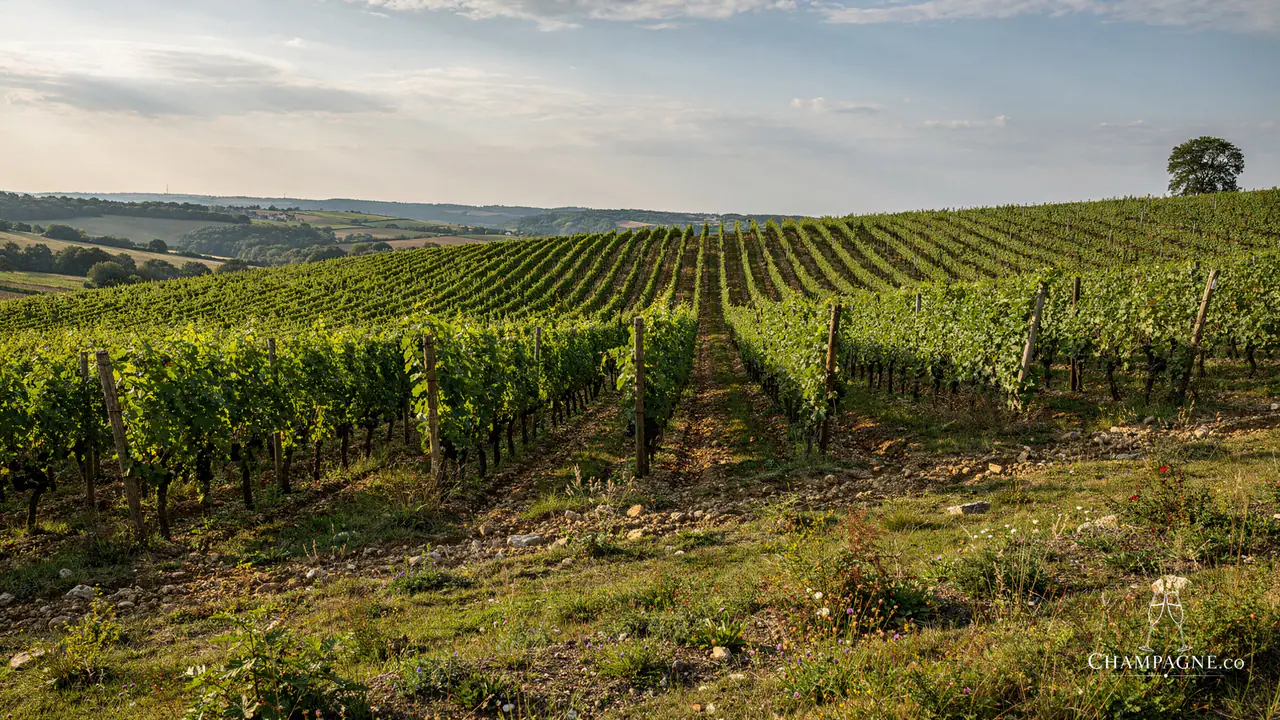
The estate is based in Cuisles, where Meunier is the dominant grape in the current Champagne range. The public record shows a long progression toward lower-input farming: Jean-Marc Moussé introduced grass cover and other changes before Cédric's return, and the family stopped using synthetic pesticides completely in 2014.
The estate is now certified under the EU organic system. That certification applies to the current agricultural operation and provides the strongest current basis for describing the domaine as organically farmed.
Cellar and winemaking
The current range is organised around several distinct expressions rather than one fixed blend. L'Or d'Eugène and Les Vignes de mon Village are Blanc de Noirs, while Anecdote is a Blanc de Blancs. The Spécial Club wines push the range toward vintage and parcel specificity, and the two rosé routes are kept separate: L'Or d'Eugène Rosé is a rosé d'assemblage, while the Spécial Club Rosé is made by saignée.
Most of the currently listed wines are Extra-Brut, which gives the range a consistent dosage framework without implying that all Moussé releases share the same blend or cellar treatment. Vintage, parcel and disgorgement details remain specific to the named release.
Champagne.co analysis
Moussé is most coherent when approached as a Cuisles-and-Meunier estate rather than simply as an organic grower. Organic certification matters, but it is the combination of village focus and range architecture that gives the wines their identity.
L'Or d'Eugène establishes the broad style, Les Vignes de mon Village tightens the focus to place, and the vintage and Spécial Club wines move further toward individual harvests and parcels. Anecdote then provides a useful Chardonnay counterpoint, showing that the estate is not limited to one grape even though Meunier remains the centre of gravity.
The two rosés are also worth keeping distinct.
Buying guidance
Start with L'Or d'Eugène for the clearest introduction to the estate. Les Vignes de mon Village is the logical next bottle if the Cuisles identity is the priority.
Choose Anecdote 2018 when Chardonnay is the focus. Terre d'Illite 2017 and the Spécial Club 2017 Les Fortes Terres are better choices for drinkers interested in vintage and parcel specificity. For rosé, decide first which method you want: L'Or d'Eugène Rosé for assemblage, or Spécial Club Rosé de Saignée 2017 for the more specific saignée expression.
Loading current Champagne range…
Spotted something wrong? Report a correction
Every report goes to a human review queue. Nothing on this page changes automatically.