Mouzon-Leroux
Mouzon-Leroux et Fils is a family grower in Verzy Grand Cru, with winegrowing roots in the village dating to 1776. The estate is led by Sébastien Mouzon alongside Pascale and Philippe Mouzon, and its modern identity is unusually concentrated: the vineyards…
Editorial profile
Mouzon-Leroux et Fils is a family grower in Verzy Grand Cru, with winegrowing roots in the village dating to 1776. The estate is led by Sébastien Mouzon alongside Pascale and Philippe Mouzon, and its modern identity is unusually concentrated: the vineyards are in Verzy, the farming is organic and biodynamic, and all seven authorised Champagne grape varieties are represented within the domaine.
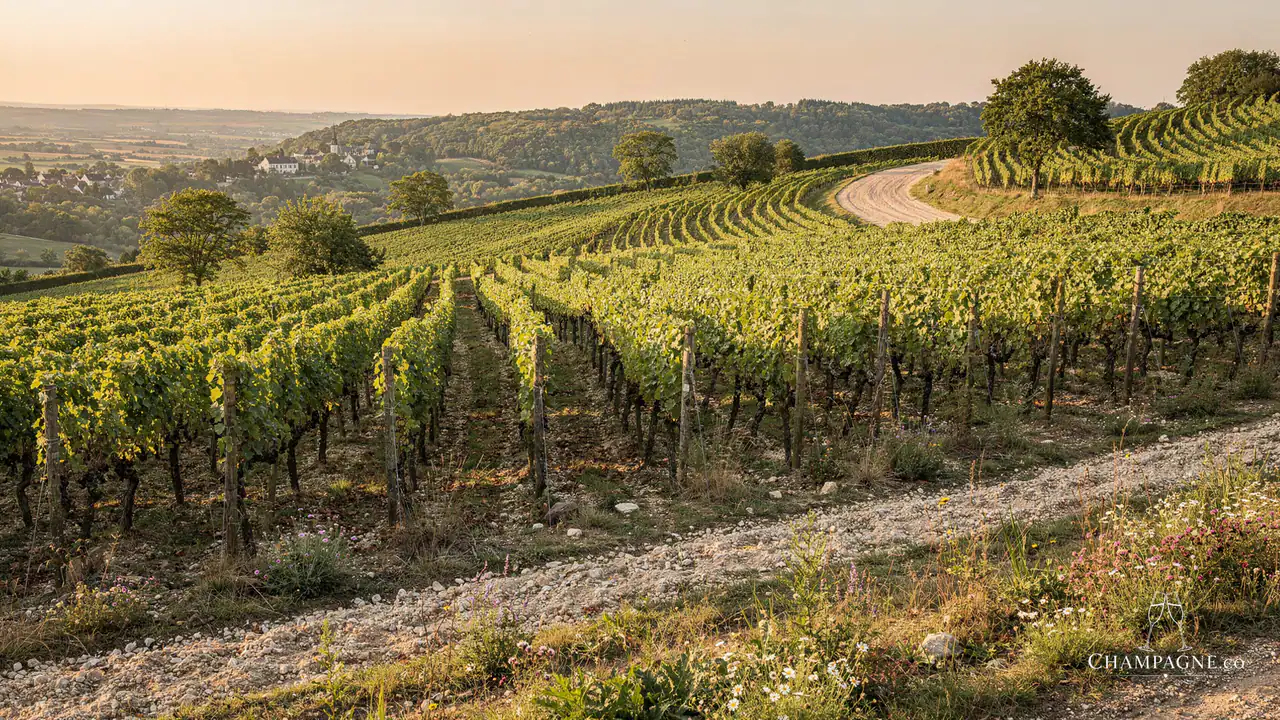
The most current dedicated vineyard page gives 8.5 hectares across 65 parcels, with approximately 60% Pinot Noir, 35% Chardonnay and 5% shared between Arbane, Petit Meslier, Pinot Blanc, Pinot Gris and Meunier. The vines occupy north-east-facing Grand Cru slopes on calcareous clay and loam over flinty chalk.
Biodynamic farming began in 2008. The estate is Demeter certified, while the Association des Champagnes Biologiques records organic-certification engagement from 2011 and the first certified organic harvest in 2014. Agroforestry has become a visible part of the vineyard programme, with more than 1,500 trees and shrubs and more than 800 aromatic plants planted among the parcels, plus winter grazing by sheep and chickens.
Why this producer matters
Mouzon-Leroux is compelling because it creates diversity without leaving Verzy. Rather than relying on fruit from different Champagne regions, the estate changes grape variety, parcel, vintage, reserve system and cellar treatment inside one Grand Cru village.
That makes the range unusually instructive. L'Atavique establishes a Pinot Noir-Chardonnay baseline; L'Ascendant adds time through a perpetual reserve; L'Incandescent turns Pinot Noir into saignée rosé; L'Angélique and L'Ineffable isolate Chardonnay and Pinot Noir; and Les Fervins brings all seven Champagne varieties together in equal proportions from Verzy.
The farming programme reinforces that single-village focus. Biodynamics, organic certification, agroforestry and animal grazing all apply to the same compact Verzy ecosystem rather than to a scattered collection of purchased grapes.
Vineyard and terroir
The vineyard is entirely associated with Verzy Grand Cru on the north-eastern side of the Montagne de Reims. Current estate material describes calcareous clay and calcareous loam soils over flint-rich chalk from the Lower Campanian.
Pinot Noir dominates the plantings, with Chardonnay providing the second major component. The remaining five authorised varieties occupy only a small share of the vineyard but are important to the domaine's identity because they are actively preserved and used rather than maintained as symbolic plantings.
The current 8.5-hectare figure is the best working measure for the estate. Some older estate and certification pages still show smaller figures, so acreage should be read as a current snapshot rather than retroactively imposed on every earlier vintage.
Farming and cellar approach
The estate has followed biodynamic methods since 2008 and is certified both organic and Demeter. In addition to cover and soil work, the vineyard programme includes extensive tree, shrub and aromatic planting as well as winter grazing.
In the cellar, fermentations use native yeasts and the domaine works with low dosage across much of the range. Barrel use varies by cuvée, as does sulphur use, and the estate avoids a single fixed formula for every wine. Current technical pages show that the same Verzy raw material can be handled very differently depending on whether the goal is a reserve blend, varietal vintage, rosé or parcel wine.
Champagne.co analysis
Mouzon-Leroux is best read as a single-village experiment in variation. Verzy stays constant while the estate changes almost everything else: blend, grape, reserve age, maceration, sulphur regime and parcel focus.
That makes L'Atavique and L'Ascendant especially useful together. One shows the estate's current blended baseline; the other uses related material but introduces a perpetual reserve, making time part of the composition. L'Angélique and L'Ineffable then separate the two dominant grapes, while Les Fervins moves in the opposite direction by reuniting all seven permitted varieties in equal shares.
The vineyard programme adds another layer. The biodynamic and agroforestry work is not an abstract sustainability story: it is concentrated on one Grand Cru landscape. For readers interested in how farming, grape diversity and reserve architecture can all operate within a narrow geographical frame, this is one of the more revealing estates in Verzy.
Buying guidance
Start with L'Atavique for the clearest introduction to the domaine. L'Ascendant is the logical next step if you want to see how a perpetual reserve changes that basic Verzy Pinot Noir-Chardonnay framework.
Choose L'Angélique for Chardonnay, L'Ineffable for Pinot Noir and L'Incandescent for rosé de saignée. Les Fervins 2018 is the most distinctive bottle for drinkers specifically interested in Champagne's full seven-variety palette. With the vintage wines, verify the exact year and release because technical details change and should not be carried automatically from one bottling to another.
Loading current Champagne range…
Spotted something wrong? Report a correction
Every report goes to a human review queue. Nothing on this page changes automatically.