Nathalie Falmet
Nathalie Falmet is a winegrower and oenologist based in Rouvres-les-Vignes in the Côte des Bar. She trained first in chemistry and then in oenology at Reims, graduating in 1993, before taking over the family vineyard and developing a small-production…
Editorial profile
Nathalie Falmet is a winegrower and oenologist based in Rouvres-les-Vignes in the Côte des Bar. She trained first in chemistry and then in oenology at Reims, graduating in 1993, before taking over the family vineyard and developing a small-production domaine in which parcel, grape variety and vinification method are deliberately separated from one wine to the next.
The estate works roughly 3.3–3.4 hectares. Current Vignerons Indépendants data records 45% Pinot Noir, 45% Meunier and 10% Chardonnay, while Falmet's own estate page gives a 3.40-hectare vineyard on Kimmeridgian clay-limestone soils. The scale is small enough for individual parcels to become an important part of the range, reflected most clearly in the cadastral-number cuvées ZH 302, ZH 303 and ZH 318.
Why this producer matters
Falmet's range is built less around one fixed house blend than around controlled comparisons. The same small estate supports a core Brut, a zero-dosage single-parcel Pinot Noir, rosé, solera-style wine and micro-parcel bottlings identified by cadastral number.
That makes the domaine particularly useful for readers interested in how grape variety, parcel and vessel can change the expression of Côte des Bar fruit. The parcel wines do not rely on invented vineyard names: using the actual cadastral references keeps their identity unusually precise.
Vineyard and terroir
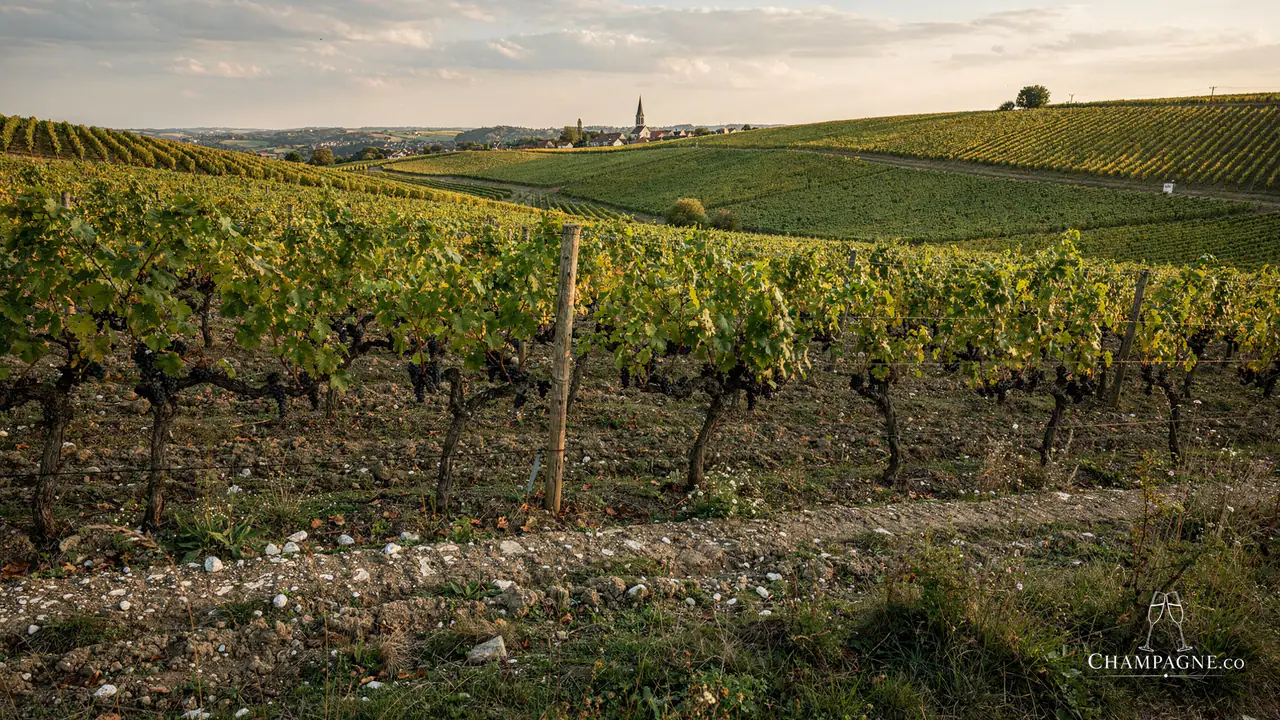
The vineyard lies around Rouvres-les-Vignes on Kimmeridgian clay-limestone soils. Pinot Noir and Meunier occupy roughly equal shares of the estate, with Chardonnay forming the smaller third component.
Falmet describes the vineyard as managed through sustainable cultivation rather than as a certified-organic estate. The important editorial distinction is therefore to keep the farming description specific and not convert environmentally minded practices into a certification claim that current sources do not establish.
Cellar and winemaking
The cellar approach changes according to cuvée. Stainless steel, larger-format oak and parcel isolation all appear in the current range, while dosage runs from Brut to zero dosage.
Two current releases show that contrast clearly. Brut Nature, Val Cornet is a single-parcel 100% Pinot Noir wine vinified in temperature-controlled stainless steel and released at 0 g/L; the current bottle is from the 2022 harvest, with a 2020 release listed for magnum. ZH 302 is a 100% Meunier micro-parcel wine from vines around 50 years old, vinified in 350-litre casks; the current technical page identifies the 2012 harvest and zero dosage. Those details belong to those exact releases and should not be generalised across the rest of the portfolio.
Champagne.co analysis
Nathalie Falmet is most interesting as a small Côte des Bar estate organised around precision of origin and method. The vineyard is not large, yet the portfolio avoids collapsing everything into one dominant house style. Instead, the cadastral cuvées turn individual parcels into separate reference points, while the core Brut and rosé wines provide more accessible entries.
The contrast between Brut Nature Val Cornet and ZH 302 illustrates the logic well. Both are dry, parcel-focused wines, but one isolates Pinot Noir in stainless steel while the other isolates Meunier in larger-format oak. That kind of difference gives the range genuine internal structure without requiring a long hierarchy of prestige labels.
Buying guidance
Start with Brut for the broadest introduction to Falmet's house style. Brut Nature, Val Cornet is the more revealing next step if you want pure Pinot Noir, a single parcel and zero dosage.
Choose ZH 302 when the goal is to explore Meunier through a mature micro-parcel and cask vinification. The other cadastral wines, ZH 303 and ZH 318, are better approached as specific releases, so confirm the exact bottle details before buying. For rosé, check both L'Oeil de Perdrix and Tentation Rosée rather than assuming they represent the same method or style, and treat Solera separately as the reserve-system expression.
Loading current Champagne range…
Spotted something wrong? Report a correction
Every report goes to a human review queue. Nothing on this page changes automatically.