Nominé-Renard
Nominé-Renard is a family grower based in Villevenard, working a vineyard of about 21 hectares. The estate describes its current holdings as 36 plots across six villages, planted to Chardonnay, Pinot Noir and Meunier. Simon Nominé oversees the vineyard,…
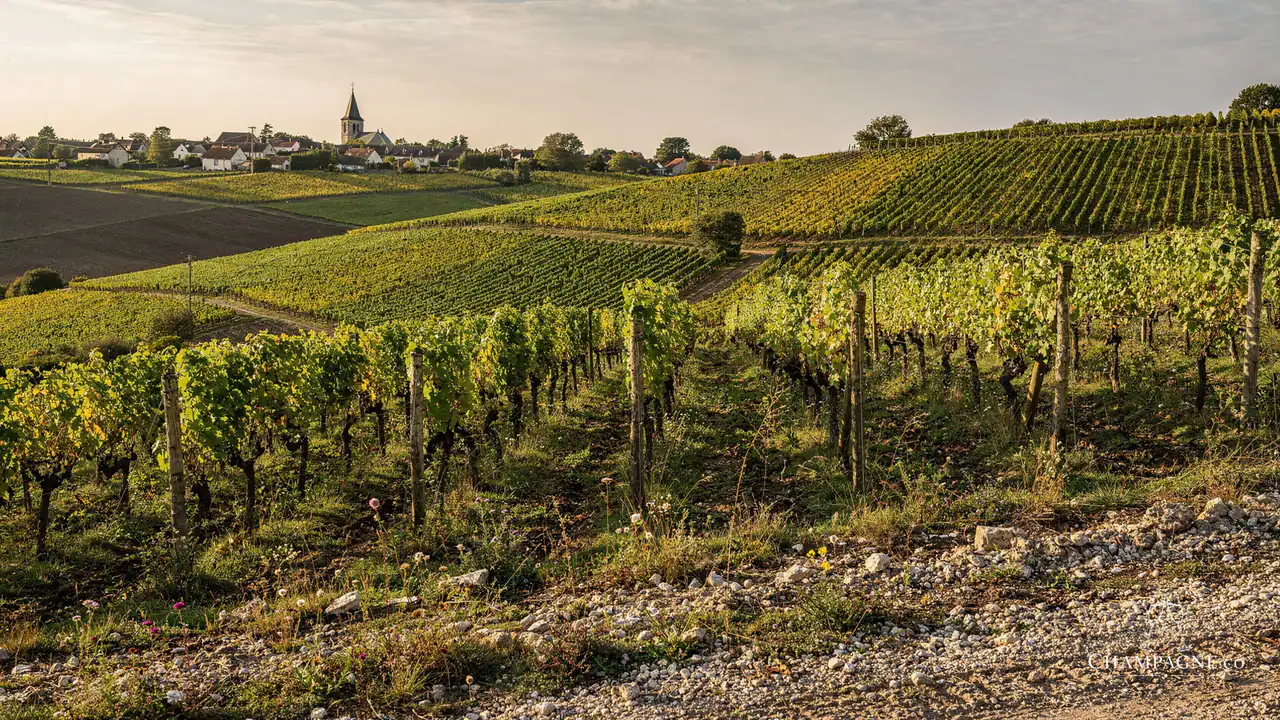
Editorial profile
Nominé-Renard is a family grower based in Villevenard, working a vineyard of about 21 hectares. The estate describes its current holdings as 36 plots across six villages, planted to Chardonnay, Pinot Noir and Meunier. Simon Nominé oversees the vineyard, and the producer operates as a Récoltant-Manipulant, pressing and vinifying its own grapes in Villevenard.
The vineyard is spread across several sectors rather than one single village. Current technical material for the core Brut names Villevenard, Étoges, Broyes, Allemant, Charly-sur-Marne and Passy-Grigny, linking the Petit Morin and Côte de Sézanne area with Vallée de la Marne fruit. The domaine holds Haute Valeur Environnementale and Viticulture Durable en Champagne certification.
Why this producer matters
Nominé-Renard is a useful example of a medium-sized grower estate where blending starts with parcel separation. The family vinifies grape varieties and plots separately before assembling the wines, giving the cellar a broad range of components despite remaining an estate producer.
The current range is also unusually easy to navigate. Brut Nominé provides the multi-village house reference; Blanc de Blancs and Blanc de Noirs separate the white- and black-grape directions; rosé and Demi-Sec broaden the core styles; and the Spécial Club and limited-edition wines move into vintage or varietal specificity.
Vineyard and farming
The estate's 21 hectares are divided into 36 plots in six villages. The vineyards therefore encompass several soil and climate contexts rather than one homogeneous terroir, and the cellar's practice of separating plots and varieties before blending is central to maintaining that diversity.
Current Comité Champagne records confirm both HVE and Viticulture Durable en Champagne status. Those certifications provide the appropriate current description of the estate's environmental programme without implying organic certification.
Cellar and blending
Nominé-Renard presses and vinifies grape varieties and individual plots separately, then uses blending to create the final cuvées. The current Brut Nominé gives the clearest picture of that approach: it is 40% Chardonnay, 30% Pinot Noir and 30% Meunier, using fruit from across the estate's six-village footprint.
The present Blanc de Blancs technical sheet takes a more focused route. It is 100% Chardonnay from Étoges, Villevenard and Allemant, drawn from five parcels and aged for 48 months on lees plus 12 months after disgorgement in the current specification. Those details describe the current release and should not be projected automatically onto future bottlings.
Champagne.co analysis
Nominé-Renard's most useful feature is the relationship between parcel separation and blending. The estate is large enough to have meaningful diversity across six villages but small enough to remain a grower-producer controlling the process from vineyard to bottle.
Brut Nominé shows the complete three-grape, multi-village palette. Blanc de Blancs and Blanc de Noirs then simplify the picture by isolating grape families, while Le M goes further by focusing entirely on Meunier. Spécial Club and the limited vintages add harvest specificity rather than merely creating a higher-priced version of the same non-vintage blend.
For readers, that makes the range logical rather than sprawling: start broad, then narrow by grape or vintage.
Buying guidance
Start with Brut Nominé for the most representative overview of the estate. Choose Blanc de Blancs if Chardonnay is the priority or Blanc de Noirs for the black-grape side of the portfolio.
Le M is the clearest choice for a pure-Meunier expression, while Spécial Club Millésime 2019 is the bottle to seek for a vintage-focused step up. Demi-Sec is deliberately sweeter and should be selected for that style rather than treated as an alternative to Brut. With limited and vintage releases, confirm the exact year because the current shop can change faster than the broader range pages.
Loading current Champagne range…
Spotted something wrong? Report a correction
Every report goes to a human review queue. Nothing on this page changes automatically.